


The 2026 NFL Draft is just around the corner, and it could be a pivotal moment for the Detroit Lions to get their franchise back on track. While the 17th-overall pick in the draft will have a number of viable targets, Day 2 of the draft could be just as important. With multiple positions in need of top-100 talent, Detroit could go any direction with picks 17 and 50, including trading up or trading down.
One of the players who could find themselves in Detroit by month’s end is Jacob Rodriguez. The
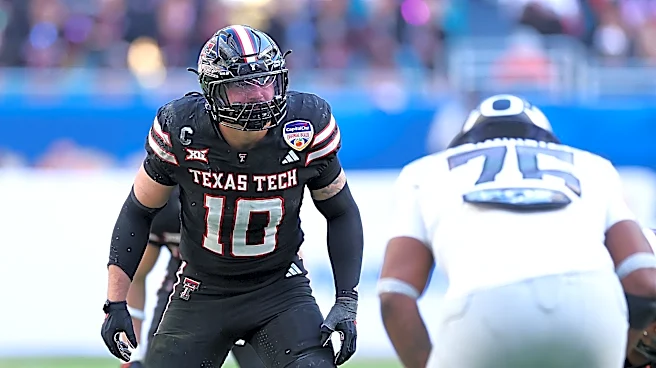
Texas Tech linebacker was among college football’s best in 2025, and with an underrated need for a linebacker, Rodriguez could and should be a target for Detroit. Finding the sweet spot in terms of draft value may be a challenge, but the Lions have not shied away from spending assets to get their guys.
[Editor’s Note: This is the beginning of our “Why the Lions should draft…” series, where our staff members advocate for their favorite 2026 NFL Draft prospects for the Detroit Lions on either Day 1 or Day 2 of the draft.]
Why the Detroit Lions should draft Texas Tech LB Jacob Rodriguez
Need
Before we get into the prospect, we need to look at why Detroit would even explore linebacker options. While the Lions could be at a schematic crossroad on defense entering the 2026 season, one fact will surely remain true: this team loves and values linebackers.
In 2026, the Lions rolled out three linebacker sets at a rate nearly unseen in the present-day NFL. Jack Campbell accounted for 1,096 defensive snaps during his All-Pro season, while Alex Anzalone (1,003 snaps) and Derrick Barnes (939 snaps) were equally significant contributors—in fact, three of the top four defenders by snap count were this linebacking trio, with defensive end Aidan Hutchinson (1,005 snaps) rounding out the group.
Campbell’s role in the defense is set, but the rest of the linebacking depth chart could get a shakeup. The biggest change this offseason was Anzalone’s departure to the Tampa Bay Buccaneers in free agency on a two-year, $17 million deal. Anzalone, once the MIKE linebacker and green-dotted shot caller of the defense, had his role usurped by Campbell, forcing the veteran into the WILL role—a role he excelled in from 2023 onward. However, the two sides seemed destined for a departure due to a youth movement and salary cap crunch.
With Anzalone gone, the Lions have an understated need at WILL. Of the five linebackers presently on the roster, Malcolm Rodriguez is the frontrunner for the WILL spot, an uncomfortable proposition for the Lions. Rodriguez was previously Detroit’s starting WILL back in 2022, his rookie season, but he has since been relegated to reserve duties or the occasional spot start. He tore his ACL in 2024, an injury that not only delayed his 2025 campaign but also likely contributed to the worst statistical season of his career. Across six games in 2025, Rodriguez received a paltry PFF grade of 28.4—his lowest single-game grade of 26.0 came in his lone official start in Week 18. While Rodriguez is surely (hopefully?) better than these grades would indicate, it illustrates that relying on him as a starter would be a significant leap of faith for Detroit.
Of the reserve options, Damone Clark may have the best chance of challenging Rodriguez for a starting spot—bolstered by his relationship with defensive coordinator Kelvin Sheppard—but he would also be a shot in the dark. Trevor Nowaske, meanwhile, is primarily a special teamer with some capability to play SAM and MIKE linebacker.
Another possibility is that the Lions move away from the SAM linebacker role and utilize Barnes in more two-linebacker sets. Given how many defensive backs with nickel capabilities are currently on the roster, it could very well be a direction for the Lions to explore. It is also worth noting that Barnes’ contract becomes very cuttable after the 2026 season. If he struggles again this upcoming season, the Lions could be looking for a new linebacker to start alongside Campbell, even in two-linebacker sets.
Who is Jacob Rodriguez?
If the Lions want to maintain their three-linebacker sets, acquiring a WILL is a must-have in my eyes. Given their current draft capital, there may be no better option in the 2026 NFL Draft than Jacob Rodriguez.
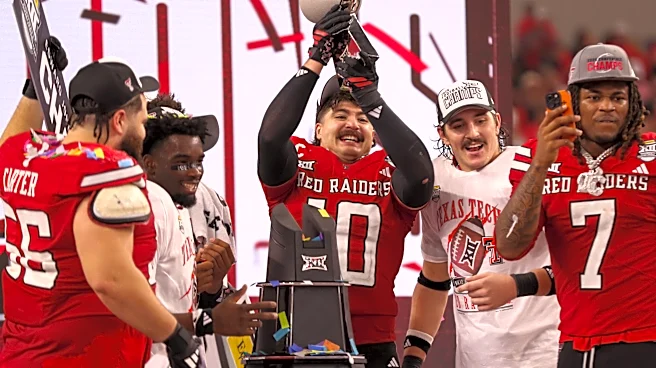
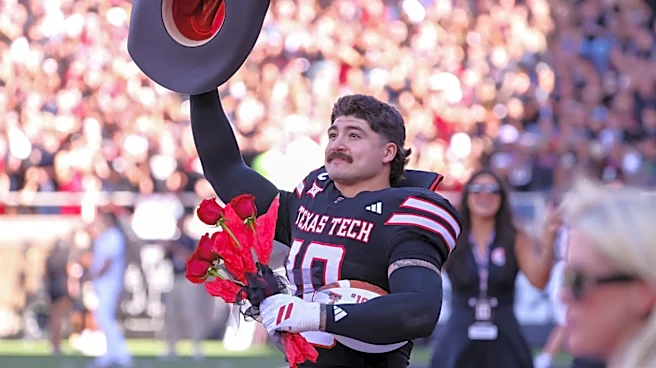
Rodriguez began his college career as a quarterback prospect, though his freshman season at the University of Virginia was largely spent as a multi-purpose “athlete.” Rodriguez traded the title of quarterback of the offense for quarterback of the defense in 2022, transferring to Texas Tech and switching position to linebacker. It took him a few seasons to develop, but in 2024 and 2025, Rodriguez exploded onto the scene for the Red Raiders’ defense. His 2025 trophy cabinet is utterly stocked, winning the Bronko Nagurski Trophy and Chuck Bednarik Award (two awards for best defensive player in college football), the Butkus Award (for top college linebacker), the Rotary Lombardi Award (for college lineman of the a year, an award that applies to linebackers), a unanimous All-American nod, a Big 12 Defensive Player of the Year title, and he even came fifth in Heisman voting—not a bad resume for a quarterback recruit.
Play style
As mentioned, Rodriguez projects best as a WILL linebacker at the NFL level. As a refresher, the weakside or WILL linebacker typically lines up away from the tight end side of the formation. Whereas middle (MIKE) or strongside (SAM) linebackers are often taking on blockers, thus requiring more size and power, the WILL linebacker can afford to be smaller, like Malcolm Rodriguez. The smaller size is offset by a greater range, highlighting the need for athleticism and awareness at the position, whether that is shadowing running backs in coverage or reading and reacting to run blocking.
While Rodriguez comes in as smaller than average for linebackers (6-foot-1 and 231 pounds), it is adequate for the WILL position. He makes up for a lack of length with elite athleticism:
Though not an elite coverage linebacker, he has the traits to become one. As a comparison, you need look no further than Anzalone’s progress from college to the NFL. When Anzalone was drafted by the New Orleans Saints in 2017, he was billed as an athletic linebacker who could grow into a coverage role. After nine seasons in the NFL, Anzalone has quietly become one of the better cover linebackers in the league. It took time for Anzalone, but being good in coverage is just as much an athletic test as it is a mental test.
The mental side of Rodriguez’s game is arguably his best. His background as a quarterback gives him a unique ability to diagnose offensive play calls from the defensive side, and he has shown a knack for sniffing out blocks before they develop. Being athletic only carries you so far as a linebacker. Reading and reacting in time can be the difference between a big offensive play and a big defensive play. In Jack Campbell’s rookie season, he had elite athleticism, but his anticipation was lagging behind. Too often, Campbell was getting washed out in run defense due to a misread lane or redirection. That changed for Campbell with experience, and he has now paired his speed and power with split-second decision-making, turning him into an All-Pro. I think Rodriguez could hit the ground running as a pro, as his awareness is already at an NFL level.
Rodriguez also has mastery of the Peanut Punch, a technique that was made famous by cornerback Charles “Peanut” Tillman and is a staple of the current Lions defense. Throughout his college career, Rodriguez has forced a whopping 13 fumbles thanks largely to the technique of punching out the ball with a closed fist. When examining playmakers on defense, sacks and interceptions are often the main point of discussion, but a player who can consistently force fumbles is an asset that needs appreciation. [Editor’s note: Ahead of 2025, Texas Tech’s coach Joey McGuire visited Detroit’s minicamp and learned how Lions DC Kelvin Sheppard runs the drill at the NFL level. When installed at TTU, Rodriguez thrived.]
I think Rodriguez could develop into a great cover linebacker before long. His play speed is solid, but what really stands out on tape is his quickness and acceleration—his tape backs up his combine testing to a T. These traits should be assets in the NFL with some seasoning. At the very least, Rodriguez’s run defense should be starting-caliber from the get-go—analyst Todd McShay calls him “slippery” as a run defender, and I can think of no better way to describe him. Whereas a linebacker like Campbell can blow up blocks, Rodriguez can outright dodge them at times.
The key words there are “at times” because he is not without flaws. The biggest knock on Rodriguez is his length. While he is not as small as Malcolm Rodriguez, he possesses one of the smaller wingspans among top linebacker prospects (74.63 inches). That lack of reach, coupled with a modest height and weight, could result in him struggling to take on blockers. Against linemen, especially while pulling, he can get washed out if blocked. As a smaller linebacker, he could even struggle against chips from tight ends and fullbacks. Because of Rodriguez’s skill set, opposing offenses would be wise to attack him in the run game, such as with duo or pulling linemen. His short wingspan also limits his ceiling in coverage—he is unlikely to be a ball-hawking linebacker despite having keen awareness and vision.
Rodriguez may struggle with covering fast and shifty running backs in the NFL (think Jahmyr Gibbs), though you could also argue that most NFL linebackers struggle in that regard. With 4.57-second speed, he can play fast, but he is unlikely to win sprints versus some running backs and wide receivers. Another negative for Rodriguez is his tendency to miss tackles, partly due to his lack of length and partly due to his aggressiveness with pursuit angles—in particular, he struggles with overrunning on cutbacks. The latter can be overcome with good coaching, but the former may challenge him throughout his career.
As a final negative, he has limited special teams experience, something often required for smaller linebackers. Due to his athleticism and football IQ, he could develop into a decent special teamer, but it is not a craft he has honed yet.
Intangibles
I have already spoken in length about Rodriguez’s top-tier awareness and how that translates to success on the field, but Rodriguez checks almost every box on the Lions’ typical prospect wishlist.
From birth through to college, Rodriguez was an athletic junky, doing everything from wrestling to track to baseball. His high school prowess as a quarterback earned him a scholarship to the University of Virginia, though he only saw action as a receiver and running back in limited snaps. A coaching carousel prompted a transfer to Texas Tech, where his college career took off. Part of that success came from the natural ability that once made him a dual-threat quarterback, but it is also a testament to his perseverance and growth. He started as a walk-on at Texas Tech, so his college career culminating in a stack of awards and a spot on the Heisman list demonstrates how far he has come.
Grit and motor are at the forefront of Rodriguez’s game. The no-quit attitude and leadership that the Lions covet are integral to him as both a football player and a person. When injuries prompted Virginia to move him away from a pure quarterback, Rodriguez accepted the opportunity. At the 2026 NFL Combine, he stated that at the time he was “more than happy to do whatever [he] could to help the team win.” When he transferred to Texas Tech, nothing was guaranteed for him. Not a spot on the team, not a scholarship, not even a bed to sleep on. He could have quit and moved on from football, but a passion and calling kept him on this trajectory. Sleeping on a half-folded mattress topper does not make you an NFL pro, but it is one piece of the puzzle that helped Rodriguez become a valued leader on that Texas Tech defense.
Draft value
Of the eligible linebacker prospects, Rodriguez could very well be the second one selected after Sonny Styles (Arvell Reese is more of a pass rusher than a traditional linebacker, akin to Micah Parsons). However, there lies the problem with Detroit’s potential aspirations of drafting him. Styles will surely be off the board before Detroit is on the clock, but there is a sharp drop-off in consensus draft position after him. Detroit currently holds the 17th pick in the draft, but that is likely too rich for a player with Rodriguez’s lack of length and a team with arguably greater needs (offensive tackle and defensive end). The Lions have demonstrated that they value linebackers more than the average NFL team, but would they really invest another top-20 selection on an off-ball linebacker?
Barring another Brad Holmes trade, Detroit’s second selection will come at 50th overall, a spot just at the edge of Rodriguez’s projected draft position (most analysts have him in the pick 40-50 range). Between Rodriguez, Georgia’s CJ Allen, Cincinnati’s Jake Golday, Texas’ Anthony Hill Jr., and Pittsburgh’s Kyle Louis, there is no consensus LB2 in the draft, meaning by the time Detroit’s second-round pick rolls around, the draft board could vary drastically. It would not be unreasonable for Rodriguez to slide due to length concerns, but another team could just as easily fall in love with his intangibles and pick him sooner than expected—I would not rule out a late first-round selection for him.
If Rodriguez is on the board at pick 50, I would be pounding the table for him, and I imagine many in the Lions front office would feel the same way. Things will get interesting once we hit pick 30. If Styles is the only off-ball linebacker off the board as the first round winds down, it could bode well for Rodriguez falling to 50. If a player like Allen or Golday goes off the board in a surprise move, I would not rule out—nor be against—Detroit moving up to take Rodriguez somewhere in the mid-to-late-30s. A jump from 50 to, say, 36 might cost Detroit a future third-round pick, but that is nearly an annual tradition for the Lions and Holmes, and if that is what it takes to secure a Day 1 starter at WILL, I would take it.
The exact landing spot for Rodriguez is difficult to project, but I believe that whichever team selects him could get a smart, athletic, and gritty linebacker who could start for years to come.