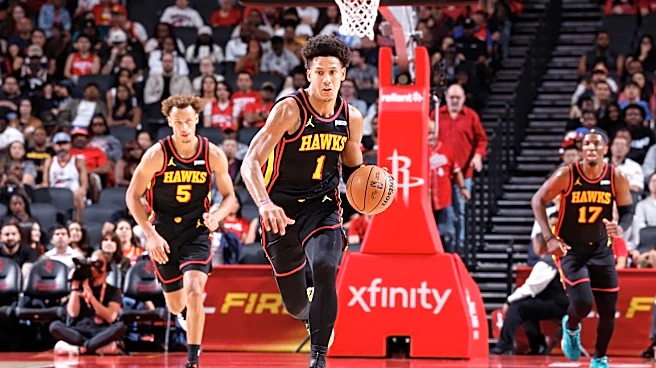



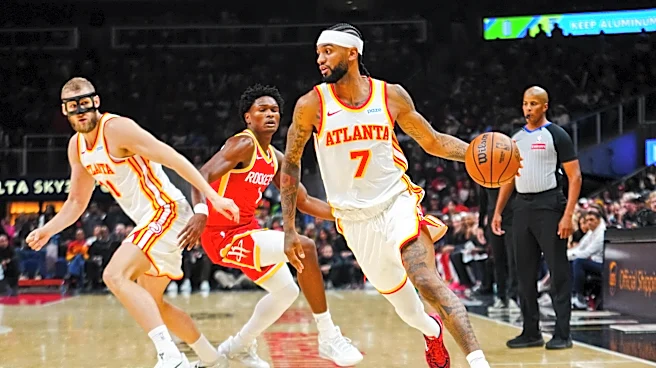
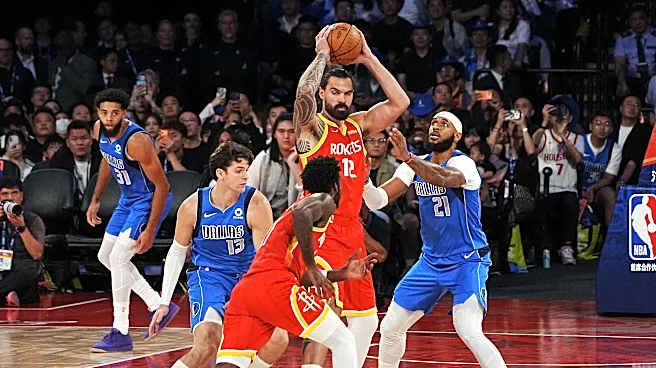

The Hawks are 2-2. It’s a slightly disappointing turn of events after dismantling the Charlotte Hornets to a franchise-best game margin two games in.
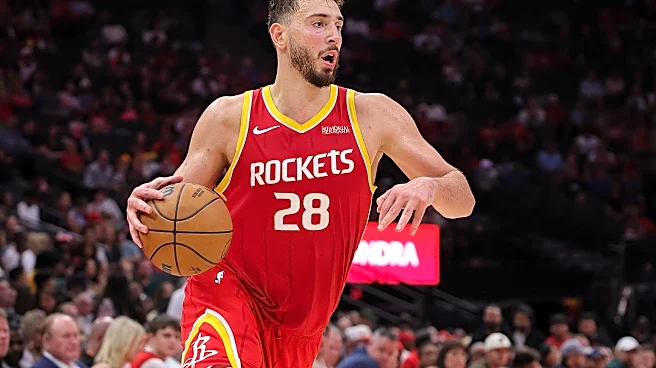
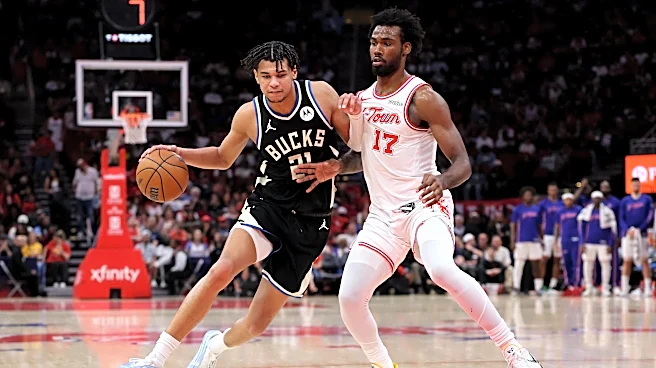
The hope is that the Houston Rockets turn out to be a great team this season to make the recent sweep at their hands look less dispiriting in time.
But there are still 78 games left to go even if not. It’s way too early to press the alarm button.
It’s also difficult draw any real conclusions for this Hawks team, but I’ll try anyway from a statistical point
of view. Let’s touch on a few points of emphasis I noticed four games in.
Pace and three-point rate check-in
What kind of team are the Atlanta Hawks, really?
Well, some things are hard to tease out with such a small sample size of the season. However, pace and three-point rate are two things that stabilize quite early on from year-to-year.
The Hawks pace over the past two seasons has been juiced by their high turnover rates on defense, giving them plenty opportunities to score in transition. As of Tuesday, October 27, their defensive turnover rate (TOV%) is 13.9. Or in other words, out of every 100 defensive possessions, they are forcing around 14 turnovers.
This has led them to being a top 10 team in pace (102.5 possessions per 48 minutes) so far this season — wholly unsurprising considering their quick-paced teams of late.
A lot of this is driven by the Great Barrier Thief, Dyson Daniels, who has 14 steals (!) in four games which leads the NBA. Those opportunities quite often lead to Alexander-Walker flaring to the wing for open threes or Jalen Johnson run out dunks.
As for the three-point rate, the Hawks are putting up 44.6% of their field goal attempts from behind the arc, slightly up from last season’s 42.9% rate. Both marks had them 11th in the NBA respectively.
The offense is built to move the ball and seek high value shots like catch-and-shoot threes — but oddly those attempts aren’t coming from the corner to this point. The Hawks have the 27th corner three-point rate with 18.3% of threes from that location — the most efficient three-point area due to its slightly shorter distance.
That might help explain their poor shooting so far this season, hitting just 33.1% long range of total attempts, down from their top five finish in 2025-26 (37.1%).
But in reality, this is likely noise and a touch of bad luck. Three-point shooting is one of the last major metrics to statistically stabilize, so there’s no reason to worry yet (including with respect to the center pairing discussed below).
Dyson Daniels, still indispensable — on both ends of the floor
We know Quin Snyder likes to spread the ball handling duties on offense in the post-Trae Young pivot they made over roughly the past calendar year.
A big key to this is getting the other guards to screen and cut off the ball. It helps to have good perimeter size and physicality at all the backcourt spots when possible, and one guy above all accentuates this aim.
Dyson Daniels is an all-world defender, and his tape over the past four games looks just as good as it did during his runner-up finish in the 2024-25 Defensive Player of the Year campaign.
But let’s talk about the other side of the floor for a bit.
Daniels is often a lightning rod for discussion, largely over his inability to stretch the floor despite (ostensibly) being a guard. But he’s among the best guards in the entire NBA at screening and cutting, often getting the ball around the free throw line giving him the option to shoot his patented floater or kick to corner shooters.
I call him a false center on offense because his role resembles that of your standard pick-and-roll big man, just in a 6’7” package. The threat of a pass out of the short roll is usually all he needs to get his flip floater shot over defenders.
Also, he’s dished out 14 assists this season against just three turnovers — efficient but notably playing less on the ball with Aaron Wiggins and Kingston Flemings joining the fold.
In this manner, he’s incredibly valuable to threatening the rim and giving a bit more space to shooters like a traditional above-the-rim center would be. Just like last season, the offense is better with him on the floor than off (albeit a drop from around seven to two points per 100 possessions from last season to this one).
So while it sure would be nice for him to his more than one three in four games, the offense is far from reliant on it.
The shooting centers need to keep shooting
Related to Dyson Daniels’ shooting woes, with the Hawks running the inverted offense where Daniels is screening and cutting, it’s important to get floor spacing from the other positions.
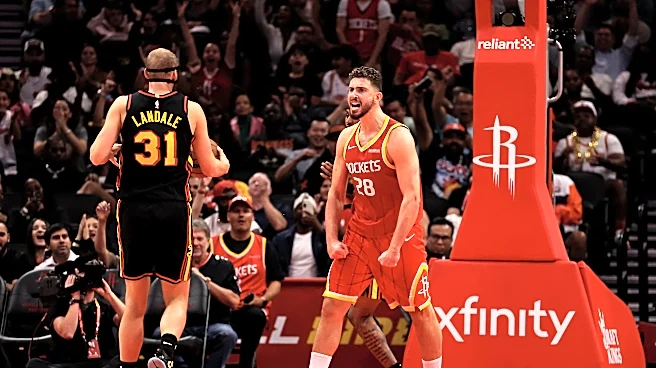
The two centers (Onyeka Okongwu and Jock Landale) spacing the floor is rather key to allow these actions to flourish .
However, through four games, Okongwu and Landale are a combined 4-for-28 (14%) from three — including a 1-for-15 (8%) mark across the two-game Rockets sweep.
I don’t have a lot to add for this one other than the shooters need to keep shooting. It’s as simple as that. Turning down open threes will just junk of the Hawks offense even more.
Okongwu and Landale are fairly limited in other areas, including defensive rebounding (see below), so their value as a stretch center is paramount to let Daniels play his funky offensive game.
Shots will fall. Okongwu shot 38% from three last year, including hitting the most threes by a Hawks center in franchise history. Landale shot 38% as well. There’s no reason to change boats midstream.
The Hawks might have a defensive rebounding problem
There was a possession in the Saturday home game against the Rockets when the Hawks had three chances to secure a defensive rebound. They failed all three times, giving Houston points on their fourth shot of the possession.

I mean, they let 6’2” Reed Sheppard outwork them. Not a good scene.
Through four games, the Hawks are securing 68.3% of available defensive rebounds — a mark good for just 27th in the NBA.
Some of it was going against an elite rebounding team twice in the Rockets. But they’ve also had to downsize a bit in the wake of the Mouhamed Gueye injury. 6’4” Luguentz Dort has been a primary backup at power forward when Jalen Johnson sits.
Dort is a very solid rebounder for his size, but that’s a huge caveat. Okongwu gets heat for his size as well as a starting center, but again he’s a solid rebounder regardless of size — although not elite.
Okongwu had a healthy 20.3% defensive rebound rate last season (8.7 defensive rebounds per 100 possessions). The team has been slightly better at pulling down defensive rebounds when Okongwu was on the floor the last two seasons. In that aspect, he pairs well with elite defensive rebounder Jalen Johnson.
This is something of a worrying trend for the early reversal of fortunes this season, unlike poor three-point shooting that will certainly come around in time.
The team needs a bit of time to incorporate Dort and reincorporate Landale into their collective glass crashing pursuit. The effort can be a bit better after some film review. But it’s possible that there’s a personnel issue at play.
If this continues, there may be a growing fan push for a center upgrade towards the trade deadline.