
If you’re like me, and well, you’re on this page so you probably are, the NCAA tournament is a national holiday. It’s everything that is beautiful and ugly about college sports. Last weekends first rounds didn’t have the thrill of mid-majors dancing to the Sweet 16, but plenty of iconic finishes made for a fun weekend.
The tournament serves as a final showcase or the basis of final arguments for draft-heads. But for NBA fans who haven’t spent time following these players all year, the tournament is a launch
pad to this summer’s draft.
One can hope that the Dallas Mavericks’ makeshift front office of Michael Finley and Matt Riccardi fall in that first group. And it is certainly possible (and should be a requirement) that the new general manager of the team will be in office by draft night. Whoever that person might be, hopefully they are well versed in this class. The first rounds of the tournaments offered many lessons learned on this group. Here is what the Mavericks might have taken away.
Top of the class
It was a strange showing for the consensus trio of Darryn Peterson (Kansas), Cam Boozer (Duke), and AJ Dybantsa (BYU) last weekend. All of them showed the flashes fans have been accustomed to seeing, while all leaving a few question marks that could impact the order they’re drafted. No longer is Peterson seen as the presumptive first pick. In any game any of these three have proved why they should be considered.
Dybantsa was a quick exit from the tournament. Offensively he looked like an unstoppable force, posting 35 points and 10 rebounds. His athleticism and physical presence jumps off the screen. But the questions raised about his game — how long to develop a three-point shot? can he playmake enough to be a primary distributor? can he take care of the ball? — were not quieted. Dybantsa logged one assist, five turnovers, and was 1-of-7 from three. The talent around him impacts all those facets. But worth a watch as we move into workout evaluations.
Peterson’s Jayhawks managed a second round appearance. The questions about his game have focused mostly on his health and availability or game mentality. His offensive game when he’s clicking is thrilling, and he remains the biggest upside for downhill scoring. To Peterson’s credit, he was available to close the season, and played 36 and 37 minutes in his two tournament games. The current discussion point surrounding his game moving forward is can he be the playmaker beyond scoring. Peterson, like Dybantsa, logged one assist in two games. I think we can chalk it up to a weak offensive team around him, but worth noting nonetheless.
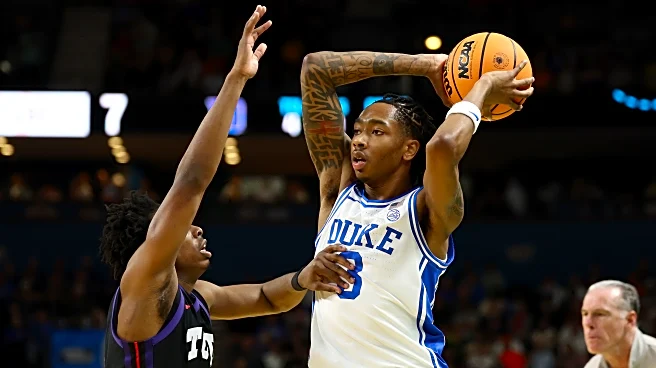
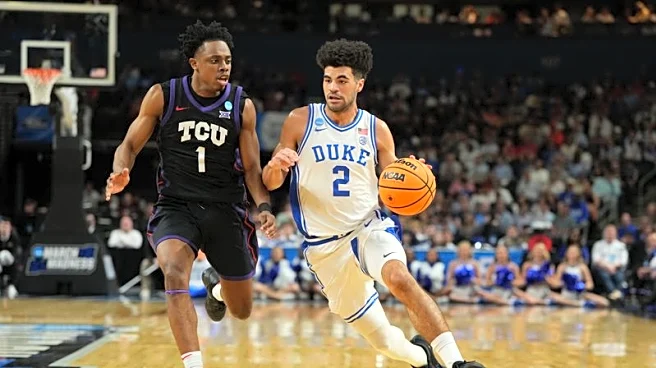
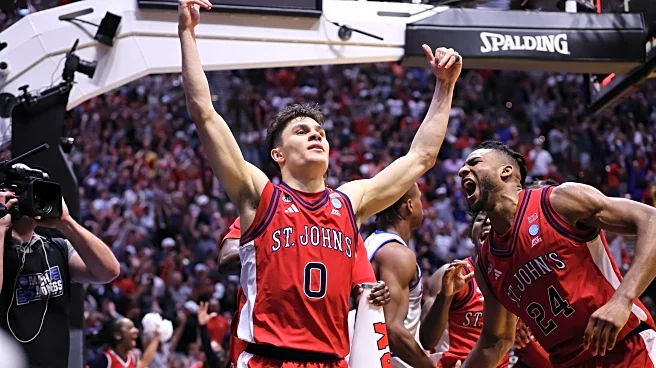
Boozer and the Blue Devils still remaining, now facing St. John’s in the Sweet 16 (the team that eliminated KU on a last second layup). Duke barely survived Siena, before beating TCU in the round of 32. With a scheme aimed at disrupting Boozer, Siena exposed (or confirmed for doubters) questions about Boozer’s athleticism, speed, and verticality by clogging the game around him. There is no doubt that Boozer’s high IQ and versatility were still on full display, and he likely has the highest floor of the top trio. As he still is in the tournament, he’ll get the last opportunity at making a statement for his case as the number one pick.
The guards
The draft class is mighty deep at the guard spot, and we saw a lot of that displayed in the tournament’s first weekend. Not everyone took over their respective games, and some showed more than others. In the end the tournament may prove that all of the guard play is sound and it may just come down to personal preference for who you back in the draft.
Kingston Flemings (Houston) did not have loud games last weekend. Those weighing on advanced analytics will point to free throw and three point rate as an alarm bell for his game, but you know Flemings is a gamer as soon as you watch him. He plays with a veteran’s mentality, shows versatility on both ends, and has a huge stage to go up against another guard in this class on Thursday when Houston faces Illinois.
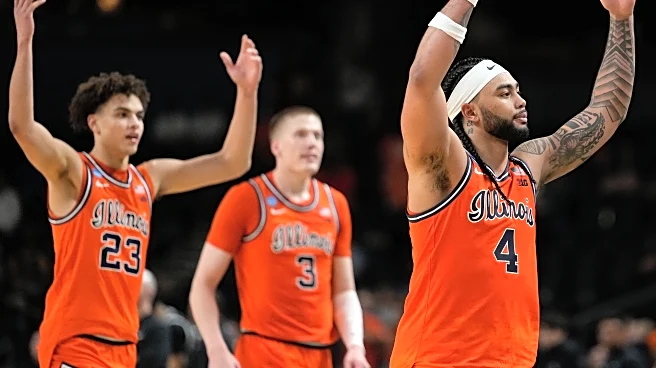
Keaton Wagler (Illinois) didn’t take over his games either, and didn’t need to. But his ability to play on and off ball was still on display, as was his outside shot — the 6’6 guard was 6-of-12 from deep. He was also effective in distribution, logging nine assists in the two games while giving up three turnovers. In the past Wagler has had challenges with aggressive and physical defenses. Enter: Houston. This will be perhaps his toughest test against a stout defense on a massive stage. It will be appointment television for the draft world.
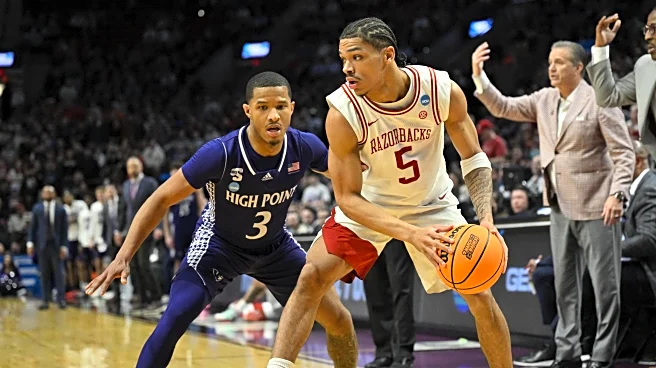
Darius Acuff (Arkansas) might be the most talked about player in the draft class over the last month. He’s been the most exciting offensive player in college ball the last several weeks, can completely take over games on offense, and is also the most divisive prospect. The undersized guard (officially listed at 6’3 but the combine will confirm or expose) is not a good defender. He lacks effort and technique. That flared up in their second round game against High Point. He averaged 30 points, 6.5 assists (just 2.5 turnovers) in the two games, but he also allowed High Point’s 5’10 point guard Rob Martin to go for 30 points in a close game. Acuff, who just signed a signature shoe deal with Reebok, will likely continue to be the most talked about prospect with a date with the stout Arizona Wildcats in the Sweet 16.
On the flip-side Brayden Burries (Arizona) is the quietest riser of the draft. He’s a combo guard with a solid frame and is the leading scorer on a diverse and talented title contender. There are questions about how some of his game translates to the next level, but his averages of 17 points and 7 rebounds while shooting 7-of-8 from three over two tournament games speaks to his ability to impact in multiple ways. This weekend’s matchup with Arkansas may be the most exciting head-to-head of tournament to date, and if Arizona continues to march forward expect Burries to solidify his name in top ten draft discussions.
Finally Labaron Philon (Alabama), who was a loud scorer in game one (29 points) and quiet in round two (12 points). The sophomore sits on the fringes of the lottery discussions given the depth at guard in this draft. As the Crimson Tide face a tough test against Michigan in the next round Philon will need to be vital to their success. How he manages the game for his teammates, and how he adjusts to Michigan’s size in the interior will be what to watch for.