
Who is he and where did he come from?
He’s Matt Clyde Joe Teran Fraizer, and he comes to us from Clovis, California via the University of Arizona and the Pittsburgh Pirates minor league system. The Red Sox signed him as a minor league free
agent last week after he was released by the Pirates. He’s been given a non-roster invitation to big league spring training.
Is he any good?
There are some surface-level aspects of Fraizer’s biography that could reasonably lead one to think he’s a decent prospect: He was a third-round pick out of a traditional baseball powerhouse; he was the Pirates 2021 Minor League Player of the Year; he’s a strong athlete with speed, a big frame, and a good enough glove to cover centerfield from time to time; and his AAA stat line is a tidy .287/.346/.433 with 6 homers and 27 doubles in 107 games. But a deeper dive into his career shows you why he has yet to play in the Majors.
First, while he was a third-round pick, he actually wasn’t even ranked in the top-200 of MLB Pipeline’s 2019 draft prospects; the Pirates selected him that early in order to save bonus pool money. Second, he’s one of those prospects who has always been just a little too old for his developmental level (he’s now 27), inflating his stats. And, third, his overall slash line hides some real deficiencies in his offensive profile that would likely keep him from ever having a big league career. He struggles to control the strike zone, ranking in the 28th percentile for chase rate in AAA last season. He gets absolutely eaten up by breaking pitches and does almost all of his offensive damage against fastballs which, in the minors, come with significantly less velocity. And despite the fact that he’s 6’2 and 220 lbs., he just doesn’t put the ball over the fence much and is instead more of a gap-to-gap hitter.
But Fraizer runs very well (89 career minor league stolen bases while being caught just 22 times), he doesn’t strike out too much, and he hits the ball very hard. The fact that he doesn’t hit many homers despite hitting the ball so hard is likely due to another one of his deficiencies, that being that he rarely pulls the ball in the air, indicating that he could be a good candidate for some mechanical tweaks.
Show me a cool highlight.
Hey, he had a four-hit game this past August! Sure, one of them was a bunt while two others were softly hit balls that found gaps, but four hits is four hits.
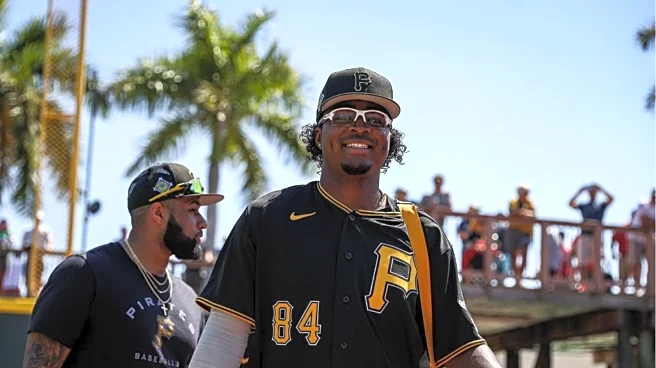
What’s he doing in his picture up there?
Showing off one of his most overlooked tools: his elite and big league-ready dimples.
What’s his role on the 2026 Red Sox?
Given the outfield depth chart as it stands, if Fraizer has a role on the 2026 Red Sox at all, then that probably means that something has gone terribly wrong. That’s not to say that he won’t provide any value to the organization, though. Rounding out the WooSox lineup with strong AAA hitters helps the team’s other position player prospects by lengthening innings and creating scoring opportunities. On the other side of he ball, fast and defensively mature players obviously help the pitching prospects by limiting free bases. In general, it’s a good thing to have good minor league players on your minor league rosters, even if they don’t necessarily have a future with the big league club.
And who knows: maybe a swing tweak or two can help him unlock his power or layoff breaking pitches, leading to a surprising late-career renaissance.