





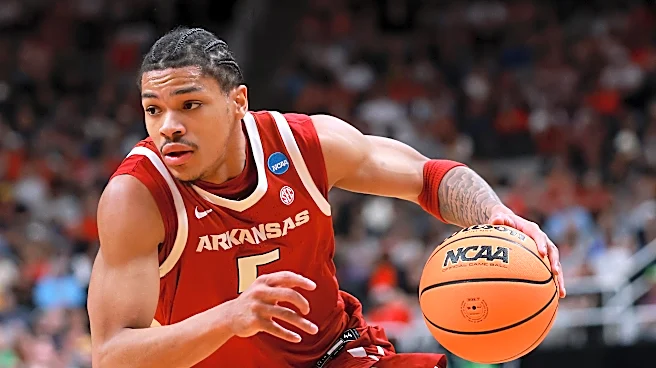
Following a disappointing first-round playoff exit, the Boston Celtics now shift their attention toward a pivotal offseason and the upcoming NBA Draft, where they currently hold the 27th and 40th overall selections. Selecting near the back end of the first round, and in the early portion of the second, is familiar territory for the Celtics front office.
Since 2023, the Boston Celtics have selected Baylor Scheierman at No. 30 and Hugo Gonzalez at No. 28 in the first round, while also using second-round
capital on Jordan Walsh at No. 35, Anton Watson at No. 54, and last year’s 32nd overall pick, which they ultimately traded in a deal that brought in Amari Williams and Max Shulga.
According to Hoopshype’s annual draft workout tracker, Boston has already begun the initial phase of its pre-draft evaluations for this draft cycle. Here are the prospects the Celtics have brought in so far:

Whether Brad Stevens, Celtics’ President of Basketball Operations, decides to package one or both selections in a trade for established talent or maneuver around the draft board, the group of prospects Boston has begun evaluating makes for an intriguing starting point in the team’s pre-draft process. So, let’s dive in.
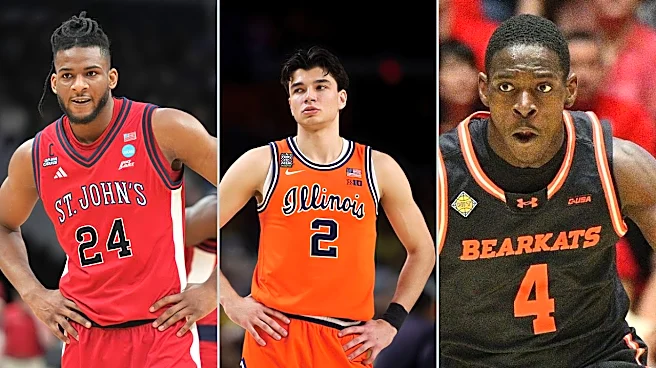
Zuby Ejiofor | 6’7.5” | F/C | St.John’s | 22
16.3 pts | 7.3 rebs | 3.5 asts | 1.2 stls | 2.1 blks | 53.6/30.5/71.8 | 60.9 TS%

Zuby Ejiofor is one of the more fascinating late first-round to early second-round prospects in this year’s draft class because of how translatable his role appears to be at the NBA level. The former Kansas Jayhawks men’s basketball transfer blossomed into the centerpiece of St. John’s Red Storm men’s basketball under Rick Pitino, developing from a high-energy rotational big into one of the most impactful two-way forwards in college basketball.
Ejiofor did measure in shorter than his previously listed 6’9” height at this year’s NBA Combine, but his leadership, motor, and non-negotiable attitude to the defensive side of the ball will still seemingly get him drafted pretty comfortably.
Defensively, is where his money is made. Ejiofor will be a versatile switch-capable big who can defend multiple frontcourt positions, protect the rim in weak-side rotations, and survive on the perimeter better than most players his size and weight. His combination of elite strength and good length (7’2” wingspan) allows him to hold ground against bigger centers despite lacking towering height. Without elite athletic ability, he relies on verticality and positioning. Scouts consistently point to his defensive instincts, motor, and physicality as NBA-level traits.
Ejiofor can create events on the defensive side as shown by his 7.2 block percentage (80th percentile) and 2.2 steal percentage which ranked in the 83rd percentile positionally, but his intangibles along with all the traits I listed above make him so much more impactful looking outside the box score. This made him an advanced analytics darling last year as he ranked third in the nation in BPM (Box Plus Minus) and 11th in DBPM (Defensive Box Plus Minus). These stats should not be taken as end all be all projections as they are not perfect.
Offensively, his game is still evolving, but there are intriguing signs of modern utility. He plays with a relentless motor and thrives doing the kind of connective, winning plays NBA teams value from role-playing frontcourt pieces like being a good screener, a strong finisher around the rim, offensive rebounding and an increasingly effective passer in dribble-handoff actions and short-roll situations. One of the more notable developments in his game this past season was his improvement as a facilitator, showcasing better court vision and decision-making from the high post. His 3.7 assists per game and 23 assist percentage both ranked in the 97th percentile.
His bruiser/bully mentality on offense did lead to him getting to the line a ton in college. His 69.4% free throw rate (seven attempts per game) ranked in the 95th percentile. He converted 71% of his attempts at the stripe which is solid for a guy his size but if he can get better from there, that would be great. This ties into the swing skill for him which is his perimeter shooting.
I believe Zuby Ejiofor has the potential to develop into a Swiss Army knife, high-IQ frontcourt player who does not necessarily need to be a great shooter to impact winning, though added perimeter range would certainly elevate his value. He shot just 30% from three-point range last season on 59 attempts and has yet to demonstrate consistent enough touch from beyond the arc to command defensive attention at the collegiate level. That said, he has shown enough makes to suggest there is at least some developmental upside, and his shooting mechanics are not broken, leaving room for gradual improvement over time.
If everything goes as planned for Zuby Ejiofor, I see a considerable amount of Isaiah Stewart likeness in his game (probably minus the fights).
Andrej Stojakovic | 6’5.5” | Wing | Illinois | 21
13.5 pts | 4.5 rebs | 1.0 asts | 50/24/80 | 57.8 TS%

Just because players share a last name does not necessarily mean they are related, but when you see “Stojakovic” on the back of a basketball jersey, it naturally invites speculation about a possible family connection. In this case, however, the assumption is correct: Andrej Stojakovic is the son of former NBA All-Star and champion Peja Stojakovic.
Andrej transferred to Illinois last season after spending his first two years with Stanford and California. On offense, he is probably the opposite of what you would expect from someone with his last name. The 6’5” wing is an absolute slashing two-point scoring oriented player, and he does something Brad Stevens noted as a point of improvement for the Celtics.
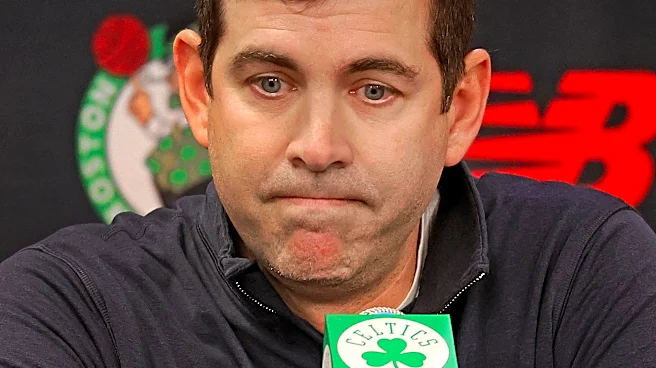
At his end-of-season press conference, Stevens emphasized the need for the Celtics to generate more consistent rim pressure moving forward. “One of the things that we’ve gotta figure out is how to have more of an impact at the rim,” Stevens said, later expanding on the point by asking, “I think the biggest thing is can we generate looks at the rim?”
One of the more notable remarks from the session came when he underscored the organization’s offensive priorities, stating, “Every one of us would prefer a dunk over that, over a three. Every single one of us. And we struggled to generate them.”
Stojakovic ranked in the 98th percentile in unassisted rim makes per 100 possessions last season at 5.4 shooting 66% from there. Furthermore, he averaged 11 rim attempts per 100 possessions, and over half of his overall attempts on the season come from there. Even though he averaged seven less minutes and four less shots than his previous season at California, when he got his opportunities to slash, Illinois did a good job of having the floor spaced whether it was from the wing or a planned iso at the elbow.
38% of his possessions on offense saw him driving to the rim, and he achieved 1.00 PPP (points per possession) on that play type. He’s not the most athletic guy, but he shows real craft and determination when driving that works more often than not. He loves to use the spin move when defenders manage to cut him off, or he feels majority of their momentum going one way. This driving ability also translates to transition offense as he posted 1.38 PPP on the break. He also seems somewhat comfortable in the mid-range area as he shot 45% from there.
As a shooter though, Andrej has struggled all three years of his collegiate career. He’s at 30.5% on average in his campaigns and just had his worst one from three shooting 24.4% on 2.5 attempts. His release isn’t the smoothest and is slower than you would like. Unless he can rework his mechanics (totally possible), this almost entirely limits his ability as someone who can create threes for himself and make them off the bounce. Also, I don’t believe his handle is the best, but it is effective for what he does.
On defense I do see him being a solid team and individual defender. He routinely stays in front of the ball and has good instincts when peeling off to either another offensive player or to passing lanes. He didn’t post great defensive playmaking statistics last season (0.9 stl % + 1.9 blk %) but with his pursuit and contests after screens I do see some shot blocking ability. In his 2024-2025 season with Cal, he posted a 3.6 blk percentage (1.2 a game) which ranked in the 96th percentile for his position.
It remains to be seen whether Andrej Stojakovic will ultimately hear his name called on draft night, but he has shown enough to warrant a closer look during the evaluation process from Boston.
Kashie Natt | 6’3” | Guard-Wing | Sam Houston St. | 23
10.8 pts | 8.2 rebs | 2.4 asts | 2 stls | 43/39/78 | 56 TS%

Kashie Natt is one of the most unique players in this NBA Draft cycle. He started his collegiate career at the JUCO level playing at Southern Shreveport before transferring and playing his next three seasons at LSU Alexandria. He turned some heads with his play there winning NABC Player of the Year and NAIA National Player of the Year ultimately leading to his step up in division play.
The 6’3” Natt is a literal annoying gnat (in the most complimentary way possible) to every offense he plays. He is a defensive menace and plays with an edge that only a few can match. Natt’s 4.2 stl % ranked in the top 20 in the nation, tallying him as one of the most disruptive players in college basketball. Well, I guess him winning Conference USA Defensive Player of the Year would do the trick also.
His athleticism helps him be that disruptive defender as he is one of the best vertical athletes in the Draft. He’s able to rise up like a center for some incredible blocks either on ball or help side.
On the ball, his quick feet and anticipation make him one of the best in the class. His hands and instincts are absurd, and he flies around making plays from distances most cannot. His traits have me thinking he could be really valuable as a gap defender at the next level with those hands, instincts, and range.
Another reason why he’s so unique is that he averaged 8.2(!) rebounds a game at 6’3” with 2.3 of those coming on the offensive glass which we know the Celtics love. This past season he posted a 23.6 defensive rebound percentage which I’m not sure a player his height or shorter has done in a long time. He led all of Conference USA in defensive rebounds and double doubles. His play even translated versus higher levels of competition as he put up 16 points, 11 rebounds, and two steals on Texas Tech who was #10 at the time.
Natt isn’t a ready-made offensive player which I’ll discuss later, but he did shoot 39% from three 2.5 attempts last season. His last four years have seen him hit 34.9% from behind the arc so there is some level of consistency with him as a shooter. This of course will be pivotal to his value at the next level as I believe he can contribute on defense right away.
Although I love the traits he has, Natt is not a perfect player. Defensively, the only concern I see is foul trouble. His fiery temperament and blazing play style can occasionally lead to early fouls. That said, the issue may not be as pronounced at the NBA level, where he would play fewer minutes and have an additional foul to work with. On offense he is not a polished player. He can get crazy with the handle sometimes which can lead to turnovers. He only averaged 1.2 turnovers last season, so I don’t see this being a big issue.
As a playmaker, I don’t see him doing anything extraordinary. When creating for himself he does have flashes of some on the ball pop especially as a straight-line driver using his athleticism to get to the lane. When he gets there though, he has to work on finishing through contact and making rim reads for teammates. Other than that, I can’t see him as of right now being someone you can say consistently, “here take the ball and create offense” and honestly that’s ok.
While Kashie Natt is going through the draft process right now, he did sign to transfer to Oklahoma State next season, meaning it’s not set in stone if he comes out this year. Whether it’s this year or next, I love the outlier traits Natt presents and will keep an eye on him.