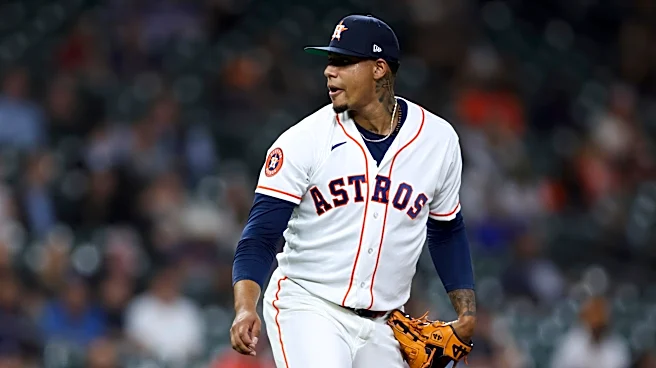



While right-hander David Bednar has the best recent resume and far more closing experience, there’s still a solid case that says RHP Bryan Abreu is the best right-handed reliever left in the free agent market. As the same time, Abreu had his worst season in 2026 at the worst time possible. The result is a volatile profile that may obscure the best value play in the whole market, or indicate an impending decline for the 29-year-old right-hander. The Tigers have not been tied to Abreu, but if they’re
indeed interested in Raisel Iglesias, they’re probably checking in on prices for Abreu’s services as well and the risk-reward calculation here is certainly intriguing.
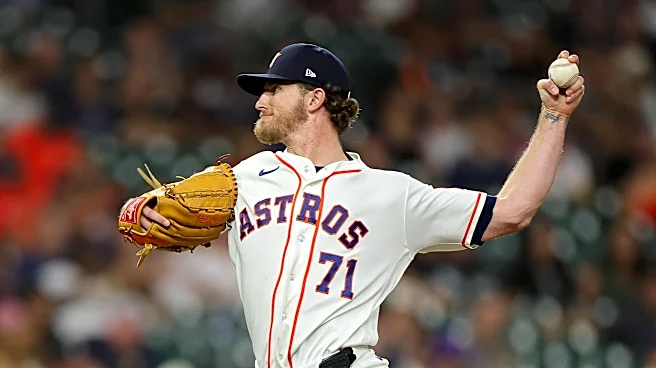
Abreu has been a mainstay of the Houston Astros bullpen since 2021, and as recently as 2025 was among the elite handful of top relievers around the game. While rarely closing games, the big right-hander has generally been deployed in the late innings against the heart of opponents’ lineups to get the toughest outs in high leverage. He has plenty of big game experience and has routinely been in the thick of them with the Astros. Unlike Bednar, Abreu did not receive a qualifying offer, and so he doesn’t have that drag on his value this offseason.
A team might get one of the steals of the offseason by going after Abreu aggressively, or the could end up overpaying for a still good reliever entering a decline phase. In my opinion the first possibility is a lot more likely, but relievers are relievers. Even putting aside the injury risk for any pitcher, relievers are a pretty volatile group.
From 2022-2025, Abreu averaged a little over 97 mph with average extension and solid life on his straight, almost cutterish, fourseam fastball, and his 87 mph slider was one of the best breaking pitches in the game. He was durable, averaging a little over 70 innings per season. In three of those four seasons, his strikeout rate was roughly 35 percent, which is just about as good as it gets. His walk rate has typically been just a little on the wrong side of league averages for relievers, and he doesn’t give up many home runs despite pitching his home games in Houston. Overall he’s been one of the more dominant relievers in the game, particularly against right-handed hitters, though never quite the best.
That dominance was completely missing in action in March and April of 2026 as Abreu got off to a downright terrible start. His fastball was down nearly two miler per hour, and his strikeout rate dropped significantly while the walks and home runs piled up in the worst year of his career. He still struck out a ton of hitters, but the bad outings were pretty bad. His ERA on May 1 was 12.54. He stabilized things in May, but then had a pretty bad June that culminated with a stint on the restricted list from June 22-26 for what manager Joe Espada described as personal reasons. It wasn’t a bereavement or family emergency eligible issue, and so Abreu went unpaid for those days, and no reason every emerged for his absence.
From July 1 onward, Abreu was right back to being his old self, compiling a 2.02 ERA with a 3.13 FIP back by a 32.6 percent strikeout rate and an 11.3 percent walk rate. Not quite prime Abreu, but right back to looking like a top 10-15 reliever in the game. His fourseam velocity, which had dipped well below 95 mph at times early in the season, was back up into the 96-97 mph range. Again, not quite prime Abreu, but close enough to erase most of the ugly memories of the first three months of the season. He also added a 93 mph cutter that was new in June and July, continuing to mix that pitch into his repertoire more and more until he was using it nearly 20 percent of the time down the stretch.
Overall the whiff rates on his three pitch mix still look really strong despite the rough first half. The fourseamer had a good whiff rate of 27.8 percent in 2026, while the slider remained elite at 39 percent (down from 46.1 percent in 2025), and the cutt racked up a whiff rate of 36.1 percent.
So this leaves evaluators in something of a dilemma. The lasting impression of his 2026 season is of a reliever who got off to a rough start, perhaps had some kind of personal problem going on, and then got it together from July 1 to the end of the year, looking again like one of the better relievers in the game and even building an effective new weapon into his toolkit in the form of that cutter.
Ben Clemens at FanGraphs had Abreu ranked as the 8th best reliever in the market entering the offseason. He suggests a two-year deal worth $18 million in free agency, and that seems very reasonable. So we’ll assume it will cost something more like two years, $25 million if the Tigers actually wanted to go after him. Or perhaps a team who offers a big one-year deal with a player option for 2028 might reel him in by guaranteeing him a nice contract that stretches beyond the developing owners vs. labor fight, but with the option to turn right around and try free agency again next year.
There’s certainly more risk than anyone expected coming into 2026, but Abreu’s strong second half has reduced it to a lingering but not quite present concern. He won’t get the monster deal it looked like he might command after his 2025 season, but he doesn’t cost a draft pick the way Bednar does after getting a qualifying offer from the Yankees, and for teams who cherish those picks, he’s the number one target left among right-handers. He’ll do well, and he’s young enough to turn around and land a bigger deal in a year or two if he can prove the first half of 2026 was a one off.