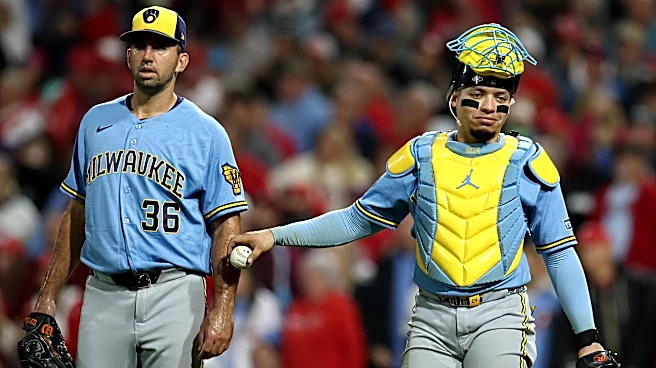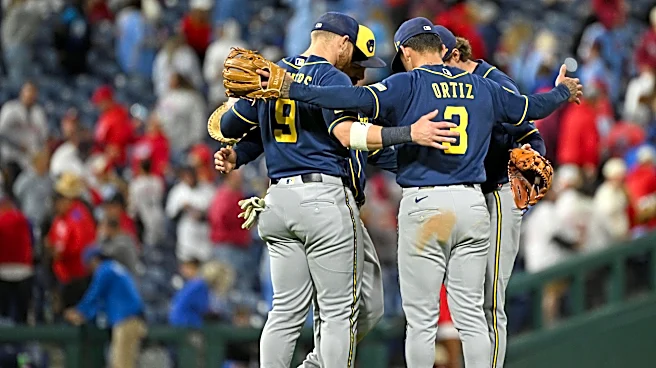

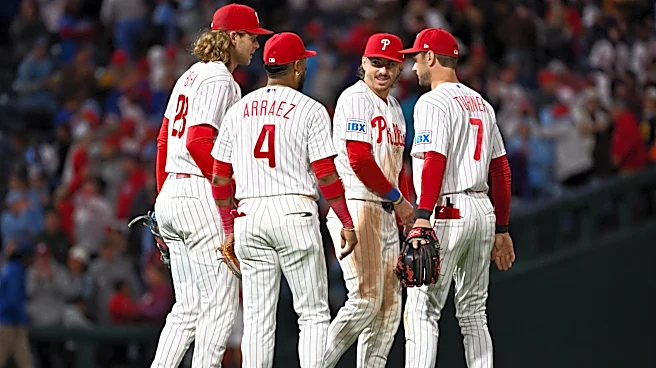

The game was 4-1 in favor of the Brewers, but the Phillies had something
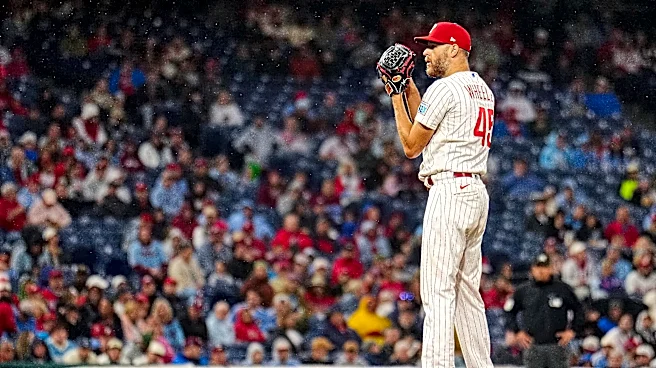
On Wednesday night, needing a victory to help lower their magic number by a game, with one out in the seventh inning, Kyle Schwarber was plunked by pitcher DL Hall, followed by an infield single by Trea Turner. The team had done nothing with runners in scoring position all night long, but any chance that they can get with that happening, they would take it. The lineup card stated that Bryce Harper would stride to the plate
as it was his turn in the order. What would he do?
August was Harper’s best month of the year. His .333/.496/.573 wasn’t his top slugging percentage of this season, but as far as actual production on the field, his 194 wRC+ during the month meant he had few peers during that month in terms of offensive production. While the batting average is nice and the slug is perfectly cromulent, if you’re like me, it’s the fact that he ended up on base half of the time he came to the plate that astounded. That’s treading into Bondsian territory.
It also coincided with a new approach that he and the team took: take pitches. A novel concept, it seemed to have been something that eluded the lineup as an offensive approach for many days. Swinging early and often, attacking pitches if they were in the zone, these were the hallmarks of the Phillies lineup these past few playoff years. In 2026, once August hit, it’s as though Harper decided that swinging less, particularly chasing less, was what he wanted to do in order to be more productive at the plate.


And whaddaya know, something crazy happened. Once Harper decided to swing/chase less, he actually started to become more productive at the plate.

Now, I’m not saying that it is a direct corollary that swinging less equals more production at the plate. It clearly has to do with more with the fact that he wasn’t chasing pitching out of the zone and getting himself out. But it simply cannot be a coincidence. Harper was good this year for most of the year, the usual cold and hot streaks aside, but during August, he was in a god-like mode when hitting. The team started to win more often too and it seemed like the entire offense was hitting well as a result of Harper swinging a hot bat.
However, it is no coincidence that I left the month of September in those charts.
Look at how the things have flip flopped. He’s swinging more and has exited that god mode when at the plate. While he’s been fine this month (.278/.346/.375 prior to Wednesday), it’s mostly just that – fine. The team has needed him to do more, only for him to not be there. I can’t help but believe that his sudden change in approach at the plate – swinging more often – has led to a drop in his production.
Anecdotally, it feels like each time Harper is stepping to the plate, particularly with runners on, he is swinging at the first pitch, no matter where it is. If it also feels to you like he is swinging at missing early in the count more and not just at the first pitch specifically, it could be the fact that pitchers have decided to change their pitch mix to him and he is deciding to jump on the first good fastball he sees.
However, the plan has changed against Harper this year.

There has been a noticeable jump in how pitchers are doing the whole fastball/changeup thing while decreasing the amount of breaking pitches he sees. How has Harper fared against this combination?
You guessed it, by swinging and missing at those offspeed pitches more often.

Granted, it’s the natural game of cat and mouse that pitchers and hitters have played since the dawn of the baseball age and Harper is caught in the middle of that. He’s still getting hits, but a 300 points loss in OPS is an issue.
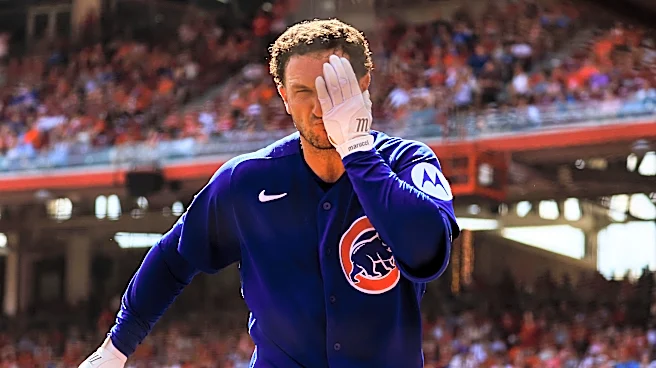
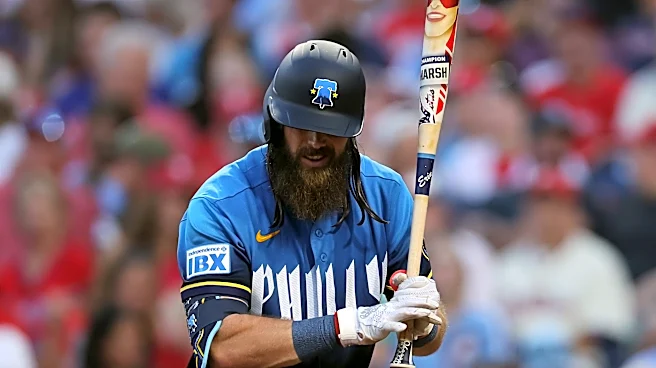
The first pitch that Harper saw from Hall in that seventh inning, he drilled straight into the plate back to the pitcher for the second out of the game.
If the Phillies are going to do anything in the playoffs, Bryce Harper needs to be productive at the plate. While he did have good months during the season, August showed that a certain approach at the plate was one that worked for him and led to Phillies wins.
As Jack put it in the season three finale of “Lost”, we have to go back.