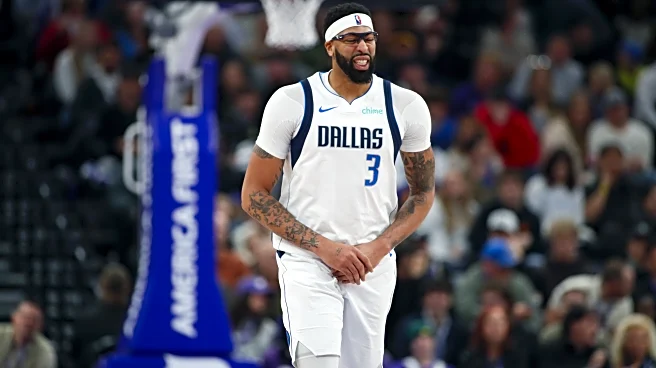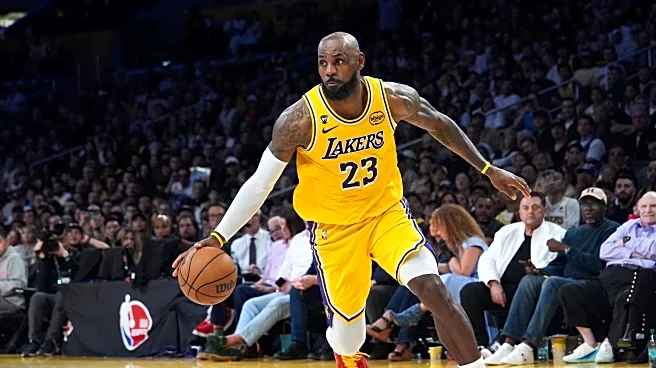

After another evening stroll through social media, I stumbled upon a video with an intriguing concept: what if the most influential NBA players were transposed into NFL roles? The phrasing may sound obscure
at first, but the idea quickly gains clarity. The video focuses on a very specific moment of the game, transition after a defensive rebound, to distinguish two archetypes of players: the quarterbacks (Luka Dončić, Nikola Jokić…) and the running backs (LeBron James, Franz Wagner, Stephon Castle…).
The former organizes, reads, and distributes. The latter imposes rhythm through speed and power. Two different ways of creating an advantage, in that brief window where the defense is still unsettled. Curious by nature, I tried to draw a parallel with our Suns: how effective are they in transition after defensive rebounds? Who really takes on these roles? And above all, what does this distribution (or its absence) say about the team’s identity? Here’s my reflection on the exercise.
A solid wall, a shaky fortress?
At first glance, Phoenix looks like a decent transition team: 116.3 points per 100 possessions, ranking 12th this season. But this average hides an extreme dependence on one single type of fast break: transition after steals.
With 10.9 steals per game, Phoenix leads the league in disrupting passing lanes and ball handlers, and they’re also among the best at converting those steals into points. The Suns generate ultra-productive transition sequences: 2.5 points per possession and 145.1 points per 100 transitions. Jordan Ott’s squad ranks ahead of OKC and just behind the Rockets. Their disruption game is historically elite.
However, when it comes to defensive rebounds, the story changes completely. They sit 29th in the NBA with only 29 defensive rebounds per game, and their efficiency in transition off rebounds is disastrous: -0.6 pts/poss, 113.7 Pts/Play, well below the league average of 118.5. This contrast reveals a team that punishes opponents’ mistakes but struggles to initiate transition in neutral contexts.

A lack of engines and runners?
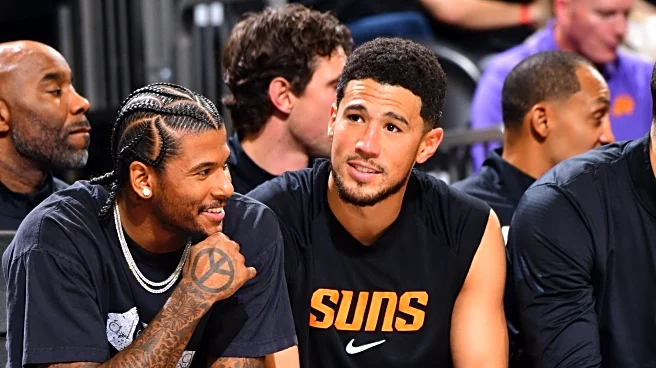
Looking at the individual side, no one truly stands out when it comes to pushing the ball or generating transition after defensive rebounds. If we focus on transition frequency after rebounds, only Devin Booker and Royce O’Neale are somewhat above average, with about +4.8% combined. The rest sit at or below league norms.
No player significantly boosts frequency or points added per possession in rebound-based sequences. This suggests a lack of pushers (players who grab the ball and accelerate) and also of secondary runners to stretch the defense. The tempo is often dictated by half-court specialists, and fast breaks are rare, slow, or poorly coordinated.

For comparison, Phoenix has only 2 players above +4% frequency. The Warriors have 6, the Lakers 3 (with LeBron James and Luka Dončić both at +11%), the Jazz have Lauri Markkanen at +7%, the Spurs’ Stephon Castle at +10%, and the Blazers’ Deni Avdija at +8%. In short, what we’re missing is that percutor, the player who can push us to another level in this area.
With talents like Booker, Dunn, or Allen, Phoenix does have elite finishers in transition. The problem seems structural, systemic, and technical: few schemes favor quick outlets, rebounders are rarely in a comfort zone to run or pass quickly, spacing after rebounds is often static, or the team simply isn’t on the same frequency.
Example: Dillon Brooks grabs the rebound and passes to Grayson Allen, who shoots a moving three, while Mark Williams was sprinting, and Devin Booker was wide open in the corner. The sequence to the corner would have been the better option.
Another situation: Allen secures the rebound but takes too long to pass. Then you have two players (Booker and Dunn) in the same spot calling for the ball, Williams runs without conviction and without looking at the ball. In short, only Gillespie seemed to truly grasp the moment.
And now? Paths to activate transition play
Recenter the organization on Devin Booker: Booker has already shown he can be a credible transition engine, with a +6.7% frequency last season (98th percentile). He should be the primary outlet, the one who sets the tempo and forces defenses to retreat. Structuring transition around him maximizes his aggressiveness and spatial reading.
Bet on Jalen Green’s athletic potential: despite negative transition frequencies in each of his seasons, Green has flashed spectacular moments. His return from injury should be the chance to integrate him as a secondary runner, punishing defensive retreats and adding vertical threat. He’s the type who can turn neutral rebounds into easy baskets.
Dominate your own glass to trigger the break: the Suns are 29th in defensive rebounds per game (29), a glaring weakness. It’s now essential to recruit or develop an athletic, powerful big (yes, I’m flipping my stance) who can win physical battles and immediately project the ball forward. Without this foundation, transition will remain limited to steals.
Encourage bigs to sprint and structure spacing: even without touching the ball, bigs must consistently run the floor to apply pressure and open lanes. Spacing must be organized from the moment the rebound is secured: a guard pushing, a runner on the wing, a trailer ready to punish. This creates quick cuts and early open shots, instead of falling back into static half-court sets.
The Suns have proven they can be a dangerous transition team…but only when fueled by steals. Their inability to turn defensive rebounds into fast-break opportunities limits their offensive potential and magnifies their structural weakness on the boards. The talent is already there, the flashes exist, but without a complete and balanced transition game, Phoenix will remain a team that punishes mistakes…rather than one that dictates the rhythm.