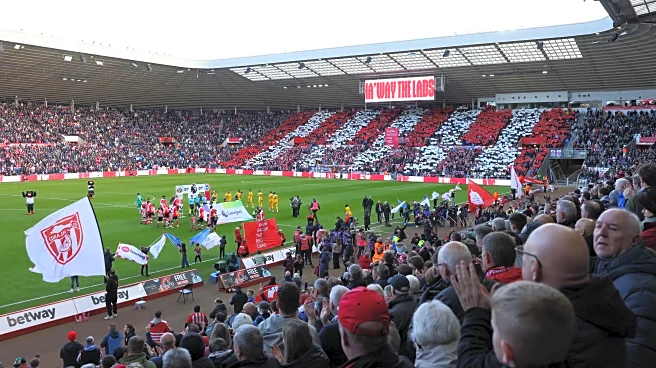


Sunderland returned to the Stadium of Light to resume League action after a three-game stint on the road to face a Brighton side who were looking to draw level on points with the hosts. With a fresh raft of injury concerns announced just before kick-off, Sunderland were left down to the bare bones and Brighton were able to claim all three points, so where did it go wrong for Le Bris?
Sunderland Line-Up
With fresh news that both Enzo Le Fée and Nilson Angulo were out of this one following training injuries
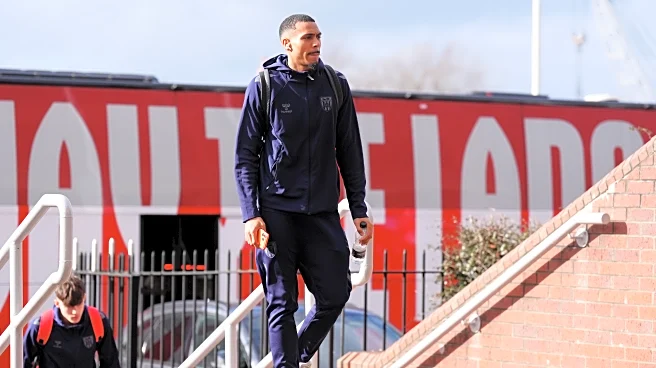
and the latter being ruled out for an extended period, Le Bris was forced into making several changes from the side that crashed out of the FA Cup last weekend. With Robin Roefs sidelined for at least another week, Melker Ellborg made his home debut, Luke O’Nien dropped out of the defence for the returning Trai Hume and Noah Sadiki replaced Le Fée following his cup suspension.
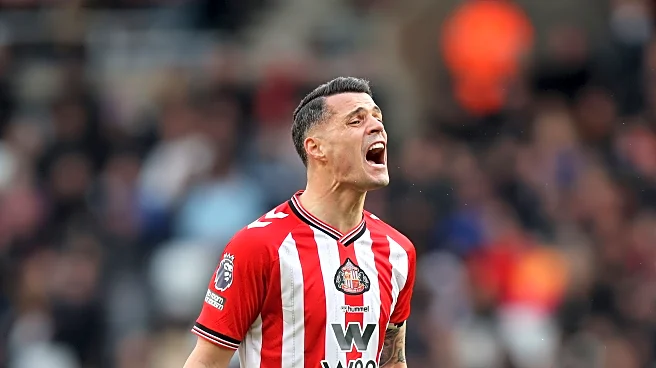
In the forward areas Brian Brobbey returned to replace Eliezer Mayenda whilst the injured Angulo was replaced by Granit Xhaka pushing Chris Rigg wide onto the right wing for this one. With Sunderland currently only having one fit winger from their selection of six it was a case of square pegs in round holes for the first time this season.

Despite the absences out wide, Le Bris opted to retain his usual formation due to the return of Xhaka and his ability to anchor the midfield and allow both Sadiki and Diarra to advance forward and support either flank in the attack. Sadiki was able to link up well with Chemsdine Talbi down the left flank by creating overloads and encouraging 1v1 isolations for the Moroccan however Diarra and Rigg were slightly less successful down the opposite side.
With Xhaka’s return to the base of the midfield, Sunderland moved away from their double pivot and instead inverted back to the system they started the season with by having two more advanced midfielders ahead of Xhaka. Whilst this does aid our wide areas and helps to present them with more opportunities, the runner in behind Brobbey is removed and leaves the striker much more isolated in possession.
Opposition Line-Up
Fabian Hürzeler has had a mixed reception during his first season at the Amex Stadium. As the youngest manager in the league by quite some distance he’s suffered peaks and troughs this season and holds a similar league record to Le Bris for his first campaign in the top flight.
With a return to full fitness of ex-loanee Danny Welbeck, Hürzeler was able to return to his usual 4-2-3-1 system that utilises Welbeck as their main focal point to hold the ball and drag open space before bringing onrushing wingers in to play via out-to-in runs which find space centrally to attack with pace.

Pascal Groß and James Milner utilise their experience to marshal the midfield and allow Brighton’s wingbacks to overlap and create an overload in midfield areas in transition, with slick positional rotations to confuse the opposition and draw low blocks out of shape.
Former Newcastle and PSR casualty Yankuba Minteh and Diego Gomez man the wings in an attempt to utilise their pace on transition and exploit gaps within opposition low blocks making Brighton a deadly side away from home. With the ever-reliable Lewis Dunk and Paul Van Hecke marshalling the centre of defence the Seagulls have done well to retain the core of their squad after yet another summer of change in the Brighton talent production belt.
Open & Free-Flowing
With both sides seemingly breathing a sigh of relief knowing they’d escaped the relegation dogfight, the game started with a real air of excitement and the lack of pressure saw chances created from both sides in an ebb and flow game right from the off. With both teams looking to probe space and initiate the press, the ball was zipping from one final third to the other in the opening period and resulted in chances for both sides.

As Brighton are a team who like to pressure opponents into forcing turnovers in their own half, Sunderland saw early pressure leave gaps for direct balls giving early opportunities for both Habib Diarra and Chemsdine Talbi to attack the Brighton backline. Minteh was equally as potent on the other end fizzing in a great ball which Ellborg’s brilliant reflex save was able to push Hinshelwood’s strike wide before Talbi had his effort cleared off the line by Lewis Dunk at the other end.
Tactical Tweaks
With both teams conceding early chances the game slowed a little and allowed both managers to feel one another out. Sunderland were hesitant to press Brighton given their ability to line-break and spring counter-attacks in less than five passes from front to back due to their off-ball movement. Danny Welbeck would draw the attention of Alderete whilst Dan Ballard was forced to track Jack Hinshelwood right into the Brighton half, the disjointed gap created provided Minteh with a channel to run through and with some great one-touch passing from their midfield saw Sunderland sliced open in transition.

Sunderland were able to find joy when they adjusted to beat Brighton’s press, most notably through Alderete’s ability to slice through the press with his line-splitting balls to Xhaka or down the channels. The central defender played 10 passes into the final third which was more than any other Sunderland defender and only second in the whole team behind Granit Xhaka with 14 of these. We’ll touch on this a little more below but Sunderland’s lack of creativity in attacks stems from their inability to build into the final third without either of the two mentioned above.
Brobbey Left Isolated
With the return of Xhaka into the base of midfield, Sunderland inverted their triangle of midfielders by swapping around the tip of the midfield from Diarra just behind Brobbey, to Xhaka protecting the back four. The switch in shape meant that both Noah Sadiki and Habib Diarra were tasked with controlling either flank and half-space to support the winger on their respective sides and so as such couldn’t get close enough to Brobbey to support his hold-up play.

With 23 touches recorded during his time on the pitch, it’s not for the lack of trying as the centre forward looked to bring others into play whenever he could, but unlike his usual one-touch flicks over half of the 10 completed passes he did make were five yards or more which shows just how far away his teammates were at all times. Without our full-backs joining the attacks, they instead invert and hold the position of our midfielders who themselves have pushed wide to provide passing options and overloads for the wingers. This in turn removes any real link-up options from Brobbey and removes the box-crashing threat both posed earlier in the season.
The Importance of Wingbacks
When Sunderland found they’d be without their first-choice wingback pairing for a long stretch, at first it felt like a manageable situation however the longer we’ve been without both Nordi Mukiele and Reinildo, the more of a toll it’s taken on our ability to attack with any real purpose or consistency.
Prior to injury, Mukiele was often tasked with marauding down the right flank to link up with his midfield and allow the winger to drift in-field and either run off Brobbey as Diarra did against Burnley, or instead look to build up with Brobbey as we did several times against Liverpool. On the opposite flank, Reinildo was able to utilise the space created on the touchline from Le Fée or Talbi cutting inside to pin opposition wingers further back and prevent Sunderland’s counter-press from being over-exposed.

Compare an out-of-position Trai Hume and a naturally defensive Lutsharel Geertruida in our patterns of play more recently and you’ll see that Omar Alderete, as noted above, is having to carry the bulk of the weight in advancing the ball between the lines without the two wingbacks either side of him like previously. Hume and Geertruida combined for seven passes into the final third between them and only two touches in the opposition box. Whilst neither replacement has played particularly poorly, both are naturally struggling to influence games from an attacking sense like our two main wingbacks and it’s really hampered how disjointed we are in the attacking phase at present.
Calamity of Errors
In a game that looked likely to otherwise end honours even, Sunderland conceded a second-half sucker punch on the hour after an initial poor back pass from Hume on his weaker side paired with a slow response from Ellborg gifted the visitors a cheap corner. The initial cross is headed back out to Minteh who inadvertently managed to shin his cross into the near post, deceiving not only the outfield players but also Ellborg who’d left a gap at his near post anticipating the cross.

With an xG of 0.02 and an on-target xG of 0.04 it was truly a reflection of a fluke goal in a moment where Sunderland were really beginning to get their tails up. Yet another reflection of the tightest of margins in the Premier League as two rued chances were missed only minutes prior to Brighton grabbing the only goal of the afternoon.
A Long Week to Ponder
Sunderland registered their third home defeat in a row which has completely flipped their home and away form, having picked up 0/9 points in their last three home games compared to 4/9 in their last three away fixtures. With a derby looming on the horizon could this be the perfect time to grab some momentum away from home given Sunderland had only taken ten points from their previous twelve away games heading into Leeds last week.

We’ll wait to hear further about the fresh injury concerns of Dan Ballard alongside that of Roefs, Reinildo, Mukiele, Le Fée and Isidor who have all been named as major doubts for next weekend, in which could see Chris Rigg start in his first Tyne and Wear derby in the Premier League for Sunderland. Things haven’t looked great of late, but with a current injury list that at the time of writing remains into double figures, Le Bris needs to cut some slack for the lack of available options at his current disposal beyond his starting XI.