



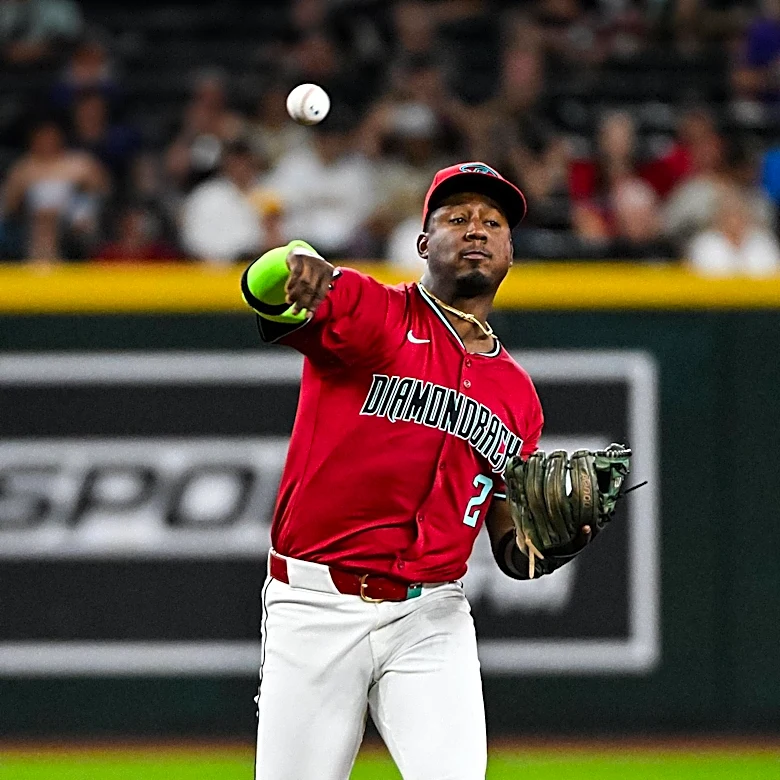
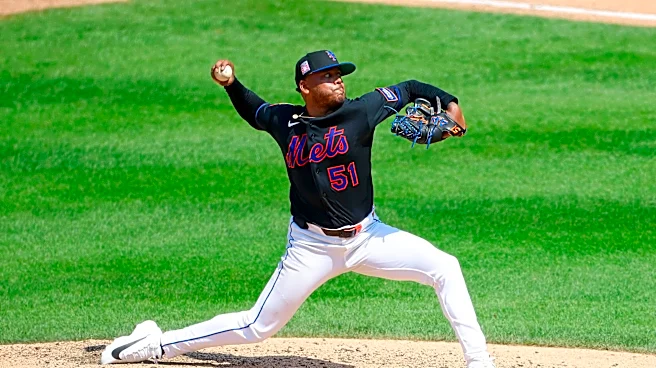
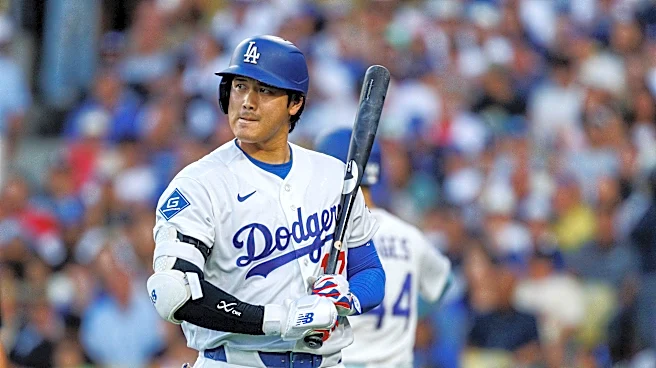
Much more so than on the position player side, this meter will look completely different the next time it is posted as a good chunk of the players in the table below are no longer on the roster because they were traded at the deadline. The Mets dealt starters Freddy Peralta and Clay Holmes (not listed because he never took the mound in a Mets uniform in the second half), as well as relievers Luke Weaver, Brooks Raley, Huascar Brazobán, and A.J. Minter. Moving forward, many young Mets pitchers will be given
a chance to see if they can be part of the solution moving forward, but for now let’s see how these departing Mets finished their tenure in Queens.
| Player | Last week | This week |
|---|---|---|
| Huascar Brazobán, RHP |  |
 |
| Xzavion Curry, RHP | |
|
| Daniel Duarte, RHP | — | |
| Kevin Herget, RHP | — | |
| Sean Manaea, LHP | |
|
| Nolan McLean, RHP | |
 |
| A.J. Minter, LHP | |
|
| Freddy Peralta, RHP |  |
|
| Cionel Pérez, LHP | |
 |
| Jonathan Pintaro, RHP | — | |
| Brooks Raley, LHP | |
|
| Christian Scott, RHP | |
|
| Kodai Senga, RHP | |
|
| Robert Stock, RHP | — | |
| Zac Thonton, LHP | |
|
| Luke Weaver, RHP | |
|
| Devin Williams, RHP | |
|
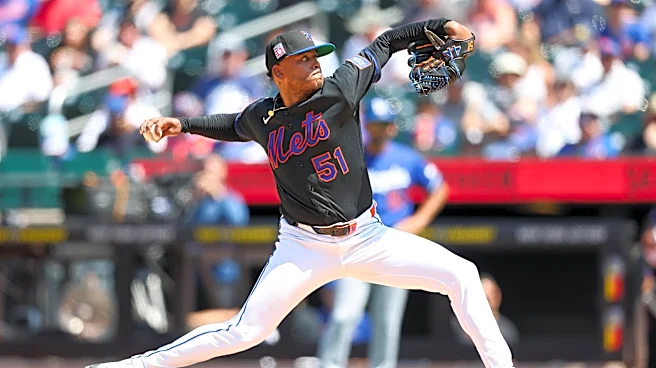
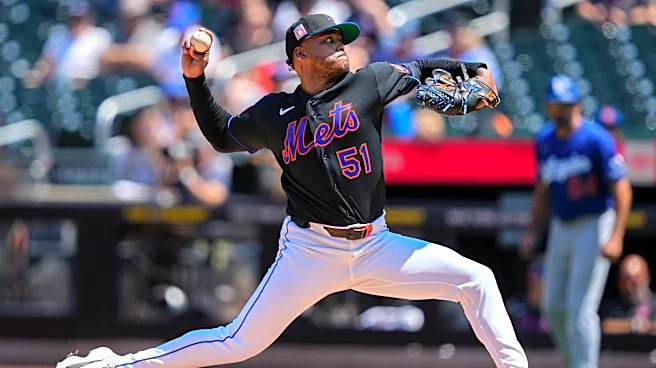
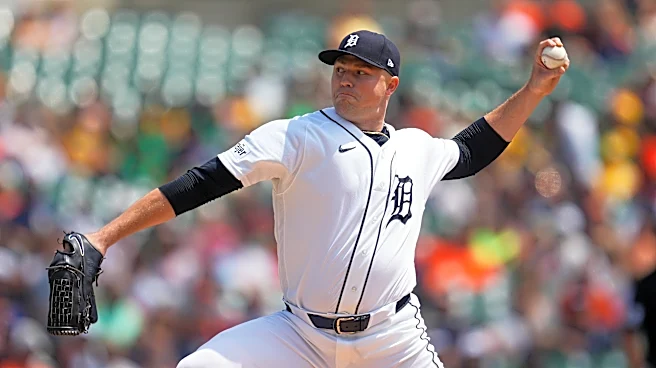
Unfortunately, Freddy Peralta’s already unsuccessful Mets tenure ended on a sour note. He got knocked around by the Brewers on July 20 to the tune of seven earned runs in 5 1/3 innings of work, taking his ninth loss of the year. He struck out six and walked only two in the outing, but he gave up eight hits, including two home runs. His last start before the trade deadline was a little bit better—and the Mets won the game—but he only lasted four innings, so he was not able to factor into the decision. In that outing, he gave up three runs (only two of them earned) on six hits, striking out three batters and walking two. He was the Mets’ biggest offseason acquisition on the pitching side and unfortunately it didn’t work out how either he or the Mets would have wanted. He was dealt to the Tampa Bay Rays for a package of three prospects and the return is undoubtedly not as good as it would have been if he had pitched to his career norms; though if Peralta had pitched to his career norms, it’s possible the Mets would not have been in the position they are in today.
It was Cionel Pérez who earned the win in the series finale against the Dodgers that Peralta started with two scoreless innings of work and three strikeouts. Pérez’s second half was off to an excellent start, as he went five straight appearances without allowing a run out of the break. Unfortunately, he hit the injured list on Friday with a left forearm strain, which is never a good thing to hear about a pitcher.
At the same time as Pérez hit the IL, A.J. Minter became the first Mets reliever to be dealt. Minter had a mix of good and bad outings in the second half prior to the trade. He gave up a solo homer to Alec Bohm in the series finale against the Phillies, but the Mets had the game pretty well in hand at that point. He had a good outing in the series finale against the Brewers in a close game that the Mets ultimately lost, but then he gave up a crucial two-run homer to Kyle Tucker in the Dodgers series two days later. His final outing as a Met came in Game 2 of Wednesday’s doubleheader, in which he pitched a scoreless seventh inning to keep the Mets within a run.
In Pérez and Minter’s places, the Mets recalled Jonathan Pintaro and Xzavion Curry. Curry was the hero of Friday’s game, soaking up the final five innings of that game to save the rest of the pitching staff. He was sent back down to Triple-A after that, but he is already back in the aftermath of all of the other trades the Mets have made. In that outing, he gave up two runs on six hits, striking out two. He’s had two other outings in the second half so far—both multi-inning appearances. In Philadelphia right after the All-Star break, he twirled two scoreless frames in the only loss of that series. Then he pitched the final 2 2/3 innings in relief of Peralta in Milwaukee and gave up a home run to Joey Ortiz in an already lopsided game—charging one run to Peralta and one run to Curry. Pintaro’s only appearance since being recalled was a multi-inning one as well; he pitched two scoreless innings in Saturday’s loss to the Marlins. Kevin Herget, freshly recalled from Triple-A, pitched a scoreless inning in that game as well when he was called up to replace Curry on the roster.
Zac Thornton started Saturday’s game and struggled, taking the loss for giving up four runs—only three of them earned—in 4 2/3 innings of work. A guy who usually doesn’t walk many, he issued three free passes in the outing and struck out only two. It was Thornton’s first mediocre outing since his major league debut in Washington DC, ending a run of dominance that carried into the second half to start with. In the Mets’ only win of the Brewers series, Thornton pitched six scoreless innings in what ended as a shutout victory. He followed that up with another quality start and another win against the Braves, giving up three runs on six hits in 6 1/3 innings, striking out five and walking only one.
Saturday’s game also featured Daniel Duarte giving up his first two earned runs all season in his eighth appearance of the year. Prior to that outing, Duarte appeared in four games in the second half of July and was unscored upon across 6 1/3 total innings, striking out eight batters and walking only one across those four appearances. He remains on the active roster and will likely be a major contributor in the Mets’ bullpen over the final couple of months.
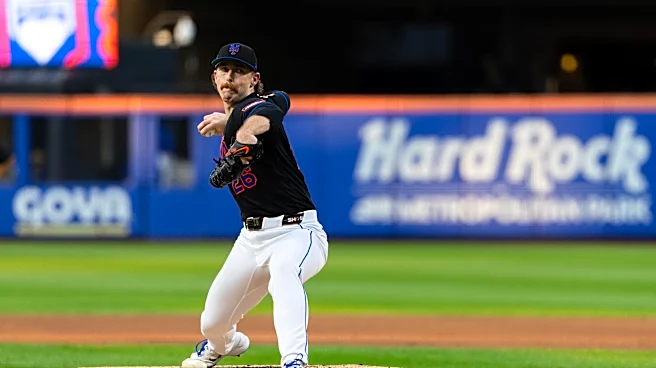
If there’s one reason to believe the future is bright, it’s that Nolan McLean has been great. He hasn’t given up more than two earned runs in any start in the month of July. He was excellent in his first start of the second half in the series finale in Philadelphia, in which he struck out a whopping ten Phillies in six scoreless innings of work, yielding just two hits and earning the victory. McLean took a tough luck loss in a close game against the Dodgers in his next start. He allowed four runs, but only two of them were earned. He struck out seven and walked two in six innings of work. He was good, but Yamamoto was just better. He did not factor into the decision in his most recent start against the Marlins in which the Mets broke through for two runs in the eighth to win the game. McLean gave up two runs on six hits in 6 1/3 innings of work, striking out six batters and walking two.
It was Brooks Raley who earned the win in that game, getting out of a jam for McLean in the seventh and then pitching a scoreless eighth as well. That was Raley’s penultimate appearance as a Met and he ends his Mets tenure with the second-highest ERA of any Mets pitcher with more than 100 appearances. Overall, in six appearances totaling six innings of work in the second half prior to the trade, Raley was scored upon in only one of those appearances, taking the loss for allowing the go-ahead run in the seventh inning in the series opener against the Dodgers. Otherwise, he went out on a high note.
Sean Manaea started that series opener against the Dodgers and pitched really well, limiting the damage to just one run on six hits in six innings of work. He struck out three and walked one in the outing, in which he ultimately took a no-decision. It was Manaea’s best result of his three starts so far in the second half. Manaea pitched the only game the Mets lost in Philadelphia in the first series out of the break, allowing four runs on seven hits, including two home runs in just 4 2/3 innings of work. He struck out seven and walked two. Kodai Senga helped Manaea navigate his way through the fifth, but then came back out for the sixth and allowed two additional runs to put the game far out of reach. Senga didn’t pitch again until he was forced into emergency starting duty on Friday when Freddy Peralta was scratched in anticipation of a trade. He was pretty good, giving up three runs on two hits in four innings of work, striking out four and walking two. Curry pitched the rest of the game and Senga took the loss, falling to a brutal 0-8 on the season. Manaea pitched Game 1 of Wednesday’s doubleheader against the Braves and held Atlanta to just two runs on five hits in six innings of work.
Devin Williams earned the save in that game and in the victory over the Marlins that McLean started. Williams went 3-for-3 in save opportunities in the second half of July and didn’t give up any runs in his five total appearances over that span. He was unscored upon in the second half until he pitched the ninth inning of Sunday’s game with the Mets down a run and gave up an insurance run to the Marlins in the form of a single, a stolen base, and another single.
That helped ensure a very tough luck loss for Robert Stock in his season debut with the Mets. Stock was battling for a roster spot out of spring training when he went down with thoracic outlet syndrome, requiring surgery. He finally returned on Sunday to a team with the roster spot to welcome him and he was fantastic, giving up just one run on three hits in five innings of work. He struck out four and walked none in the outing. Stock may very well just be part of the Mets’ rotation moving forward.
Sunday’s game marked the final appearance as a Met for multiple relievers, including Huascar Brazobán, who was traded just hours later. Brazobán led Mets relievers with seven appearances in the second half prior to the deadline. He was only scored upon in one of those appearances; he gave up what turned out to be a crucial insurance run to the Brewers in the rubber game loss. He gave up a two-out double and then made way for A.J. Minter, who allowed that run to score, charged to Brazobán.
Christian Scott started that game and took the loss, allowing four runs on three hits and lasting just 3 2/3 innings. He struck out an impressive six batters, but walked three. His other two starts in the second half thus far were much better. In the first game after the break, Scott shut out the Phillies for 5 2/3 innings, striking out seven batters and walking none. He allowed just three hits and earned the win. His clunker in Milwaukee pushed his season ERA above three briefly, but he snuck it down to 2.99 with six one-run innings against the Braves at Citi Field in Game 2 of Wednesday’s double header. One run was all the Braves would manage, but it was enough to hand Scott the loss, as the Mets were shut out by Chris Sale and the Braves bullpen. Scott struck out seven and walked only one in the outing.
Sunday’s game also represented Luke Weaver’s final game as a Met. Given that he is under contract for next year, Weaver was arguably the Mets’ most valuable trade chip and in his five appearances in the second half prior to the trade, he demonstrated why. He appeared in relief of Scott in the first game of the second half and allowed a run on a Trea Turner solo homer that was ultimately meaningless; Weaver still earned a hold anyway and Williams earned the save in the ninth. That was the only run Weaver gave up in five innings across his five appearances. He ends his Mets tenure with a spectacular 1.84 ERA—one of the lone bright spots in an otherwise miserable season.