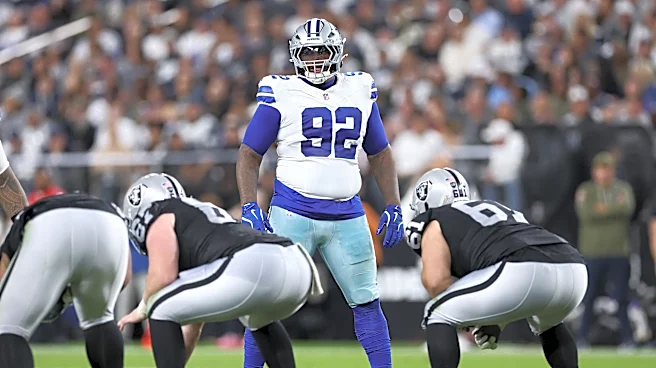



In November last year, the Cowboys traded their 2026 second-round pick and a 2027 first-round pick for star defensive tackle Quinnen Williams. He’s signed through 2027, but the level of investment made to get him to Dallas requires him to play more than just those two remaining years for the Cowboys.
When he signed his current contract in 2024, Williams’ four-year, $96M extension was the second highest average paid to defensive tackle at the time. If he were to sign an extension in Dallas today, and
still want to be the second highest paid DT, he’d be looking for something in the range of $30-31M per year.
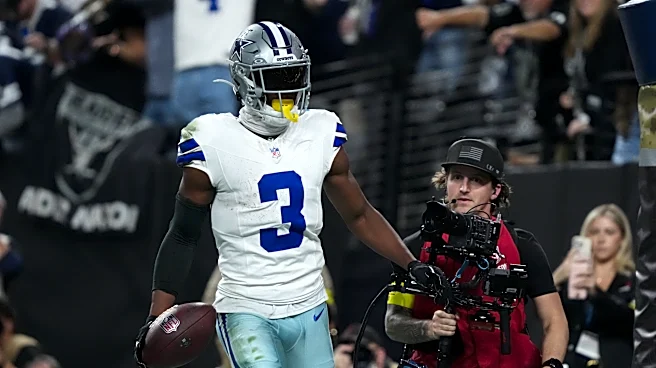
In May last year, the Cowboys traded for George Pickens, and while the draft capital invested was a relatively modest third-round pick, the cost of keeping him around in Dallas is anything but modest: He’s playing on a $27.3M tag this year, would play on a ca. $33M tag next year, or sign an extension that would likely be even higher.
In late August last year, the Cowboys acquired Kenny Clark as part of the Micah Parsons trade, and while he doesn’t command the type of money Williams and Pickens do, he’s still on the books for $12.7M this year.
Add Dak Prescott, Ceedee Lamb, and Daron Bland, and the Cowboys have quite a top-heavy roster.
Now, this is nothing new in Dallas, which has always had quite a top-heavy roster. In fact, just seven players make up 50 percent of the 2026 salary cap, four of them were drafted, three were added via trade. But for such a top-heavy roster to work, you need a bunch of quality players on small, cap-friendly contracts to compensate for your spending on your top guys, and that’s where the draft comes in.
Because while the draft is nominally all about talent acquisition, there’s no denying that it’s also an integral part of salary cap management. The draft is the perfect vehicle for bringing in talented and cheap labor to replace old and expensive employees.
But before we get to the draft, let’s first take a look at the “50 percent rule”, which I first came across in an article by Dan Durkin of The Athletic. That rule can be quite instructive with regard to how a team is constructed, and here’s how the Cowboys compare the other NFC East teams in that regard.

Durkin explains the rationale of the 50 percent rule:
Metrics like the number of players it takes to reach the 50-percent threshold shine light on the overall star power of the team. How the player was acquired indicates how well the team has drafted, and typically those with more drafted players have more roster stability.
When a team reaches double digits before hitting the 50-percent threshold, this typically indicates a lack of difference makers at the top of the roster.
Here’s a breakdown of the Cowboys players in the chart (per Spotrac.com):
- Dak Prescott | $43.8 million | 14.6% | Draft
- CeeDee Lamb | $19.6 million | 6.5% | Draft
- DaRon Bland | $17.1 million | 5.7% | Draft
- Jake Ferguson | $10.4 million | 3.5% | Draft
- George Pickens | $27.3 million | 9.1% | Trade
- Quinnen Williams | $21.6 million | 7.2% | Trade
- Kenny Clark | $12.7 million | 4.2% | Trade
We need to understand, of course, that the cap hits used here are flexible numbers; contract restructuring or bonus proration can push a part of the contract volume into future years for accounting purposes. The Eagles, for example, push the maximum amount possible on almost every contract into future years with option bonuses. The Cowboys use the more traditional restructure to create cap space as needed
There is no doubt the Cowboys have a lot of star power. Of the seven players listed, six are multiple Pro Bowlers, the exception being George Pickens, who’s been to only one Pro Bowl – so far.
And that brings us back to our earlier point about how this type of roster building can only work if your draft well. ESPN’s Bill Barnwell explains:
The way to survive with that sort of roster is to build through the draft and rely on talent making an impact while players are on rookie-scale deals.
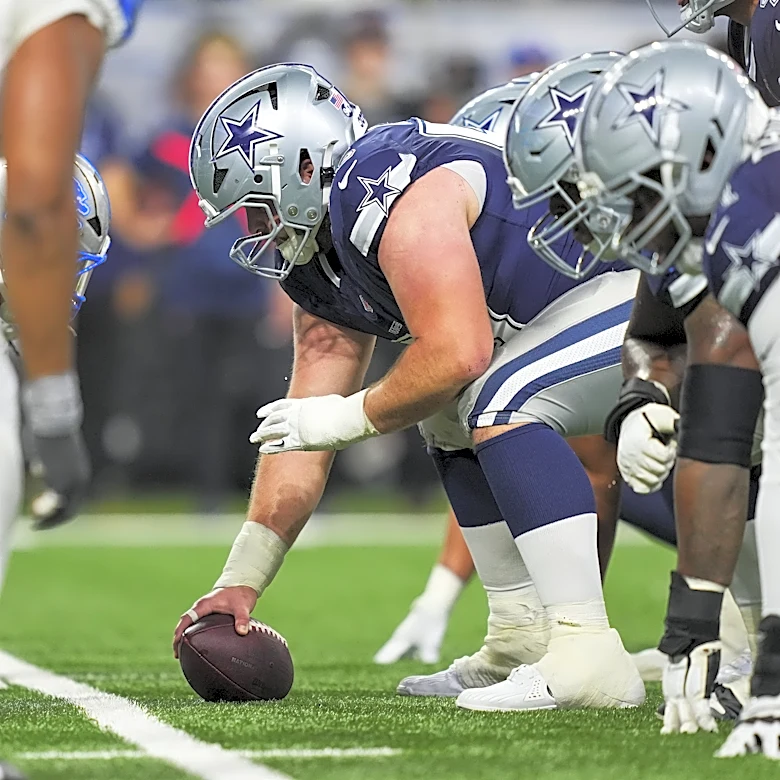
The Cowboys typically do a good job of selecting talent all things considered, but they don’t appear to have found much between their 2023 and 2024 draft classes beyond center Cooper Beebe and linebacker DeMarvion Overshown.
Adding more young talent to this roster is the only way the Cowboys can build a Super Bowl contender around their big-money group of veterans. And moving down from No. 20 to add more capital would be the right way to get them there.
Barnwell’s quote is part of a longer article in which he looks at which teams should be trading down in the draft. He used the Cowboys 20th overall pick as an example, he could have used the 12th overall pick just as well, and what he wrote is true for both picks anyway.
The Cowboys need more bodies, not less. And they specifically need more talented bodies on rookie contracts.
The Cowboys defense still has many holes, and even the offense can use a low-cost upgrade here and there. Trading multiple picks to move up means you fill fewer of those holes. That in turn means it’s more difficult to field a contender. And I want to be in the playoffs this year, so I want to fill as many holes as possible with young, cheap talent.
Don’t trade up, trade down. Multiple times, if possible.
And don’t get hung up on trade value or winning a trade according to some random draft value chart. Trade value does not win games. Make the deal and get those extra picks. And then go and get the players that will make a difference to your team.
Remember how the Cowboys supposedly overpaid for Travis Frederick in the 2013 trade? They lost the trade value fight but won with the Frederick and Terrance Williams picks.
More of that. Please.