

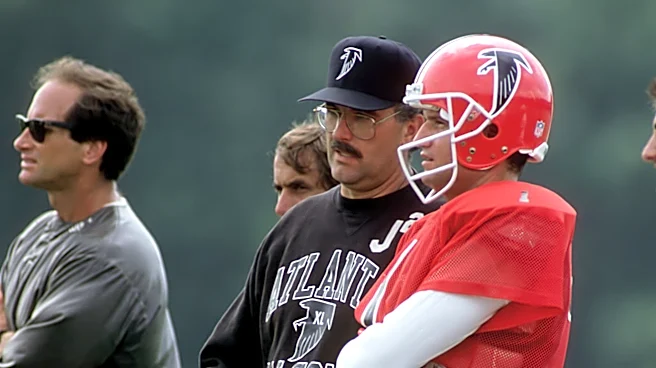

Jones spent time in Atlanta as both a quarterback and head coach, leaving a unique mark on the franchise’s history.
The Atlanta Falcons have lost another familiar figure from their history, as former quarterback and head coach June Jones passed away on Thursday at the age of 73.
Jones had a lengthy football career that took him across the NFL, college football, and beyond, but his connection to Atlanta was particularly unique. It’s not often that a player gets the opportunity to return to the same
franchise as a coach, much less lead the team as its head coach. Jones was one of the rare individuals who experienced both sides of that relationship with the Falcons.
Jones originally joined Atlanta as an undrafted quarterback in 1977, spending five seasons with the franchise through 1981. Primarily serving as a backup, he appeared in 17 games and threw for 923 yards and three touchdowns. His playing career wasn’t particularly memorable statistically, but his time in Atlanta would prove to be just the beginning of his relationship with the franchise.

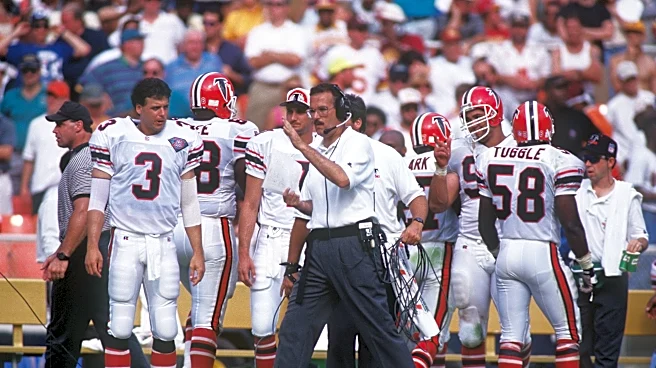
After transitioning into coaching, Jones eventually returned to Atlanta in 1991 as offensive coordinator under Jerry Glanville. When Glanville departed following the 1993 season, Jones was promoted to head coach, a position he held from 1994 through 1996.
His most successful season came in 1995, when the Falcons finished 9-7 and earned their first playoff appearance since 1991. That team featured quarterback Jeff George, who threw for 4,143 yards and 24 touchdowns, along with offensive standouts like Terance Mathis, Eric Metcalf, and Craig “Ironhead” Heyward. Atlanta’s season ultimately ended with a Wild Card loss to the Green Bay Packers, but Jones had helped deliver one of the franchise’s relatively rare postseason appearances of that era.
Jones finished his three seasons as Falcons head coach with a 19-29 record. While his tenure had its ups and downs, his impact on the game extended well beyond wins and losses in Atlanta.
A longtime advocate of the run-and-shoot offense, Jones was known for his innovative approach to the passing game. He would later find considerable success at the University of Hawaii, where he helped transform a struggling football program into a national contender. In 2007, he guided Hawaii to an undefeated regular season and a Sugar Bowl appearance, one of the most memorable accomplishments of his coaching career.
He also coached at SMU and continued working in professional football, building a career that spanned multiple leagues and several decades.
For Falcons fans, Jones will be remembered as someone who experienced the franchise from perspectives few others ever have. He wore the uniform, stood on the sidelines, and helped guide Atlanta to the postseason during a period when those opportunities were far from guaranteed.
His time with the Falcons was only one chapter of a remarkable football life, but it was a meaningful one nonetheless.
We extend our condolences to Jones’ family, friends, and everyone who had the opportunity to know and work with him.