





Well now, that’s a provocative headline.
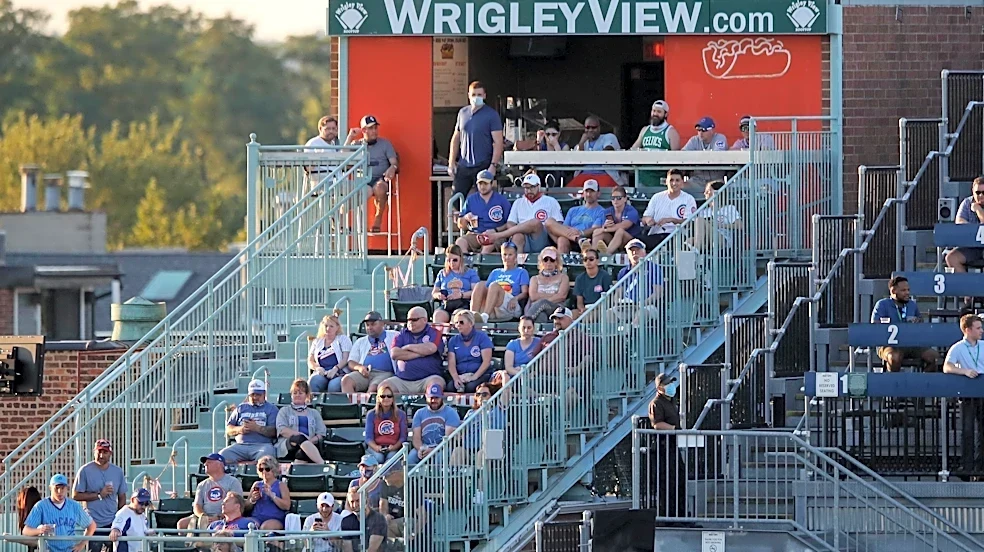
Here’s the story. Wrigley View Rooftop was one of a handful of rooftop clubs that were not bought out by the Ricketts family over the last few years (those that were, you can tell by the WRIGLEYROOFTOPS.COM signs on the buildings). Instead, they continued to operate under a deal made back in 2004 that gave the Cubs 17 percent of their revenue. That deal expired in 2023, and on Sept. 30 the rooftop club was permanently enjoined from selling tickets to watch
Cubs games. You can read about that in detail in this ESPN.com article by Ben Strauss.
The owner of that club, Aidan Dunican, has appealed the ruling in federal court.
Per Michael McCann at Sportico, here’s why that appeal is very important not only to the Cubs and to Wrigley View Rooftop, but perhaps to all of Major League Baseball:
The sides are arguing over whether U.S. District Judge Sharon Johnson Coleman should unseal the trial court record and all the financial information, contracts and potential trade secrets it contains.
Oh.
Yeah, that would be pretty important. Here’s more from the court filing:
The Cubs, Wrigley View Rooftop insists, “pick and choose what information” to reveal in court filings “so as to unfairly frame” the Cubs’ image “while deriding” Wrigley View Rooftop. The company maintains it would be in the “public interest” for the record to be released.
In addition, Wrigley View Rooftop argues the Cubs have violated the terms of a confidentiality order issued by Coleman, who set parameters for the two sides to discuss which materials ought to be designated as confidential and sealed. Wrigley View Rooftop maintains that the Cubs haven’t explained the rationale for opposing the removal of confidentiality designations.
The “public interest” is noted there. Yes, I think I, as a member of the public, would be pretty interested. So would you, most likely.
Here’s what the Cubs said in the filing in response:
Through a brief authored by Martin Roth and other attorneys from Kirkland & Ellis, the Cubs argue that it is unconvincing for Wrigley View Rooftop to ask Coleman to unseal documents both parties agreed to keep sealed—including documents Wrigley View Rooftop wants sealed—on the basis that the sealing “has somehow rendered [Wrigley View Rooftop] unable to speak to the press.”
The Cubs, which say they’re open to unsealing some documents with appropriate redactions, object to unsealing the entire record, particularly given that both sides have “legitimate business needs for confidentiality” that include “privacy required to protect the Cubs’ trade secrets or their customers’ personally identifying information.”
What the Cubs say in that filing doesn’t appear to be completely unreasonable, either. The team added:
“That a baseball team would incur expenses related to ballpark operations, payroll, construction and equipment, and related topics is obvious and comports with the Court’s comment that it also relied on ‘common sense,” the Cubs write.
In addition, the Cubs note that sharing “detailed financial information,” including the Cubs’ contracts with other rooftop businesses, runs counter to the fact that the Cubs, Wrigley View Rooftop and other rooftop businesses are all, to some degree, competitors.
The Cubs’ contracts with other rooftop businesses could contain “highly sensitive competitive information such as audit rights, margins, and payment terms,” the disclosure of which, the Cubs insist, “could harm competition in a competitive market environment.”
You can read more at the Sportico link, though yes, I’ve quoted quite a bit of it, which I think is important to the point being made. Wrigley View Rooftop didn’t sell out to the Cubs as many of its competitors did. You can learn more about that in the ESPN.com article. I take no position here on whether the Cubs should or should not be required to open that financial information to the public, as I am not an attorney and don’t know all the details of this case.
But you can be sure that U.S. District Judge Sharon Johnson Coleman’s ruling on this will be anxiously awaited not only by Aidan Dunican, but Cubs fans and owners of other MLB teams. And that’s because, per the Sportico article:
In professional sports labor disputes, players’ unions often argue that teams are more profitable than they claim. Unsealed financial records from the Cubs could attract attention well beyond this litigation, including from the MLBPA as it prepares for a potentially contentious labor fight.
Indeed. So, as always, we await developments.