


A wise man once said you can’t predict baseball. That doesn’t stop us from trying. Ahead of every season, just about every baseball-related publication tries to glimpse the future and predict the outcome of the year ahead. And at the end of the year, we realize again and again how futile the exercise can truly be. Even for a season that develops according to expectations, there will always be contours to the road that you didn’t have mapped out.
The 2026 Yankees washed out to an AL East rival in the
Division Series for the second straight year; not an unforeseen fate for a team that was largely running it back with a nearly identical roster. As such, as we mark off the biggest surprises of the season, that end result isn’t all you’ll find similar with the last time we did this exercise.
So, let’s get started. Who could’ve predicted…
…that Cam Schlittler would be this good, this quickly?
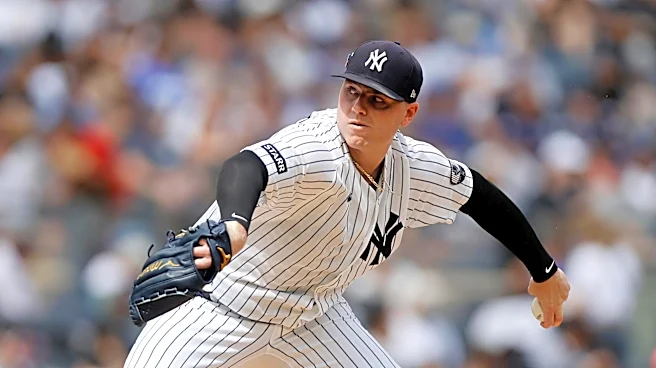
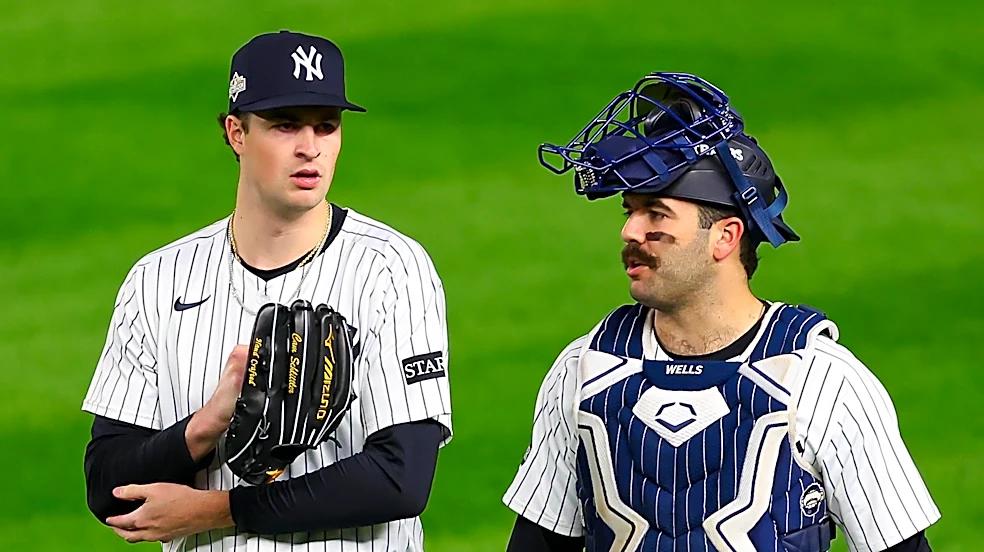
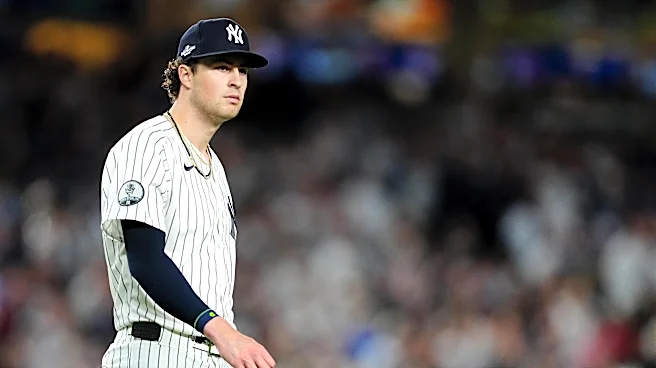
We all saw glimpses of the ace starter Cam Schlittler could be when he carved up the Red Sox in the winner-take-all Game 3 of last season’s Wild Card Series, but I don’t imagine anyone anticipated the 25-year old would become the top pitcher in the American League the following year. Cam’s 14 start-run in 2025 showed a pitcher with tantalizing talent but plenty of room for refinement—namely a 10.2 percent walk rate which is the calling card of volatile and inconsistent pitchers from sea to shining sea.
That makes it all the more incredible that Cam was not only incredibly dominant, but consistently so. Schlittler didn’t really have his first bad start until June, and lest you thought that would be the moment the other shoe dropped, he didn’t let his ERA climb above 2.26 from midsummer onward. The 1.95 mark he finished with was good for a bronze medal in all-time Yankee lore. And the command troubles he flashed as a rookie vanished—he struck out 239 batters and walked only 49, a nearly 5-to-1 ratio. As of this writing, Schlittler has not yet been given the Cy Young award, but it’s a foregone conclusion. Even my most bullish preseason prediction for him probably would not have ended with him accepting that hallowed honor, but he electrified everyone and surpassed every test in 2026.
…that the Yankees would not grab a catcher at the deadline?
The vibes around this team were going sour with the June rib injury to Aaron Judge—which kept him out until September, when a quad strain would sideline him for the all-too-short remainder of the season. Brian Cashman had to act to shore up a roster which was suddenly emitting about seven distress signals. He added more offense where he could, bringing aboard Luis Garcia Jr. and Heliot Ramos while calling up reinforcements from the minors—more on them later.
Not included on his shopping receipt, however, was a catcher, which was seen as the Yankees’ biggest need. That, of course, was because of the abysmal year Austin Wells had been enduring to that point. Wells had managed just a .504 OPS through the first half—unplayably bad even if it accompanied his generally solid defense. But the task of adding a new backstop was quickly complicated by their own closest rivals, who added two of the best catchers on the market. The Red Sox made a splash by trading for Adley Rutschman from the Orioles, and the Rays dealt with the Marlins for Liam Hicks.
As the hours toward the deadline ticked down, the Yankees were stuck with a bunch of poor options. The Twins’ Ryan Jeffers was coming off a recent injury and would be expensive; so would Colorado’s Hunter Goodman. The other remaining names were lateral moves at best. So, the Yankee braintrust ultimately chose to stick with Wells.
Thankfully, this was a problem that ultimately sorted itself out, as Wells found his swing at long last in the second half. He actually became one of the more consistent bats for the Yankees in the final two months and played to a second-half .787 OPS, more than doubling his home run and RBI total in the process. Unfortunately, Wells’ season would conclude with one more surprise, and a deeply unpleasant one: getting thrown out at third trying to leg out a triple in ALDS Game 1.
…that calling up the rookies actually worked?
If you told me that Spencer Jones and George Lombard Jr. would be key planks in the Yankees’ second half lineup, I would have assumed their season had completely gone down the tubes. Jones, the powerful but whiff-prone outfielder, had not made waves in his first little Major League stint, hitting .167 in May before being sent back down to Triple-A. Lombard, the precocious shortstop, was a known commodity in the field, but a mystery at the plate—and awfully young to be thrown into the most pressure-packed spot in the league: the little patch of dirt between second and third in the Bronx.
The aforementioned injury to Judge—and later an injury to Trent Grisham—quickly brought Jones back into the fold, and the lefty picked up three hits in his first game back in the Show. Jones raised his level in June, hitting to an .808 OPS before a second brief demotion; then Cody Bellinger got hurt and he came back again, this time for good. He didn’t set the world on fire at any point in his rookie year, but Jones proved he could be a productive Major Leaguer, for at least the few months they needed him to be one. Another surprise with Jones was the somewhat ridiculous reverse splits he put up: a 1.107 OPS against lefties as opposed to just .647 off righties.
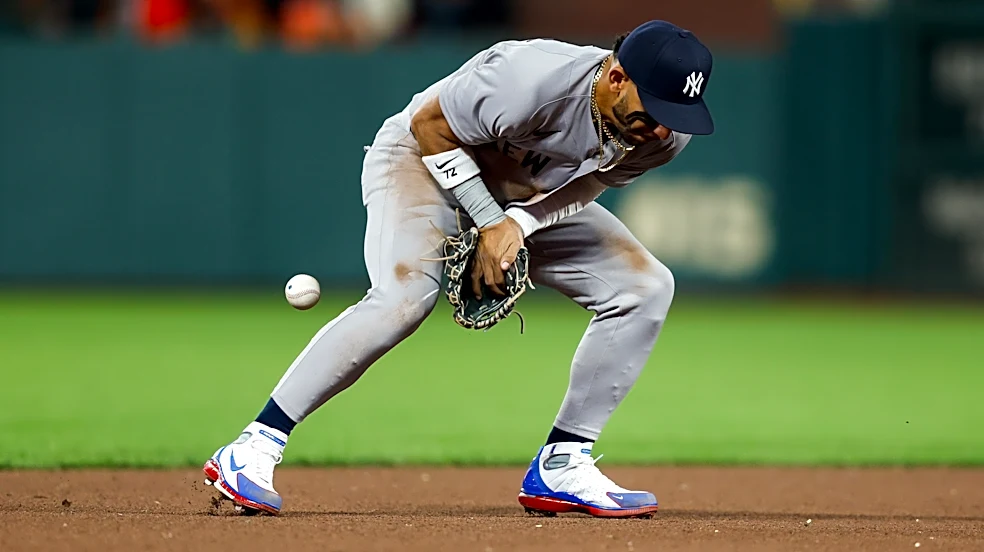
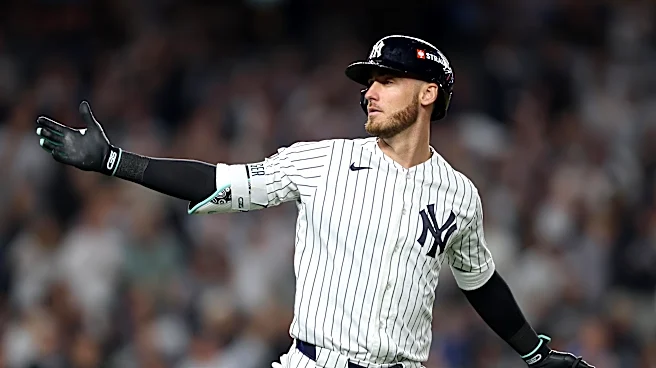
Lombard received the call to the Majors directly after the Trade Deadline, as the Yankees searched for more talent to ignite their slumbering offense. In a memorable MLB debut, Lombard made a handful of stellar plays at short, then homered in his second Major League at-bat—the same night his brother Jacob went yard in the low minors. Lombard turned a great first game into a great first week, showing composure beyond his years and an advanced approach at the plate.
The 21-year old’s offensive numbers soon dipped to pedestrian levels, and he had his defensive hiccups as well. But he never relinquished the starting shortstop position, even when Anthony Volpe—whom the Yankees had surprisingly optioned to make room from Lombard—returned to the roster. He acquitted himself well in the playoffs as well, going 6-for-18 overall. While neither he nor Jones are looking like perennial All-Stars, they may yet become mainstays on a roster in need of retooling this offseason.