
BOSTON – During every single timeout, Joe Mazzulla and four Celtics’ assistant coaches huddle up on the court.
In the center is former NBA star Sam Cassell, one of the team’s most veteran (and vocal) sideline presences.
There’s Matt Reynolds, the franchise’s longest-tenured assistant — and the coach most responsible for determining when the team will pull the trigger on a coach’s challenge.
There’s DJ MacLeay, who spearheads the team’s defensive schemes.
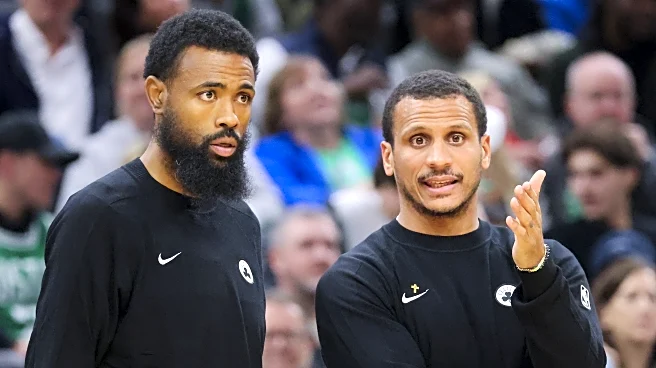
And, there’s Tony Dobbins.
It doesn’t take long
to realize that Dobbins, in many ways, serves as the antithesis of the intensity that exudes from (the majority) of the Celtics’ bench, in particular from Mazzulla and MacLeay. He’s soft-spoken and comforting, frequently putting his arms around players, fellow assistants, and even referees.
“I’m not going to be able to be more intense than Joe or more intense than DMac [DJ MacLeay],
Dobbins told CelticsBlog in a lengthy sit-down conversation. “But I can offer a different perspective, or in a moment, I can offer a different lens through which to view the situation, whether it’s my conversation with a player or an official.”
That calm, even-keeled demeanor makes Dobbins a favorite in the locker room. When tensions are high, especially in-game, his very presence lowers them.
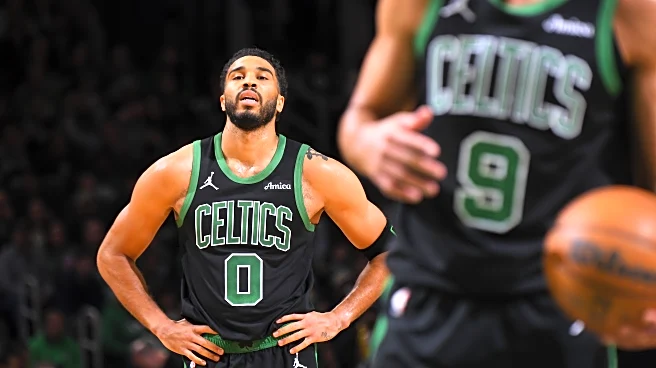
“He’s one of the best people you’ll ever be around,” said Jayson Tatum matter-of-factly.
Of course, the intensity that exudes from Mazzulla and others is needed, too. Dobbins said one of the many keys to the Celtics’ coaching staff’s success is how they manage to balance different personalities, problem-solve, and work together.
“The staff dynamic is something that’s pretty special,” Dobbins said.
Dobbins has risen through the Celtics coaching ranks as one of the assistants powering the Celtics’ defense. This year, he’s also played a critical behind-the-scenes role in Tatum’s recovery from an Achilles tendon rupture.
“He has been in the trenches with me, essentially, since I was able to start 15-minute workouts on the court,” Tatum said. “He’s been there, and he’s been able to find the line of pushing me and understanding where I’m at and what I’m coming back from.”
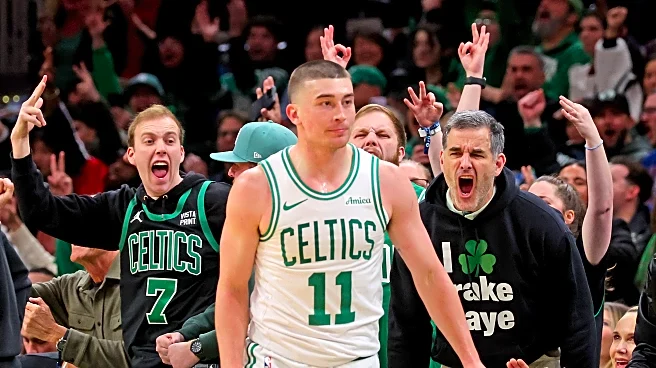
“As far as human beings go? He’s one of the most patient people I’ve been around,” said Payton Pritchard. “I don’t think you could ever say something bad about him.”
How Tony Dobbins found himself on the Celtics
Dobbins, a Washington D.C. native, started playing basketball when he was five years old. A defensive specialist, he went on to enjoy an illustrative career at Virginia Tech (1999-2000) and Richmond (2001-2004) before going undrafted in 2004.
After college, Dobbins spent a few years in the G League, but the majority of his 13-year pro career took place overseas, where he laced up for professional clubs in Italy, Greece, France, and Spain. And, after he retired in 2017, he was ready to begin his next chapter: coaching.
In many ways, Dobbins was always primed to be a coach. His father coached him from when he was a toddler all the way through high school, and while Dobbins expected his dad to retire once he went off to college.
“I thought that he was coaching me because I was his kid,” Dobbins said. “But then, when I went away to college, he went and got a group of 7-year-olds and started coaching them. And that’s what he’d do.”
So, in the summers, when Dobbins would come home from college, he joined his father.

Dobbins’ wife, Allyson Hardy Dobbins, was a college basketball star in her own right at Bowie State University. She also played overseas for 12 years, and Dobbins often emphasizes one key point about her: “She’s the best basketball player in the family.”
The couple shared the coaching bug; when Tony and Allyson would finish up their seasons overseas, they’d head back to Maryland and lead both the men’s and women’s teams in offseason workouts.
Then, right around the time Tatum was drafted by the Celtics, Dobbins got an interview to join the Celtics’ film staff.
In some organizations, starting out as a video coordinator could prove limiting. But with the Celtics, that’s almost become the norm; it’s how president of basketball operations Brad Stevens and head coach Joe Mazzulla both got their starts, too – so it’s evident that the sky is the limit.
“I don’t ever feel like for any of us, there are limits put on us,” Dobbins said. “You got these two guys who are running the organization, so to speak, from a basketball ops standpoint – whether it be Brad running the front office or Joe running the coaching staff – that see the value of giving people space to learn and grow because of what it can lead to. I feel like working for Joe, he’s not saying to anyone, you just do this or you just do that.”
Dobbin’s lengthy experience as a professional basketball player has also prepared him for this moment, giving him a level of baseline empathy. When bench players struggle on the floor, he often goes over to them to offer encouragement as soon as they check out of the game.
“I try to put myself in a guy’s shoes… what they may be dealing with, what they may be going through, what they may need,” he said. “That gives me the most fulfillment or purpose — just helping them in their journey, seeing guys accomplish their goals, have breakthroughs.”
So, Dobbins was a great pick to be one of the Celtics assistants spearheading Tatum’s recovery behind-the-scenes. From the moment Tatum was cleared for even minimal on-court workouts, he and Dobbins began working closely together.
“Even when we didn’t know if I was coming back this year, he still approached every single day as if I was a super important part of his team,” Tatum said.
Joe Mazzulla has long touted Dobbins as one of the key members of the coaching staff.
“He’s a great communicator to the guys, but also to his staff,” said the Celtics’ head coach. “He’s wise beyond his years. We’re lucky to have him.”
How Tony Dobbins’ demeanor diffuses tensions
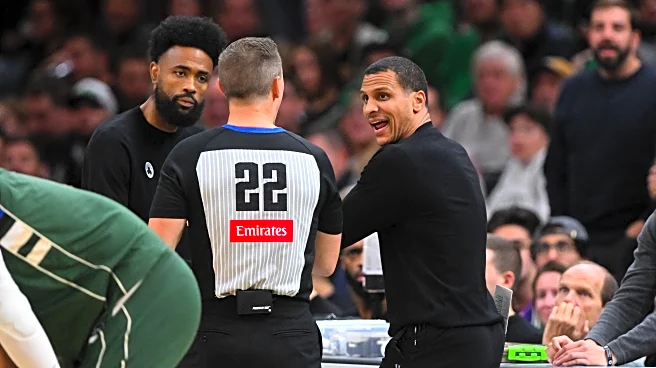
Oftentimes, after Joe Mazzulla or a Celtics player is upset with a referee, Dobbins goes over to the official for a quick conversation.
“If Joe had just gone and had some intense interaction with an official and they may be feeling a bit offended, or feeling like he was incorrect or he overstepped, then I may come in and say, ‘Okay, but you got to understand, from Joe’s perspective, we just had this play, and this play, and this play happen. So it’s not toward you. It’s just like, ‘Put yourself in our shoes, and we’re looking at it, and this doesn’t seem like it’s a balanced situation,’” Dobbins said. “And then hopefully the goal would be [the ref saying], ‘Okay, I see what you’re saying. I’ll keep an eye on it.’”
Jaylen Brown, like many of his teammates, has been a direct beneficiary of Dobbins’ de-escalation.
“Tony is always keeping everybody level-headed – reminding me, and reminding our team just to breathe,” Brown said. “Managing the emotions of the game is what he speaks to a lot, because the better players — the better professionals — can manage their stress levels and their emotions during the game, so that they can see the game clearly.”
At times, tensions will still be inflamed; high emotions are a part of the game, after all, and at times, they can be channelled toward something beneficial.
But Brown and the Celtics have experienced firsthand just how important it can be to diffuse emotions in the heat of battle, too.
“Once you have frustration, and all that type of stuff starts to seep in, it starts to cloud your vision and your decision-making,” Brown said. “So when you’re out on the floor — when you’re out in life, really — you just want to be able to make the best decisions possible.”

Dobbins doesn’t view emotions as an inherently bad thing, either. But it’s his role to de-escalate when the moment calls for it.
“A lot of times, in a game, the intensity level is so high, the emotional level is so high, that I can come and offer a different perspective,” he said.
It’s a perspective that typically resonates.
“He’s a very calming presence,” Pritchard said. “He’s a great human being, great basketball mind.”
There have been instances in which Dobbins’ nonchalant demeanor has been misinterpreted. After Dobbins interviewed with Reynolds for the Celtics’ film room position in 2017, he was internally overjoyed to find out he got the job.
But that wasn’t the reaction Reynolds observed.
“The way he tells the story, it was like, ‘You didn’t sound excited at all.’ I was just so like, even with it,” Dobbins said, laughing. “I naturally have a laid-back demeanor.”
Since that first phone call, Reynolds and Dobbins have grown to become close friends. In a coaching landscape often defined by turnover, they’ve together survived the tenures of three different head coaches — Brad Stevens, Ime Udoka, and now, Mazzulla.
And Reynolds, a long-time Celtics fan, has taught Dobbins everything he needed to know about Celtics culture.
“He’s from Boston, and I’ve [gotten] an education on what that means,” Dobbins said. “He taught me about Tommy Heinsohn. He taught me about Mike Gorman. He taught me about all these different aspects of Celtics culture that are beyond what the outside world knows.”
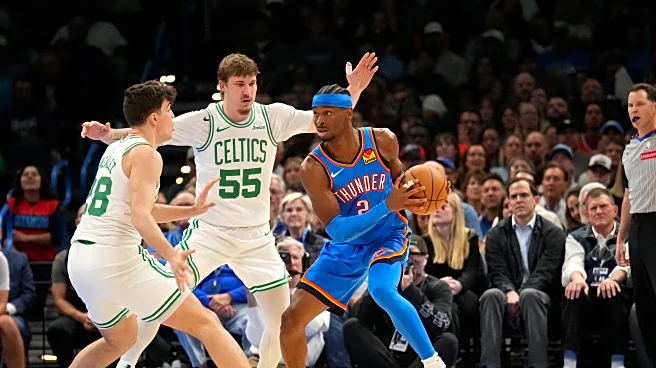
Dobbins’ rise through the coaching ranks, however, can be attributed to far more than just his personality. Dobbins, who won multiple Defensive Player of the Year awards in the French league, now helps power the Celtics’ defense, which ranks 5th in the entire NBA.
“That was my biggest strength [as a player],” Dobbins said. “So, it’s something that I gravitate toward.”
Neemias Queta, who is starting for the first time in his career and has been one of Boston’s most important defenders, said that Dobbins’ attention to detail on the defensive end has been crucial to his own success.
“His ability to break down the game, and every possession with film and just having that type of brain around every day – it’s so much easier for us to go out there and execute,” Queta said.
Tatum credits Dobbins for his unwavering behind-the-scenes support throughout the entirety of his rehab.
“I can’t thank him enough for his selflessness and just really being engaged with me every single day,” he said.
And, Sam Hauser succinctly stated why the Celtics have opted to rely on Dobbins for almost a decade.
It’s a sentiment that players and coaches across the organization echoed: “Tony is one of the greatest humans in this world.”