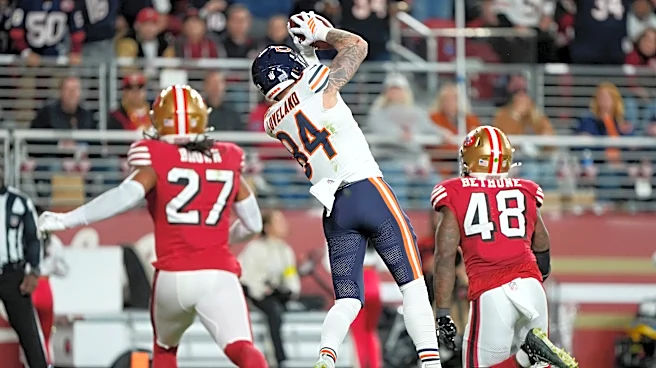




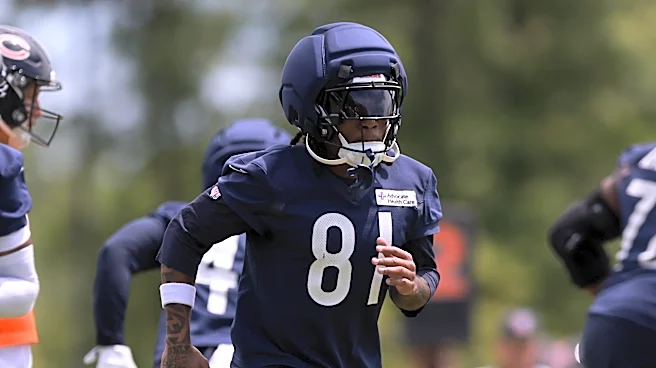


There’s no one I’m more excited to watch on the Chicago Bears this season than Colston Loveland. He had a nice rookie year, showing the total package from a tight end with his blocking, hands, and route running, but as is the case with the young Bears, he wasn’t satisfied.
“I think it’s watching the tape and knowing it was good for a rookie, but it’s not going to be good enough for a second-year or third-year guy,” Loveland said last week from Halas Hall. “So knowing that, all right, flush that, clean
up on the tape, and the certain things that I need to get better at, which is dang near everything.”
After a slow start due to some offseason rehab, Loveland settled in with 58 receptions, 713 yards, and 6 touchdowns, all to lead the 2025 Bears.
But from Week 9 on, including the two playoff games, Loveland caught 59 balls for 790 yards in those 12 games.
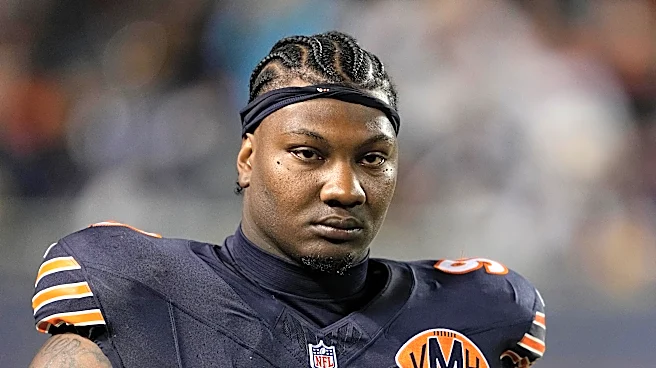
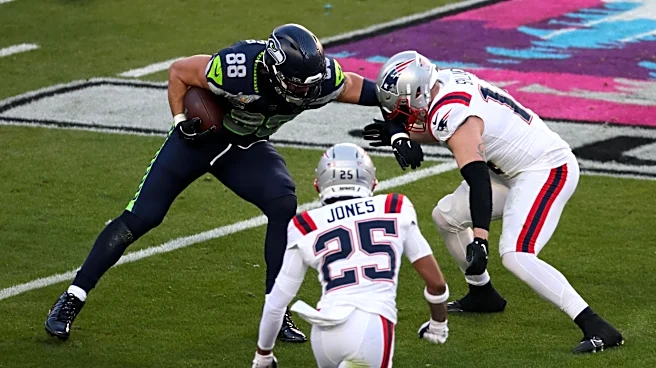
With the Bears drafting another tight end, Sam Roush in the third round, speculation on the Bears increasing their 12 (two tight ends) and 13 (three tight ends) personnel usage has run rampant all offseason. The key to this has always been Loveland, because his skill set allows head coach Ben Johnson to move him all around the formation, and that’s why I think he’ll be the Bears’ top receiver in 2026 and flirt with All-Pro status.
The Athletic’s Ted Nguyen recently picked Loveland as one of the 10 most versatile players in the NFL while talking about his “elite” potential.
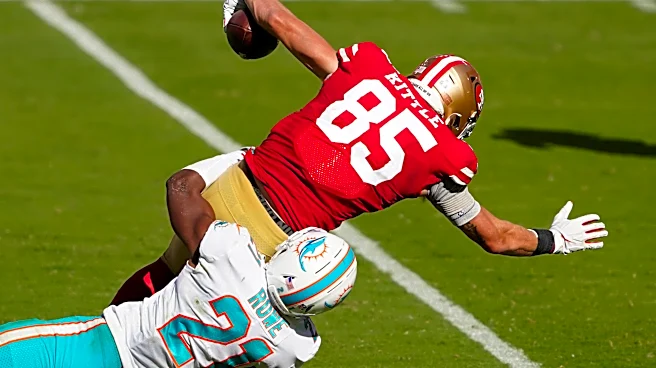
The era of the tight end is upon us. Even blocking tight ends are getting paid, and a slew of them got drafted in the second and third rounds of this year’s draft. However, there are a select few who are good to elite at both blocking and receiving. For a while, George Kittle was the only tight end truly elite at both. Colston Loveland is poised to take that title. Maybe it’s still too early to pass that mantle to Loveland, but Kittle is 32 and coming off an Achilles injury in an NFC wild-card game. As hard as Kittle works and takes care of his body, it’s fair to question how quickly he returns to form.
Loveland, the No. 10 pick in 2025, is just 22, improved into a good blocker by the end of the season and became the focal point of an explosive passing game. Loveland is a dynamic and crafty route runner and built a strong rapport with QB Caleb Williams. Last season, Kittle led the league for tight ends in yards per route run (2.18). Loveland finished second (1.86) but — as with most rookie tight ends — had a slow start. In his final six games, Loveland averaged 2.42 yards per route run. With more experience and Williams entering his second year in Ben Johnson’s offense, Loveland could well be the most productive receiving tight end in the league and be even better as a blocker.
Kittle has been one of my favorite players to watch since he was drafted, and now Chicago has a guy with that type of upside, as well as a quarterback who has a Patrick Mahomes-like ceiling.
While Ben Johnson was calling plays for the Lions, we saw how a talented tight end (Sam LaPorta) opened things up for his offense, and we got a nice glimpse of what Loveland could do as a rookie last season for the Bears.
“I love what he brings to the table,” Johnson said last week about Loveland. “He’s one of the most consistent players I’ve been around, and that’s saying a lot for a young guy, because I think it takes a while before guys can truly understand what it means to be a professional. But he’s in early, he’s always in his playbook, he’s always taking notes. I think he really thrives with being available in the pressure moments. That’s the type of guy that he wants to be.”
Loveland is striving for excellence, and he’s playing for a head coach who will push him to get there.
“I’m really happy with where he’s at right now,” Ben continued. “We’ve been able to take the route tree to the next level, and it’s something we’re going to continue to develop in training camp as well.”
That route tree will likely include plays run from the Y, the F, and, quite possibly, the H-Back position, given Loveland’s versatility.