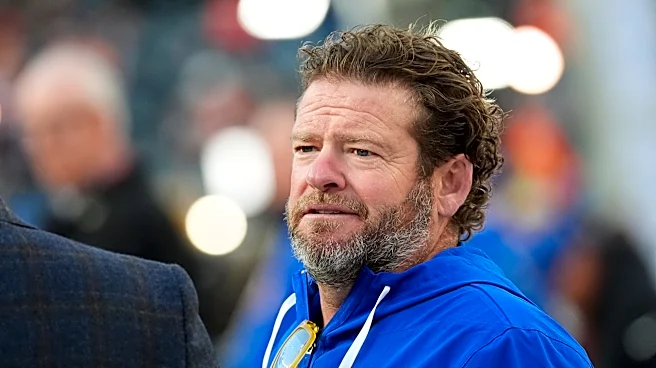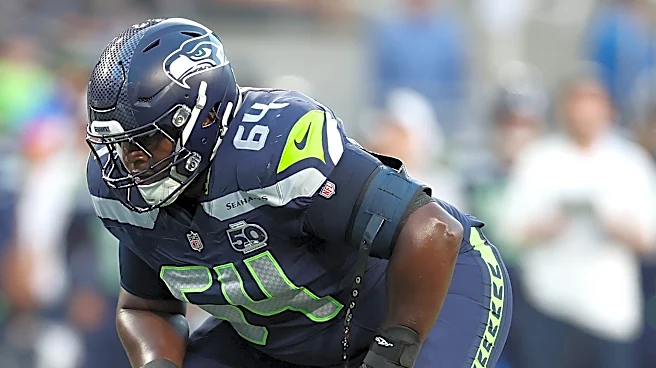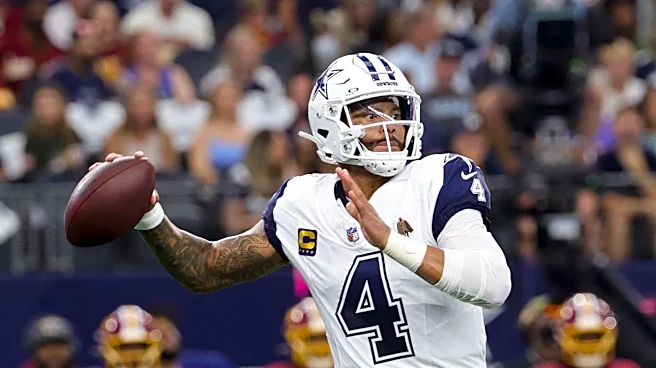


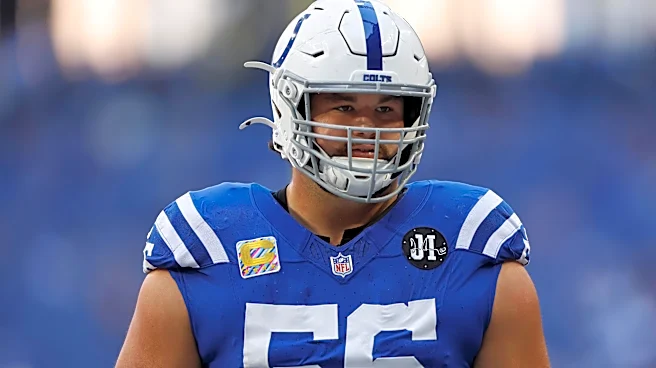
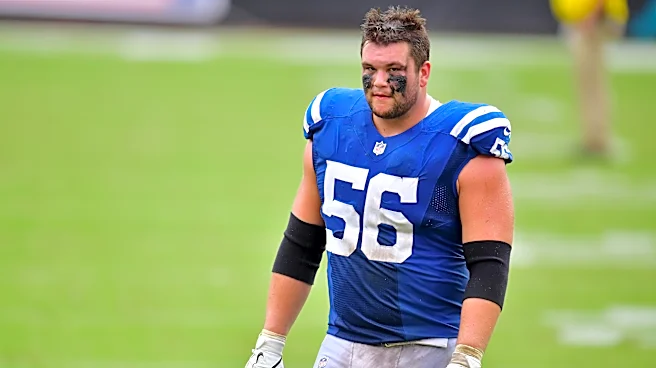

John Schneider has never been particularly hesitant to pursue veteran help when he believes a roster is close to contending. The Seattle Seahawks’ acquisition of Quenton Nelson from the Indianapolis Colts is the latest example, and it addresses one of the team’s most pressing needs without costing a first- or second-round draft pick.
Seattle sent Indianapolis a third-round selection in 2027 and a fifth-rounder in 2028, while taking on approximately $9.777 million in prorated salary for the remainder
of Nelson’s 2026 contract. For a team sitting at 4-3 and hoping to make a serious postseason run, the move is a clear attempt to improve an offense that hasn’t consistently delivered.
The rationale is straightforward. Seattle needs to give Sam Darnold a cleaner pocket and create more room for its running backs. Nelson has spent much of his career doing both at an exceptionally high level. The question isn’t whether his résumé justifies the move; it’s whether his current form can help Seattle overcome the problems that have held the offense back this season.
At 30, Nelson already has six All-Pro selections and eight consecutive Pro Bowl appearances to begin his career. According to the Elias Sports Bureau, since the AFL-NFL merger in 1970, only four offensive players have made the Pro Bowl in each of their first eight seasons: Nelson, Hall of Fame running backs Franco Harris and Barry Sanders, and offensive tackle Joe Thomas.
That is an extraordinary group to join. Seattle isn’t acquiring a developmental prospect or trying to rehabilitate a player who has fallen out of favor. It is bringing in a veteran whose track record suggests he can still be a difference-maker at one of the most physically demanding positions on the field.
A 2018 Draft Connection Comes Full Circle
Nelson’s arrival also creates an unexpected connection with Seattle’s quarterback.
In the 2018 NFL Draft, the New York Jets moved from No. 6 to No. 3 overall to select USC quarterback Sam Darnold. The Colts remained at No. 6 and selected Nelson.
The price for New York was substantial: the sixth overall pick, two second-round selections in 2018 and another second-rounder in 2019. The Jets used the third pick on Darnold, while Indianapolis landed the offensive lineman who would become one of the defining players of his position.
Eight years later, those two careers intersect again in Seattle. The Seahawks are hoping Nelson can help create the conditions for Darnold to operate more effectively, particularly by limiting interior pressure and giving the running game a more reliable foundation.
Why the Seahawks needed help inside
The Seahawks’ offensive struggles have been reflected in several underlying metrics, and the run game has been especially concerning. Seattle ranked last in the NFL in yards before contact on runs designed through the B gaps, averaging just 0.3 yards per attempt, 0.5 yards less than 31st.
The broader picture is equally troubling. Seattle ranked 26th in offensive EPA per play, 31st in EPA per designed run and 27th in run-block win rate. Its running backs averaged 3.6 yards per designed run, good for 28th in the league, while the team also ranked 28th in yards before contact on designed runs. Pass-block win rate placed the Seahawks 21st.
No single statistic explains every problem, but together they point toward an offensive line that hasn’t consistently won its assignments. When the interior fails to establish leverage or create movement, running backs are forced to make decisions before reaching the line of scrimmage. In pass protection, losses up front allow defenders to collapse the pocket and shorten Darnold’s decision-making window.
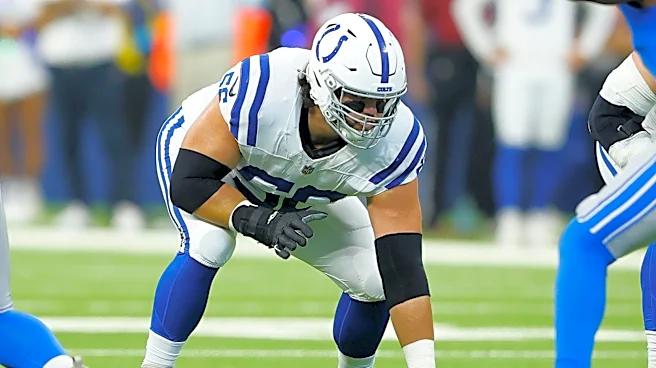
Nelson’s skill set directly addresses those concerns. His combination of power, hand placement and leverage has made him a particularly effective interior blocker, capable of creating movement at the point of attack while maintaining control of his assignment.
There is evidence that his pass protection can still be a strength. Through Week 7, Nelson had logged 275 pass-blocking snaps without allowing a sack, with a reported pressure rate allowed of 2.2% in one statistical breakdown.
His overall numbers, however, deserve closer attention. ESPN’s win-rate data placed Nelson in the 66th percentile in pass protection and the 37th percentile in run blocking in 2026. Those figures are below his marks in the previous two seasons, particularly as a run blocker.
That doesn’t necessarily mean his best football is behind him. Nelson experienced a dip in 2022 and 2023 before returning to an elite level in 2024 and delivering another strong season in 2025. Seattle will be betting that the player who reestablished himself among the league’s best can bring that level of performance to a line that badly needs it.
Joe Thuney offers a useful point of comparison. The Chiefs signed Thuney in 2021, when he was around the age Nelson is now. After arriving in Kansas City, Thuney earned three consecutive first-team All-Pro selections. Nelson could provide a similar boost, particularly if Seattle can work out an extension and keep him in the lineup beyond this season.
The trade cost is manageable. The next contract….
The draft compensation is relatively modest for a player with Nelson’s credentials. Seattle gave up a 2027 third-round pick and a 2028 fifth-round pick, then assumed approximately $9.777 million of his remaining 2026 salary obligation.
The larger financial decision may come after the season. Nelson is approaching the end of his current contract, and acquiring him could be only the first step if Seattle wants to keep him in the lineup long term.
The guard market offers a useful reference point. Peter Skoronski’s deal averages $25 million per year, followed by Trey Smith at $23.5 million and Chris Lindstrom at $21.8 million. At center, Tyler Linderbaum’s reported annual value is $27 million, while Creed Humphrey’s is $18 million.
Given Nelson’s résumé, an extension approaching +$25 million annually would not be surprising. Schneider has made several notable in-season acquisitions over the years, including LT Duane Brown in 2017, S Quandre Diggs in 2019, EDGE Carlos Dunlap in 2020, DL Leonard Williams in 2023, LB Ernest Jones IV in 2024 and WR/KR Rashid Shaheed in 2025.
Those trades haven’t always come with an immediate contract extension. Seattle can take a similar approach with Nelson, using the remainder of 2026 to evaluate his performance before deciding how much to invest in his future. The new deals for Ernest Jones IV and Leonard Williams turned out to be strong values, while the price Seattle paid to retain Rashid Shaheed felt like an overpay. Nelson presents another test of Schneider’s ability to balance immediate impact with long-term value. Whether the Seahawks can keep him beyond this season—and at what price—will be just as important as what he delivers on the field.
How Quenton Nelson fits into Seattle’s starting line
The most straightforward lineup adjustment would be to put Nelson at his established position of left guard and move Grey Zabel to right guard. That would allow Nelson to operate on the side where he has built his reputation while giving Seattle a chance to improve the interior without completely rebuilding the offensive line.
Anthony Bradford, who recently returned from injured reserve, would be the most likely candidate to lose his starting spot under that arrangement.
Zabel’s versatility makes the switch possible, but his experience on the right side should not be overstated. He played just three games on RG during his time at North Dakota State. His work at multiple positions during Senior Bowl practices demonstrated an ability to learn different assignments, although practice experience is not the same as an established track record in a particular role.
Moving Zabel to center appears less likely. The position requires more than the ability to block one-on-one: the center must deliver the snap consistently and help communicate protections and adjustments before the play. Unless Seattle sees a compelling reason to make that change, keeping Zabel at guard is the more natural solution.
The final configuration will depend on how the coaching staff evaluates the combinations, but the likely goal is clear: put Nelson in a position to play to his strengths while allowing Zabel to develop without taking on more responsibility than necessary.
What Quenton Nelson Adds: All-22 Review
Nelson’s talent is nothing new. It was evident in college, when he became one of the highest-drafted guards in NFL history and entered an exclusive group. Since 1985, only three guards have been selected among the first six overall picks in the NFL Draft: Bill Fralic, taken second by the Atlanta Falcons in 1985; Brandon Scherff, selected fifth by Washington in 2015; and Nelson, drafted sixth overall by the Colts in 2018.
Here’s a matchup we should see several times over the next few years: Myles Garrett against Quenton Nelson. Two outstanding players. Hopefully, this is the result we see consistently.
Nelson’s technique is outstanding. His execution is firm and precise, leaving the defender with virtually no time to react. It’s a rare level of technical ability.
Even at 30, Nelson can neutralize second-level defenders with excellent angles. He also consistently finishes blocks by putting opponents on the ground. He’s an excellent addition to a zone-running scheme.
Another snap, another defender on the ground. Nelson uses excellent technique and takes the right angle to open the cutback lane for the running back, allowing the play to develop into a solid gain.
Seattle’s offensive line has struggled with technique and communication on these types of blocks, occasionally allowing linebackers to run untouched into the backfield. Nelson should be a significant upgrade in that area.
Nelson combines technique with power to move defensive linemen and control the line of scrimmage. Seattle has repeatedly struggled to create running lanes through physical dominance, and this may be the area where Nelson can make the most immediate difference.
If you ever need to explain the concept of a reach block, this is a good example.
A reach block is an attempt by an offensive lineman to get across the face of a defender aligned to the outside, using lateral movement to reach a position in front of him and seal off his path. It’s common in outside zone schemes, where the offensive line must control horizontal space.
Unlike a drive block, the goal isn’t necessarily to push the defender backward. The priority is winning the positioning battle and preventing the defender from crossing the block to pursue the running back. If the defender wins that battle, he can penetrate the backfield and disrupt the run. It’s one of the more demanding blocks in football, requiring both precise technique and considerable athletic ability.
This is pin-and-pull executed properly. Nelson pulls into the space created by the blocking scheme. Watch how he adjusts his path to the defender’s positioning, finding the best angle to open the gap for the touchdown.
Screens are another staple of Fleury’s offense, and Nelson could be valuable in that area as well. Notice his patience: he doesn’t rush downfield, allowing the play to develop while avoiding an illegal-block penalty. He reaches the linebacker and clears the path for the running back like a snowplow.
Final Thoughts
The Seahawks have addressed one of the most pressing weaknesses on their roster by acquiring a proven difference-maker at guard. Nelson’s combination of power, technique and experience gives Seattle a chance to reshape its offensive line, improve its ground game and create a cleaner pocket for Sam Darnold. Just as importantly, his arrival gives the coaching staff more flexibility in how it builds the unit around him.
This is the kind of move that reflects Seattle’s belief in its current championship window. The challenge now is to integrate Nelson into the line, find the right combination alongside him and determine at the price that a long-term extension makes sense. If those pieces fall into place, the Seahawks could come away with far more than an immediate upgrade: they could establish a foundation for a more consistent offense.
Go Hawks!