





#1 – A great start
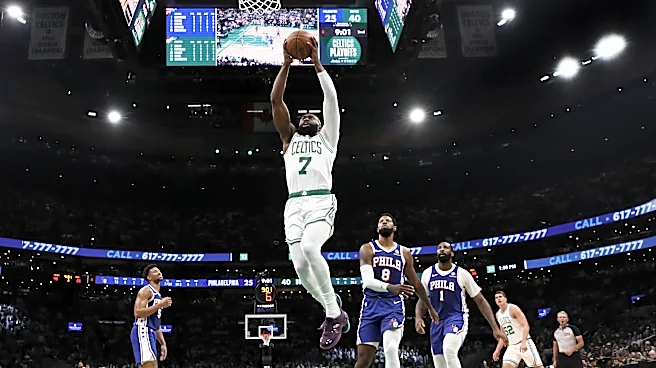
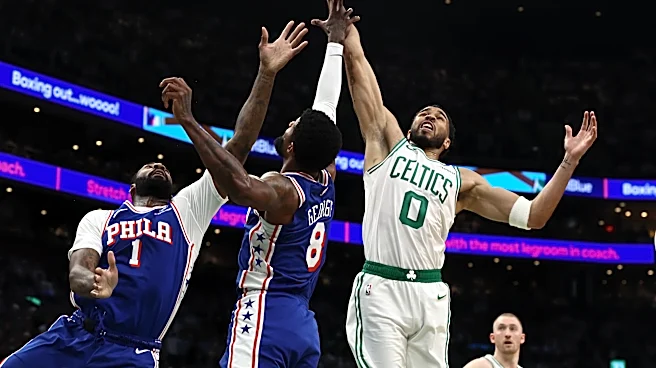
The first minutes of Game 2 looked a lot like Game 1, as the Celtics exposed the Sixers’ defense with smart ball movement and a fierce offense. As always, they targeted the weakest defender and used the strengths of the Jays to get to the rim and break the defensive shell.
Out of the 11 made field goals in the first quarter, 8 were assisted. As the Celtics kept looking for mismatches, the Sixers sent help, and Jayson Tatum exposed it with his court vision. Note also on this play the smart screen from
Neemias Queta, which makes the closeout on Sam Hauser almost impossible.
What really stood out in the first quarter was the Celtics’ willingness to play fast and not give the Sixers time to set their defense. But that is way easier when the Sixers are missing a lot of their threes—which, as we’ll see, wasn’t the case for the rest of the game.
#2 – A late collapse
The difference compared to the start of the game was obvious, and the play-by-play showed it well. Boston weren’t able to force misses from the Sixers, and the rebounding wasn’t as elite as it was in the first minutes. Then, the offense slowed down, and the Sixers were able to take away the paint from Boston.
In the last quarter, the Celtics took only three shots in the paint. They made all of them, but the problem came from outside shooting. In the last 12 minutes, their jump-shot efficiency dropped, with only two makes on 19 attempts.
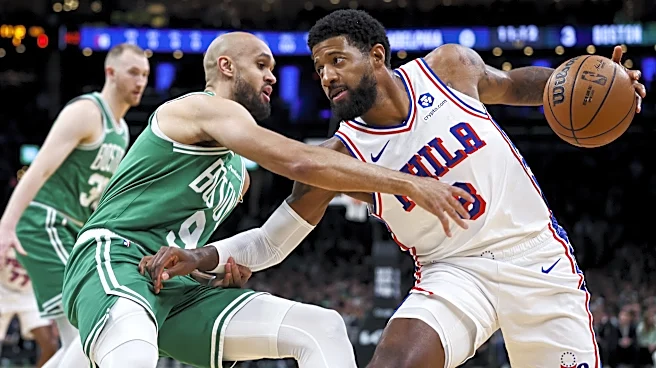
But the Celtics not only didn’t shoot in the paint, they also weren’t able to generate paint touches that could create good looks. On this miss from Derrick White, it is pretty clear that the Celtics are trying to create a mismatch, but PG understands that this is bait to give space to White, and he closes out pretty well.
The offense being static and slow in the last quarter is also due to the inability to make stops on defense. The Sixers went crazy from three and reminded us of previous Game 2s…
#3 – The Game 2 old demons
Back in 2024, the Celtics dominated the Heat in a five-game series. But, like last night, the first round was tied after two games, as the Miami shooters went crazy from deep while Boston struggled offensively against the zone.
The Sixers didn’t use the same zone defense approach as the Heat last night, but the shooting definitely helped them steal this game from the Celtics. Could this be a sign? If the Celtics end up beating the Sixers 4–1, this might resonate even louder, suggesting that this 2026 team could be following the path of the 2024 team.
#4 – Couldn’t capitalize on rebounding
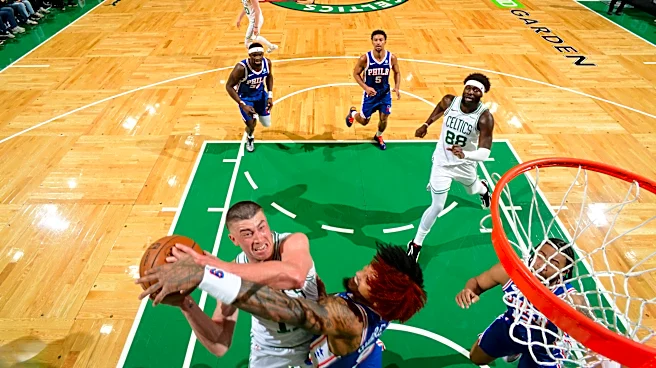
Entering the series, the Celtics knew they could rely on offensive rebounding when shots weren’t falling. With awful scoring efficiency last night (below 40% FG), the Celtics were aggressive on the offensive boards and collected 18 offensive rebounds.
But they couldn’t make the most of it.
Per cleaningtheglass.com, the Celtics scored only 0.8 points per possession on putback situations, far below their season average (1.16). On 18 offensive rebounds, this gap creates a big difference. The Celtics scored around 14 points on putbacks when it should have been more than 20.
In close games like this, especially when shots don’t fall, you must be more efficient on second chances.
#5 – Sixers better hedge defense
So what changed between the two games? It was more about execution than tactical changes from the Sixers. They kept playing that hedge coverage on the pick-and-roll to apply pressure and force the ball out of the ball handler’s hands, but they were more disciplined.
The third defender was much more active in the passing lanes to disrupt actions, and there was more presence in the paint. Overall, the Celtics had more problems getting inside against this improved execution.
Nonetheless, this coverage also creates a lot of open shots that the Celtics weren’t able to convert last night. If the Sixers keep going with that defensive principle, the Celtics still have a good chance to take the next game just by making the shots they usually make.
#6 – Boston drop coverage
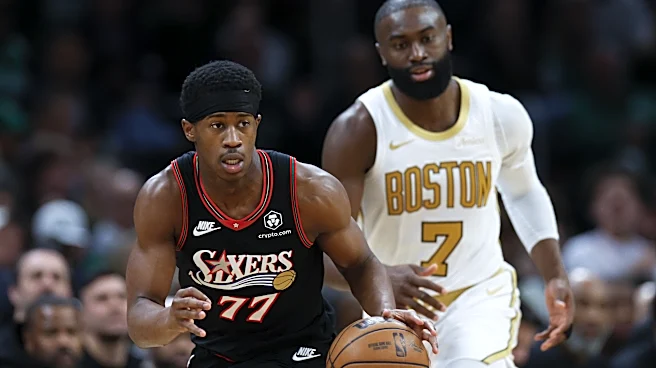
On the other end, the Sixers punished the Celtics’ drop coverage with smart empty pick-and-rolls to remove potential help and find good spots for their ball handlers. The quickness and touch of both Tyrese Maxey and VJ Edgecombe were hard to deal with.
Drop coverage is a great approach to take away the rim, but the Sixers’ pull-up ability might be too strong to rely on it repeatedly. On top of that, they did a good job placing shooters one pass away from the action to punish the Celtics’ stunts.
However, it is worth noting that the drop coverage was still very efficient at protecting the rim, with one of the lowest rim frequencies and efficiencies of the season for the Sixers. However, rim pressure wasn’t the biggest issue.
#7 – Couldn’t deal with Maxey pull-ups
The Celtics were able to cut it to a two-point game, but this is when Maxey really raised his level and put the game away for the Sixers. As we saw, the drop coverage gives him space for pull-ups.
The young guard is used to these situations, with more than five attempts per game at 34% efficiency—and it showed last night. Here, he tricked White into the screen, rejected it, and found space to pull up in rhythm.
Then, on the next play, Maxey uses his speed to get into the action quickly before the defense is set. Because of that, White is too far to contest the pull-up, and Maxey creates a pocket to shoot.
Then, Maxey showed his improvements as a playmaker. He tricked Derrick White and Nikola Vucevic into thinking he was going right for another pull-up. But this time, he rejected the screen again and drove into a completely open paint.
In the clutch, Maxey did what the Celtics couldn’t: get into the paint and make threes.
#8 – How to defend PG?
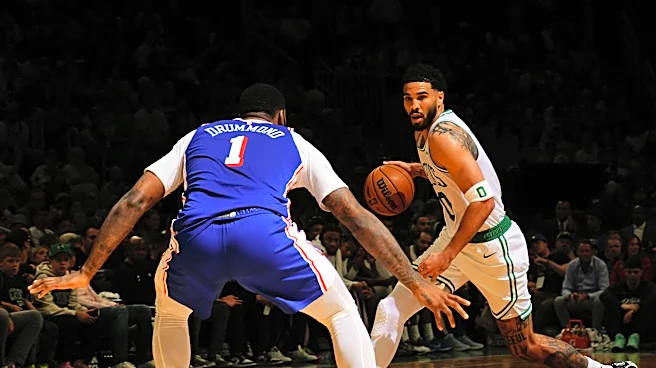
The Sixers also used PG as a creator, and this could be another problem for the Celtics to solve. To start the game, he got a couple of post-up opportunities to get going from mid-range.
Once Payton Pritchard entered the game, he became a clear target in the post, as the Celtics guard can’t hold his ground against such a big wing. This forces rotations and creates space for the Sixers.
It will be interesting to see how the defensive approach evolves and who gets more minutes over the next few games—especially Baylor Scheierman.
#9 – More Baylor?
It is quite surprising to see only 11 minutes for Scheierman, considering what he can bring. He struggled a bit against VJ Edgecombe navigating screens, but so did Sam Hauser and Payton Pritchard. Unlike them, however, he is less likely to be targeted as a mismatch while still providing spacing and connectivity.
With the quick guards and big wings the Sixers have, I would like to see more of him on the floor, both for what he brings offensively and defensively.
#10 – Beat on the turnovers
We mentioned before the series that this Sixers team was one of the best in the league at limiting turnovers while also being among the elite in defensive playmaking. We saw it last night, as they forced four more turnovers, and these extra possessions helped extend the gap over the course of the game.
The Celtics will have to be more disciplined offensively so the Sixers cannot turn defense into offense and generate easy baskets.