

Poppy Pattinson’s recent call up to the England squad saw the Houghton le Spring native strengthen the north east’s reputation as footballing hotbed. A former Sunderland Women’s player, she has joined a long line of Lionesses from the area over recent years that have helped the game capture the public’s imagination, with the likes of Jill Scott and Steph Houghton becoming household names.
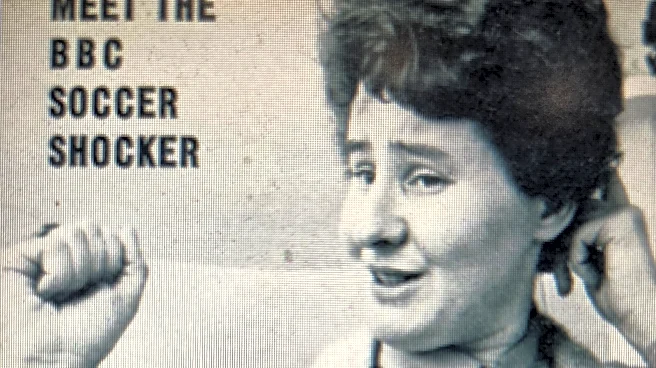
Long before them however was another pioneer with a Sunderland connection, Mary Raine, who on this day in 1969
broke new ground when she became one of the first females to broadcast on football for BBC radio’s flagship show Sports Report. Growing up in the region as part of a soccer mad family, she had loved the game since being a child and was now able to display her passion and knowledge to a national audience.
In a 2019 piece on the Sports Journalists’ Association’s website Mary explained that she had followed Sunderland due to her brother, who would often make her go in goal during kickabouts he was having with his friends, who was a big Newcastle United fan. Teachers at school were not used to seeing girls follow the sport so keenly, but despite having her football annuals confiscated by them she became a teacher herself after leaving university – although she then left the profession to become a sub-editor for the BBC.
Mary would often arrange her leave around the football calendar so that she could attend games in person and following a visit to Roker Park where she came into contact with legendary commentator Peter Jones her understanding and appreciation of the game became common knowledge within the sports department. Renowned correspondent Byron Butler was another advocate, and it was not long before she was approached by producer Angus Mackay and sent to Stamford Bridge to cover the Lads’ game at Chelsea.
Her updates were well received, and Mary was the subject of a favourable reaction in the press, whilst assistant editor Vincent Duggleby proclaimed that “Anybody that heard her broadcast will have noted her knowledge of the game. We always judge broadcasters on their merits and there is no reason why Mary or any other women should not cover matches in the future”.
Sadly though, not everybody was as receptive. As her career progressed and she came to focus on copy rather than audio, Raine was going to be sent to report on the 1970 FA Cup final between Chelsea and Leeds United only to be told by a senior figure that they could not use a report on such an important occasion by a woman. She continued to write about football related issues such as hooliganism during a long BBC career, but was not always allowed to report on games themselves – and when she did, preferred to use aliases such as John Wilson and Alan Jones.
A determined trailblazer, Mary’s first steps helped break down barriers and open up a path for other colleagues to follow. Her story might not be as well-known now as somebody like Lucy Staniforth’s for example, but it is no less important.
*Although seismic in a broader sense, the Chelsea v Sunderland match in February 1969 was not one that too many Black Cat fans will recall with any fondness. Exactly three years to the day since losing 3-2 against the Blues, the Lads were thrashed 5-1 with Bobby Tambling getting four. Colin Suggett notched the consolation in what was George Herd’s final appearance for the club – he had already started coaching the youth side and was beginning to focus on the next stage of his career.