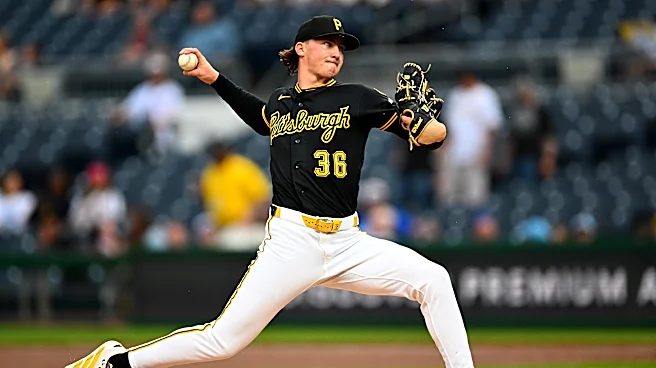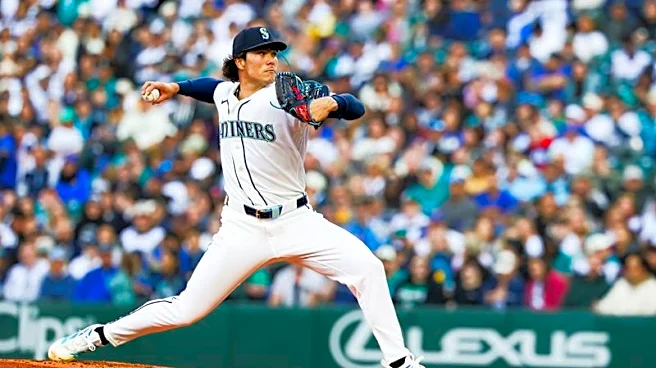





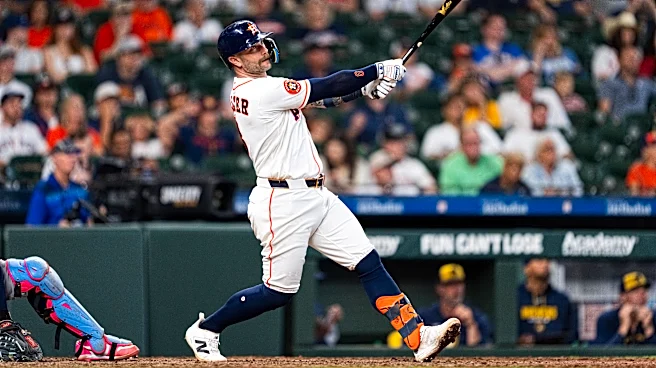
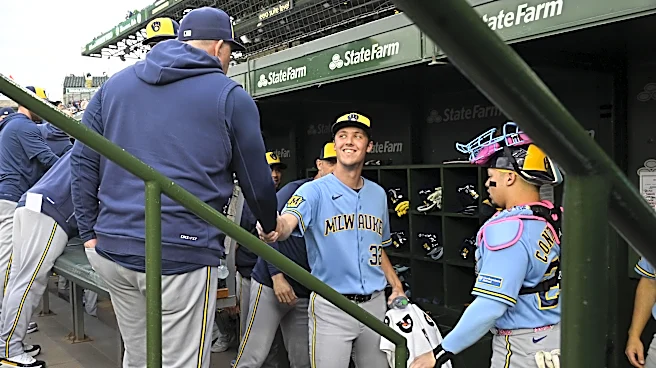
Jacob Misiorowski just almost went a whole month without allowing a run. Over 38 1/3 innings across six starts, he had a 0.23 ERA, he struck out 57 batters, and he walked only six.
It’s an arbitrary cutoff, but there are only four other pitchers in the history of baseball to strike out at least 57 batters and have an ERA as low as Misiorowski’s 0.23 in any six-start span: Hall of Famer Rube Waddell, who did it twice during the Deadball Era; R.A. Dickey, during his 2012 Cy Young year; Félix Hernández,
during his 2010 Cy Young year; and Chris Sale in 2018, when he finished fourth in Cy Young voting despite making only 27 starts.
While Misiorowski’s six-start stretch was not the greatest in the history of baseball—it may not even have been the best in the last month, with a tip of the cap to Cristopher Sánchez—I did wonder if it was the best that Brewers fans had ever seen from one of their players.
There is compelling case, but there’s also one mammoth, overlooked figure from the franchise’s history who needs to be given his due. Here are, from 7-to-1, the seven best six-start spans in Brewer history, according to me.
Note: A couple of these extend for more than six games. To keep things simple, in those cases I’ve taken the best six games from whatever the longer streak is, and I did not include another streak-within-a-streak. However, if a player had multiple distinct streaks, I considered them.
Another note: I will reference the Bill James stat “Game Score” in this piece. Game Score is a single number that’s used to put a sort of quick and dirty rating on a start, but in general it’s pretty accurate at reflecting effectiveness. It is calculated this way:
- Start at 50
- Add 1 point for each out and 2 points for each completed inning after the fourth
- Add 1 point for each strikeout
- Subtract 2 points for each hit, 4 points for each earned run, 2 points for each unearned run, and 1 point for each walk
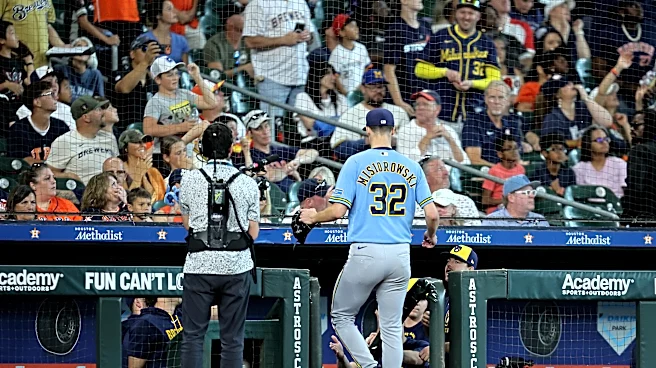
7. Corbin Burnes, April 13 – May 13 2022
40 2/3 IP, 71 average Game Score, 1.33 ERA, 2.62 FIP, 53 K, 5 BB
Surprise: Burnes’ best stretch as a Brewer did not come during his 2021 Cy Young season. It came at the beginning of the next year.
At his best, Burnes was an absolute assassin. He didn’t walk anyone. He never missed spots. His best stretch put those things on display. The remarkable thing here is the walks: just five in 40 2/3 innings. He had double-digit strikeouts in three straight starts from April 19-May 1, and allowed only six runs total.
Somehow, Milwaukee only went 3-3 in these games. But it was still an awe-inspiring display of control, and Burnes’ 10.6 K:BB ratio during the span is the best of any of the contending seasons.
6. Brandon Woodruff, May 1 – May 30 2021
42 IP, 73 average Game Score, 1.07 ERA, 2.48 FIP, 49 K, 8 BB
Here you have it: during Burnes’ Cy Young season, it was Woodruff who had the best six-game stretch. And what’s even more impressive is that it was all part of a much larger streak: from April 7th, Woodruff’s second start of the season, through June 6th, he made 12 starts, never allowed more than two runs, had a 1.25 ERA, and struck out 92 batters while walking 15 in 79 innings.
By Game Score, the six starts he made in May were the best six. Woodruff completed at least seven innings in four of those, and had double-digit strikeouts in three, one of which was a 7 2/3 innings, 10 strikeout, one walk, three hit, one run gem over the division rival Cardinals on May 12th.
5. CC Sabathia, July 13 – August 8 2008
51 innings, 74 average Game Score, 1.41 ERA, 2.33 FIP, 47 K, 7 BB
Picking a six-game stretch for Sabathia as a Brewer is hard. There’s a different six-game stretch that overlaps with this one by one game that’s arguably just as impressive: if you start on August 8th and go to September 5th, his ERA actually drops to 0.96 (though he didn’t throw quite as many innings and walked a few more batters, which accounts for the slight drop in average game score from 74 to 72). There’s also no real way to squeeze in his brilliant and meaningful starts in the last two games of the season, because he allowed eight runs (though only five were earned) in the two starts prior to those last two.
Sabathia wasted no time as a Brewer. In his first start with the club on July 8th, he allowed three runs (two earned) in six innings. Pretty good. But after that, he ripped off an 11-game stretch in which he had a 1.31 ERA, struck out 89, and walked 15 in 89 innings. He completed six of those games, three of which were shutouts. Sabathia personally went 8-0, and the team was 10-1.
The best six-game stretch by Game Score is from his second start on July 13th through August 8th. The first of three of those were all complete game victories; in those 27 innings he struck out 26 and walked three, culminating with a 3-0 shutout of the Cardinals. After a brief hiccup against the Cubs on July 28th in which he gave up four runs (three earned) in 6 2/3, Sabathia continued with 8 1/3 innings of two-run ball against the Braves and a nine-strikeout, one-walk shutout of the Nationals.
Sabathia’s best start by Game Score with the Brewers that season—and the best of his 19-year Hall-of-Fame career—came on August 31st in Pittsburgh. That’s the game where he was a bunt-hit away from a no-hitter and struck out 11.
4. Teddy Higuera, August 15 – September 10 1988
48 1/3 IP, 76 average Game Score, 0.93 ERA, 1.57 FIP, 44 K, 10 BB
We’ll see Higuera again below for what he did during the 1987 season, but by some measures, the streak he had in 1988 was better. The 1987 one was special for a different reason which we’ll get to, but by the measures of ERA and FIP, his 1988 streak was better.
From August 15 to September 10, Higuera made six starts and completed at least seven innings in all of them. In four of those, he allowed one run (one of which was unearned); in the other two, he allowed zero and two runs. His ERA for the streak was 0.93, and his FIP was a microscopic 1.57.
The Brewers went 5-1 during the streak, but how could you blame Higuera for the loss? Against Seattle on September 10th, he threw a complete game and allowed only three hits, but Seattle won 1-0.
Two starts especially stand out. On August 25th, Higuera went the distance against the Yankees, allowed only three hits, walked one, and struck out nine; that Yankee lineup had two Hall-of-Famers (Rickey Henderson and Dave Winfield) and two Hall-of-Very-Gooders (Don Mattingly and Jack Clark) at the top. The other was an outing against the Tigers on September 4th; Higuera held that talented team to one hit while shutting them out for seven innings.
3. Mike Caldwell, June 28 – July 22 1978
56 IP, 75 average Game Score, 1.13 ERA, 2.59 FIP, 25 K, 7 BB
My list of potential streaks here included 22 different six-start spans. Of that group, Caldwell’s 56 innings were the most. If you do a little math here, you’ll come to the realization that 56 divided by six is more than nine. Yes, during this streak, Caldwell average 9 1/3 innings per start. He also had the lowest BB/9 at just 1.1.
The streak started with a complete game shutout of the Yankees—the eventual World Series champs—on June 28th. On July 2nd, Caldwell went 10 innings in an eventual 4-3, 11-inning loss. (Of historical note: Seattle’s starting pitcher in this game was named, and I am not making this up, Dick Pole.) On July 7th, Caldwell shut out the Yankees again. That lineup in 1978 had six different guys who got MVP votes, one Hall of Famer (Reggie Jackson), and two or three more guys who should be in the Hall (Thurman Munson, Graig Nettles, Willie Randolph).
On July 13th, the Brewers blew out the Royals 13-2, but heck, why not let Caldwell complete the game? On July 17th, he pitched all nine innings of a 6-1 victory over the White Sox.
The cherry on top of this streak was a 10-inning complete game against the Rangers on July 22nd. In those 10 innings, Caldwell only struck out one batter. The internet tells me it was 95 degrees that day in Dallas. The Rangers played outside back then. It was a night game, at least.
2. Jacob Misiorowski, May 1 – May 31 2026
38 1/3 IP, 77 average Game Score, 0.23 ERA, 0.66 FIP, 57 K, 6 BB
The thing about Game Score is that it rewards innings pitched. You rack up points by accruing outs; a player who pitches six shutout innings starts with a 72 Game Score before factoring in anything else, while a pitcher who goes nine shutout innings starts with an 87 Game Score. Those extra innings add up.
That’s what makes it so impressive that Misiorowski managed the second-highest average Game Score for any streaking Brewers starter, despite throwing less than 40 innings.*
*Technically, there are five six-game streaks ahead of Misiorowski, but they all belong to the same 1987 stretch by Higuera (see below).
This is fresh in our brains, so I won’t spend a ton of time, but a few things from Miz May:
- The Brewers went 5-1 during the streak; in the only game they lost, Misiorowski handed a 1-0 lead to his bullpen after seven shutout innings.
- Miz struck out at least eight batters in all six games and had double digits three times.
- That he walked just six batters in those six games is remarkable. That equates to 1.4 BB/9. Across four minor league seasons, Misiorowski’s BB/9 was 5.4, and last season in the majors it was 4.2.
- Misiorowski’s K/9 in those six games was 13.4. The current record for a pitcher with at least 1,000 innings pitched is Blake Snell at 11.2. (13.4 K/9 is actually below Miz’s season average of 13.7, which leads baseball, obviously.)
- Misiorowski allowed one extra-base hit during his six starts, a double with one out and nobody on to Isaac Paredes on Sunday. Opponents slugged .110 against him. Ben Sheets slugged .134 in 2004.
1. Higuera, August 10 – September 6 1987
53 IP, 80 average Game Score, 1.19 ERA, 2.38 FIP, 45 K, 16 BB
I think this has to be the answer to this question, and here’s why: in the last three of these six games, Higuera threw three straight shutouts. One of them was ten innings.
Higuera’s start of August 26th, 1987 against Cleveland is tied for the second-best game in Brewers history by Game Score.* Higuera went all ten innings, struck out ten, walked two, and allowed just three hits. Milwaukee’s Rick Manning walked off future Brewer Doug Jones in the bottom of the tenth with an RBI single.
*This is a fun list:
- Number one, also against Cleveland, is the game when Burnes combined with Josh Hader for a no-hitter. Burnes went eight, struck out 14, and walked one for a 95 Game Score.
- Two starts are tied with Higuera with a 94 Game Score: on September 27, 1974, Jim Colborn threw the first 13 innings of a 1-0, 17-inning loss to Baltimore. He walked six and gave up eight hits but didn’t allow a run.
- The other is Sheets’ 18-strikeout game. He went nine, allowed three hits and a run, and walked one.
- Sabathia’s near-no-hitter, cited above, is just behind those four, at 93.
- Juan Nieves’ no-hitter, the only single-person no-hitter in team history, scores an 89, tied for 13th. He walked five and “only” struck out seven in that game.
In his next start, Higuera allowed just one hit and two walks while striking out nine in a 2-0 shutout of the Royals. Another close game! Ross Jones hit a two-out triple in the bottom of the eighth in a 0-0 game, which was the only thing preventing a Higuera no-hitter. But the next batter popped out, Milwaukee got two two-out runs off of Kansas City ace Bret Saberhagen in the top of the ninth, and Higuera sat down Willie Wilson, Kevin Seitzer, and George Brett in order in the bottom of the ninth.
The third shutout came against that season’s World Series champions, the Minnesota Twins. The Brewers won comfortably, 6-0… but they were only ahead 1-0 until the 6th and 2-0 until the 8th. The Twins only managed two hits and three walks, and Higuera struck out seven. A weird piece of trivia for anyone who likes seeing baseball legends on the “wrong team”: the losing pitcher in this game was Steve Carlton! It was the eighth-to-last appearance of his 24-year, 741-game career.
So that’s the three shutouts that Higuera threw toward the end of the 1987 season. But while he wasn’t quite at that level in the three games before that, he was still good. In the first game of this streak on August 10th, Higuera threw the first 11 innings of a 12-inning, 4-3 win over the Rangers. He lost a duel with Baltimore’s Mike Flanagan on August 15th but threw all eight innings and allowed just two runs in the loss. The only game of the streak that Higuera didn’t go at least eight innings was on August 20th, when he allowed two runs on three hits in six innings. But Milwaukee was up 14-2 when he left that game, so they must’ve decided they could let the bullpen get some work.
The last note about this 1987 streak: it was really an eight-game streak. From August 5th through September 11th, Higuera had a 1.27 ERA in 71 innings and averaged a Game Score of 79. Pretty darn good.
A couple quick honorable mentions, for fun:
Cal Eldred had a 0.58 ERA over 46 2/3 innings from August 14th to September 13th of his magical 1992 rookie season.
Rubén Quevedo (!) had a six-game stretch with a 0.68 ERA from May 7th to June 5th, 2002… though the first of those six appearances was a scoreless one-inning relief appearance.
Somebody named Bill Parsons had a six-game stretch in July and early August of 1972 which included four straight complete games. Two were shutouts, and in a third he allowed zero earned runs (but still lost).
Chris Bosio had an excellent season in 1989, and that was largely due to a stretch from July 19th through August 12th in which he had a 0.77 ERA in 47 innings.
Sheets’ 18-strikeout game was included in a stretch where he allowed nine runs in 46 innings (a 1.76 ERA), struck out 48, and walked only eight.
Finally, Jim Slaton had a stretch from August 18 to September 11, 1974, when he had a 0.54 ERA over 50 innings. The peripherals were ugly: he had just a 1.7 strikeout-to-walk ratio. But he was effective.