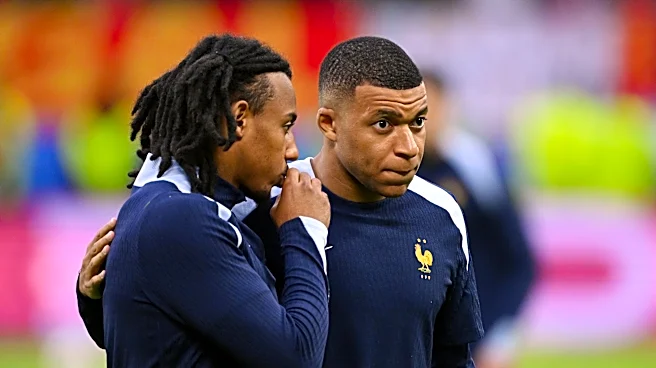



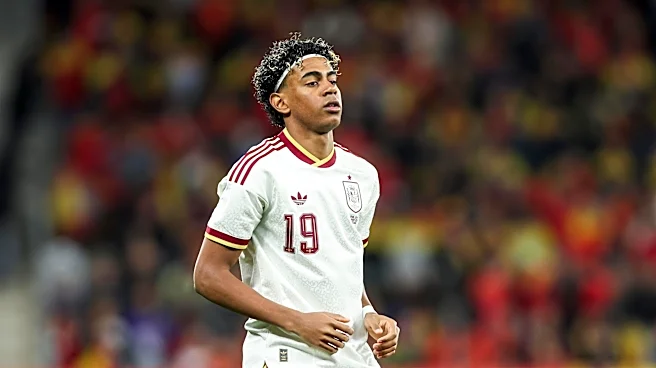
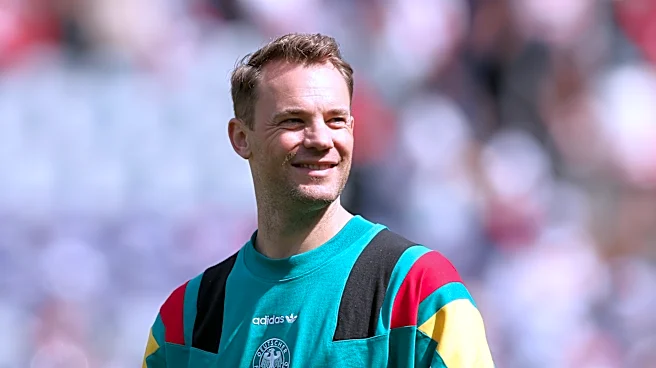



Didier Deschamps will leave the France job after the 2026 World Cup, as confirmed in January 2025, and he now faces a chance to write one final chapter into the history books, whether it would be redemption or retreat, a third final or an early flight home from the United States.
The answer to what comes next is no secret either. Zinedine Zidane is reported to have a verbal agreement with the French Football Federation to take over once Deschamps steps down, ending a five-year wait since leaving Real
Madrid in 2021. The former midfielder turned down several job offers in the intervening period, including approaches from Manchester United, holding out specifically for the France role. The succession casts a long shadow over everything France do this summer, even if Deschamps himself has steadfastly refused to be drawn into it.
The Zidane angle is not incidental for a Madrid audience. He won two La Liga titles and three consecutive Champions League trophies at the Bernabéu across two spells, and his relationships with several players in this France squad run deep. Mbappé has spoken publicly about not wanting Deschamps to end up managing another national team, “Didier is French, he is ours,” he told reporters recently, but the arrival of Zidane as successor, a man the Real Madrid players know and respect, could shift the international dynamic in ways that benefit the club. A Zidane-led France would almost certainly mean a more prominent role for whichever Madrid players have impressed him here.
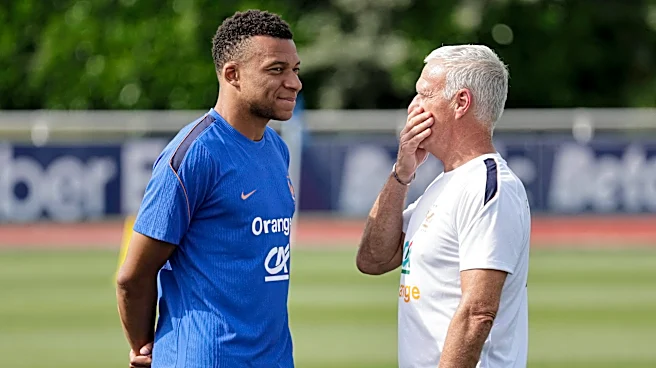
Speaking to MARCA ahead of the tournament, Deschamps was asked about his future. “What is most important is today and tomorrow,” he said. “Tomorrow is the World Cup. I have always considered myself to be at the service of the French national team.” When pressed on the prospect of a club job afterwards, the answer was equally firm: not interested, not yet, not while there is still a tournament to win.
The man has earned the right to that kind of focus. He led France to the World Cup title in Russia in 2018 and to the final again in Qatar in 2022, losing to Argentina on penalties in what many regard as the best World Cup final ever played.  He was appointed on 9 July 2012.  The tenure reaches 14 years this summer. No other manager at this tournament has been in charge longer.
France are in Group I. They open against Senegal at MetLife Stadium on June 16, face Iraq in Philadelphia on June 22, and close against Norway in Boston on June 26. Norway arrive with Erling Haaland, Martin Odegaard, and Alexander Sørloth as their headline names, their biggest challenge of the group stage, even if many French fans may still have nightmares about the threat posed by Senegal after their 2002 humiliation.
Mbappé: the record, the fitness, the noise
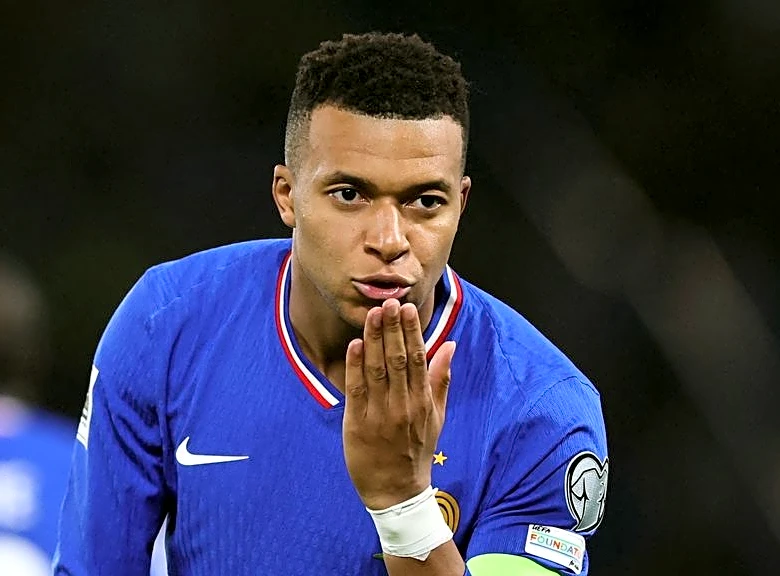
Kylian Mbappé leads the squad with 96 international caps and arrives on the cusp of two records that would define his legacy with Les Bleus. He has 56 goals in 95 appearances for France, one behind Olivier Giroud’s all-time record of 57 in 137 caps. He is also, at 27, on his third World Cup and one goal away from erasing the name of Just Fontaine from the record book for France’s all-time World Cup scorer. With 12 World Cup goals already, he is in touching distance of Miroslav Klose’s all-time record of 16.
The fitness picture coming in was complicated. Real Madrid confirmed in late April that Mbappé had sustained a “semitendinosus” muscle injury in his left leg after going off hurt during a 1-1 draw against Real Betis in La Liga. He has since recovered and leads the French attack , but the timeline of that injury, coming at the end of a season in which Real Madrid won nothing, is worth noting. The thigh problem was the latest in a sequence of physical setbacks across the year, and it cut short his ability to build any final momentum going into the tournament.
Deschamps has been direct about what the trophyless season at Madrid means for how Mbappé is judged. “When Real Madrid doesn’t win titles, it is clear that he is as responsible as the rest of the squad,” he said. “But because he is Kylian, more is demanded and more blame is placed on him. The Real Madrid fans being unhappy and questioning the results is perfectly normal. Elite footballers know that is how it works.”
That is a generous reading, and not an inaccurate one. Mbappé finished the club season with 41 goals and 6 assists in 41 appearances, a rate that almost any other forward in Europe would consider astounding. The team around him did not function. The debate lies in whether Mbappé‘s individuality came at the cost of the team. That distinction matters, and it is one Deschamps made explicitly: the individual numbers are there, the collective results were not, and the scrutiny falls disproportionately on the biggest name.
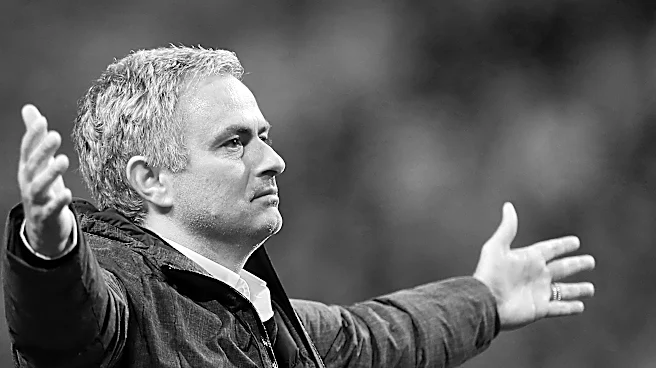
What the World Cup offers Mbappé is a stage where the Madrid context is stripped away. He does not need a rebuilt team around him here, Deschamps has structured France precisely to give him and Ousmane Dembélé the space to operate. If he stays fit across seven games, the scoring records will likely fall. What that does for the mood of the Madrid dressing room next August, with Jose Mourinho arriving and a new cycle beginning, is harder to predict. A tournament-winning Mbappé with a goalscoring record to his name returns to Valdebebas with leverage and status that no bad domestic season can diminish. A Mbappé who picks up another injury and exits early comes back fragile, and the questions about his physical durability, which have been building quietly since his nose fracture at Euro 2024, will sharpen.
Deschamps, who has had longer than most to study Mbappé up close, offered the clearest summary available. “France will always be stronger with him,” he told Marca. “That is something I have always believed and I say it again today.”

Tchouameni: everything that went wrong, and why it still matters
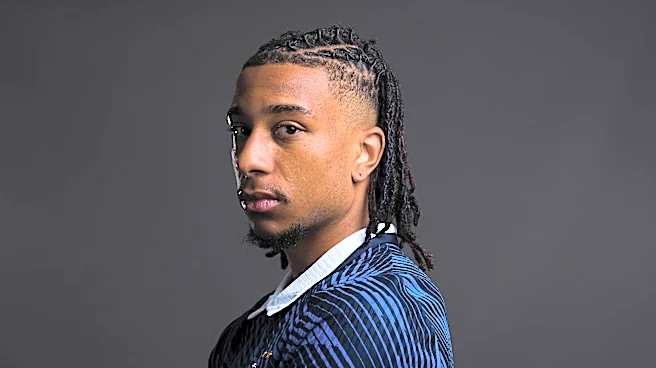
Aurélien Tchouameni’s 2025/26 season at Real Madrid was not the one anyone had mapped out for him. The climax of the campaign, in early May, was a training-ground confrontation with Fede Valverde that ended with Valverde being treated in hospital for a head injury. Both players were fined €500,000 by the club. Valverde missed the subsequent Clásico at Camp Nou, which Barcelona won 2-0, a result that handed them the La Liga title and confirmed Madrid’s second consecutive trophyless season.
Tchouameni, speaking at France’s Clairefontaine training camp, characterised it as having been blown out of proportion. “Things happened,” he told reporters. “Life goes on. Fede and I have a common goal: to win titles with Real Madrid. There is no problem.” The club drew a line under the matter once the fines were paid and apologies made to the squad, coaching staff, and fans, but it stays in the background, particularly for a player who now arrives at the World Cup needing to produce something that changes the frame around his season.
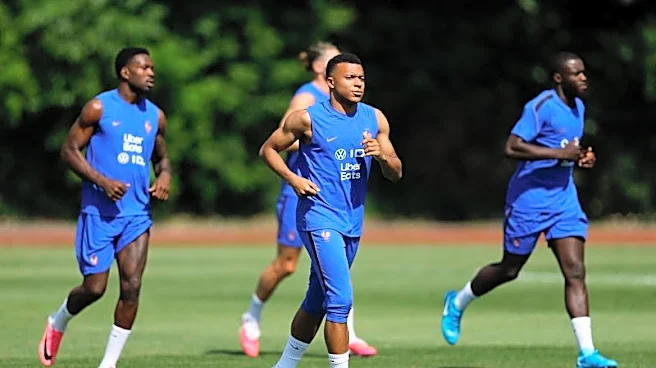
At international level, the picture is less complicated. Tchouameni’s ability to screen the back four, win the ball in transition, and carry it into midfield is central to how Deschamps builds France defensively. Deschamps describes midfielders as “fundamental” to the balance he is trying to maintain between an attack-heavy squad and the defensive solidity that major tournaments require. Tchouameni is the engine of that structure.
There is an added dimension here that connects directly to Madrid’s summer. Ibrahima Konaté, Tchouameni’s France teammate and Liverpool’s first-choice centre-back, is expected to join Real Madrid on a free transfer when his contract at Anfield expires this summer. The two have played alongside each other for Les Bleus and know each other well. If France progress deep into the tournament, the pairing of Konaté and William Saliba at the heart of the defence, and Tchouameni screening in front of them, will be one of the best defensive units in the competition. Konaté arriving at Valdebebas having just played in a World Cup final would be a very different proposition to one arriving having exited in the last sixteen.
For Tchouameni specifically, the tournament functions as a reset. Mourinho arrives in the summer and every player from last season enters the new cycle carrying the weight of what just happened. At 25 and in the prime years of what should be a long Real Madrid career, a World Cup in which he anchors France’s run deep into the knockout rounds would establish that the incident with Valverde was a moment of pressure, not a window into something structural.
Camavinga: the conspicuous absence
Eduardo Camavinga’s absence was one of the big talking points surrounding squad selections for this World Cup. Deschamps addressed the omission publicly, citing the midfielder’s physical condition and lack of continuity across the season as the primary factors. Camavinga made 28 La Liga appearances but started only 16, coming off the bench in the other 12.
“He had a difficult season for him where he played less. He also had injuries,” Deschamps told reporters after the squad announcement. “I understand and I imagine his enormous disappointment. He is entitled to be angry with me.” The tone was sympathetic, but it won’t have lightened the blow. Camavinga was part of the France squad that reached the 2022 final and appeared as a substitute in the loss to Argentina in Doha. To go from that to being left home entirely is a significant step backwards.
The wider context makes it worse. Camavinga arrived at the Bernabéu in 2021 as one of the most technically gifted young midfielders in Europe, a left-footed operator with the athleticism to play multiple roles and the composure to do so at the highest level. This season, none of that materialised consistently.
He is 23. The long-term view says he has time to rebuild. The short-term view says that missing a World Cup is the kind of absence that marks you. Mourinho arrives at the club needing to make decisions about a midfield that already carries tension from last season. A summer watching the tournament from the beach, while Tchouameni plays central minutes for a France side with genuine title ambitions, is not the preparation Camavinga needed.
Whether Zidane taking over France changes anything for Camavinga longer term is an open question. A new national team manager typically means a new set of priorities and a chance to reintroduce players who fell out of favour under the previous regime. If Camavinga produces a strong first half of next season at Madrid under Mourinho, the door back into the France squad, under a manager with no personal stake in the decisions made before him, may open again faster than the current picture suggests. The precondition is that he actually forces his way into regular starts at club level first.

What France’s competition could mean for Real Madrid
Real Madrid’s 2026/27 season begins with a new manager, a fractured recent history, and a group of players returning from a World Cup in which their individual fortunes will have diverged sharply. Konaté arrives into that environment as a new face, but the French contingent, including Mbappé, Tchouameni, and potentially Camavinga trying to rebuild, already represents a significant bloc inside whatever Mourinho inherits.
If France win, and Deschamps, cautious as ever, says that France carries legitimate favourite status built on “everything we have constructed and the results we have obtained”, Mbappé and Tchouameni return as world champions, the noise of last season temporarily quieted by the biggest prize in the game. Konaté joins a dressing room in which his international teammates are on a high. The conditions for a strong collective season at Madrid, under a manager who knows how to use motivated players, are better.
An early exit complicates everything differently. A France team that falls in the group stage or the round of sixteen returns carrying the same unresolved questions from the club season, plus a new layer. Deschamps goes out on a deflating note. Mbappé’s record-chasing goes unfulfilled. Tchouameni’s fresh start stalls. Camavinga, who watched from home, has no World Cup shadow over him, just the question of whether he can force his way back into plans from a standing start.
And then Zidane takes over Les Bleus, reconnecting with a group of players he already knows intimately from the Bernabéu. Whether that makes the France job feel closer or further away for the Madrid players who struggled this summer will depend, as it almost always does, on what happens between now and then at club level.
Deschamps, reflecting on his tenure, said he never asks himself whether he could have done better because “there are no answers.” He tried to give the best he had with the players available. On June 16 at MetLife Stadium, against a Senegal side with a point to prove after their AFCON final controversy, the last dance begins.