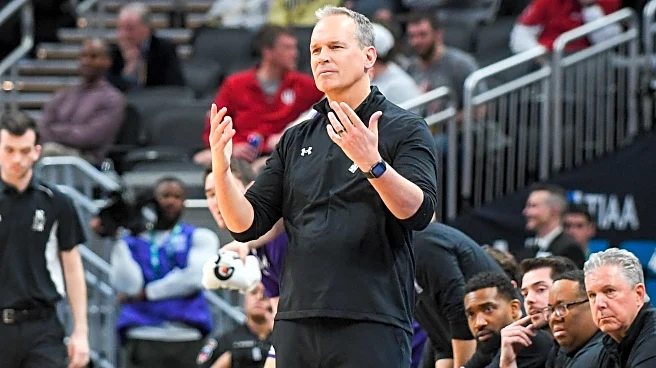




Losing four of its last five and sitting at 5-4 overall, Northwestern men’s basketball finds itself at a crossroads.
A preseason “on the bubble” squad for the NCAA Tournament, NU was expected to be a middle-of-the-pack conference team that made noise in the Big Ten on its way to earning a bid to the tournament. Northwestern has dropped three close games so far, with only the Wisconsin matchup getting away from them. Still, each loss has come against quality competition across the top two quadrants:
Virginia and Wisconsin in Q1, and Oklahoma State and Ohio State in Q2.
The four losses could’ve easily became five, had it not been for a clutch play from Nick Martinelli and Arrinten Page late in the second half against South Carolina — which would’ve been NU’s worst loss of the season as a quad three team.
The reality for ‘Cats faithful has become as such: the turnover of this team has left clear chinks in the Northwestern armor that Big Ten teams have found and hammered at. The Badgers did the best job of this, taking NU completely out of its game in a uncompetitive first half that propelled them to victory. Ohio State took time to zone in on the right game-plan, but found it in the final 10 minutes of its matchup against the ‘Cats to secure the win in Evanston.
There’s a clear formula that teams have found to beat Northwestern. The question now becomes: how does Northwestern refine its system to make it harder for conference opponents to hack? Let’s dive into it.
Defense
Northwestern’s calling card under Chris Collins has always been defense, but the last six games have told a very different story. After holding the first three opponents to 47, 53 and 63 points, NU has allowed at least 77 in each of its last six outings.
The most recent example came against Ohio State, where the ‘Cats surrendered 86 points on 57 percent shooting. The Wildcats gave up a staggering 62 points in the paint, repeatedly getting beat down the floor after their own makes. Ohio State also piled on 19 fastbreak points, turning every defensive lapse into an immediate basket. In all four losses during this stretch, opponents have scored 83 or more. Even with tougher competition, that level of defensive production is not acceptable for a team that prides itself on gritty and disciplined play.
The Wisconsin game highlighted how far the ‘Cats have drifted from their defensive identity. Northwestern surrendered 55 points in the first half. The Badgers made tough shots and John Blackwell caught fire, but no NU team should ever allow 55 points in a single half. It was an alarming display that left fans questioning the team’s urgency and focus. To Northwestern’s credit, the group settled in and held Wisconsin to 30 points after the break, which made the final score of 85 to 73 look more respectable, although anyone who watched knows the game felt much more lopsided.
The ‘Cats will go only as far as their defense takes them. Right now, opponents are too comfortable, getting downhill too easily, and dictating tempo far too often. Northwestern’s path back to relevance starts with restoring defensive toughness, communication and urgency across all five positions. That means sharper transition defense, stronger containment on the perimeter, more intentional help rotations and a renewed commitment to finishing possessions with a rebound.
This program has never been built on outscoring opponents. Its identity, and its ceiling, depend on making teams uncomfortable, forcing difficult shots and controlling runs with disciplined stops. Defense has to be the foundation of everything Northwestern does if it hopes to steady itself and make meaningful progress in conference play.
Ball security
The first two conference games have exposed this as an issue for the ‘Cats. Wisconsin exposed this in the first half of its Big Ten opener against NU, winning the turnover battle 7-0 and leading by over 20 points at period’s end.
In that first half, 18 of the Badgers’ 55 points were the result of Northwestern blunders.
The loss to the Buckeyes at home could be attributed to similar turnover issues — 14 throughout the game, leading to 19 OSU points.
Many of these Northwestern mistakes can be traced back to a lack of cohesiveness within a team with so much turnover. Jayden Reid seemed to be forming a connection with Page and Martinelli early on in NU’s non-conference slate, but the deficiencies amongst the three began to reveal themselves against South Carolina at the Greenbrier, where Reid had a season-high five turnovers.
The next couple games against Jackson State and Valparaiso should be dedicated to reestablishing Reid at the helm of the offense as an elite ball handler, while hashing out Northwestern miscues in the passing game. That means, Page shouldn’t have trouble being fed the ball in the post, guards should be more cautious in passing around the permitter, and NU should find ways to defeat the press without panic.
Field goal efficiency
Rather than this being an area to be corrected, this is an attribute that Northwestern needs to continue to build upon.
Despite going 1-2 in their final three games going into their conference debut, the Wildcats outshot all three of their opponents from the field. A year ago, this wouldn’t be the case, as NU finished dead last in field goal percentage at the end of the 2024-25 Big Ten season.
The bottom line is that despite giving other teams more opportunities with turnovers and rebounding (a point I’ll get to in a minute), Northwestern keeps itself in many of these contests by cashing in on the chances it gets at an efficient rate.
The scoring breakdown for the ‘Cats through the early part of the season has been as follows: Martinelli putting on an encore of last season, with Page following up and providing triple-threat versatility as a stretch-five. The No. 3 option on the team, as of now, is Reid, but Tre Singleton, Angelo Ciaravino and Max Green can very well find themselves in that role if they continue to provide quality minutes.
Although unconventional, this is a system that NU has proven that it could win with. The ‘Cats are already averaging five points per game more than they’d had a season ago, which ranks them just behind NCAA Tournament hopefuls in USC and UCLA. That means, Northwestern has given itself a better chance in winning high-scoring games, something it wasn’t able to do last season, going 1-12 when giving up 75+ to its opponents.
This season, they’ve already doubled that total, and if they continue to compete in shootouts, the ‘Cats can scrape out a few more wins to get off the NCAA Tournament bubble and in with an at-large bid.
Rebounding
We’ll keep this short and sweet.
This is one of the most noted issues with Northwestern: its lack of size down low hinders their ability to crash the boards, giving teams extra chances they wouldn’t be afforded against the majority of power conference opponents.
Remember the three games I had mentioned beforehand? Well, a major reason as to why NU came up short in two of those three is because they lost in the rebounding department — most notably, allowing nearly 50 rebounds to Virginia in a contest that it led until the final four minutes of the game.
Against the Cowboys, the ‘Cats allowed 15 offensive rebounds in a game that that was decided by two scores.
Being a smaller team without a seven-footer on the floor gives Northwestern a major disadvantage against its opponents featuring true centers (i.e – Virginia, Michigan, Purdue, etc.), affording teams more second-chance points than what’s to be expected. The ‘Cats crosstown matchup against DePaul was a prime example of this, as in the final two minutes of the first half, the Blue Demons snatched three offensive rebounds that led to a six-point swing.
The general consensus about NU is that its guard-heavy offense comes back to bite them late: when they need to keep teams off the board, they allow extra scoring opportunities that yield nothing but unfavorable outcomes.
The big question: to panic, or not to panic?
It’s clearly concerning to see the ‘Cats open Big Ten play with two difficult losses, especially given how each game unfolded. In a conference with five teams in the AP Top 25, starting off poorly can feel like the beginning of a slippery slope in a league that offers no easy wins.
However, adjustability is Chris Collins’ calling card as a coach. It’s the biggest asset he’s taken from Duke and injected into the Northwestern program, and is why the ‘Cats went dancing two of the past three years.
Further beyond that, Collins found a few answers in a 2024-25 season that saw crucial pieces in Brooks Barnhizer and Jalen Leach have their seasons cut short. Martinelli came to the forefront of the offense, Justin Mullins provided great defense on the perimeter, and K.J. Windham had a scoring explosion to end the year.
Northwestern has turned lemons to lemonade time after time. It wouldn’t be a surprise if lightning strikes twice, and it figures it out again.