



One of my favorite things to do every offseason is to go back and compare my post-draft notes on the Eagles’ rookies with how they actually looked when they got on the field. It’s a fun blend of film study, self-evaluation, and a check on how well certain traits really translate to the NFL. I won’t be writing full scouting reports here, as I did that after the draft. This series is more about reviewing last year’s film in comparison to my pre-draft thoughts. Did the player perform as expected? Did anything
surprise me? And what do I think comes next? At the end of each article, I’ll give my updated outlook for that player in the future.
Previously: Jihaad Campbell
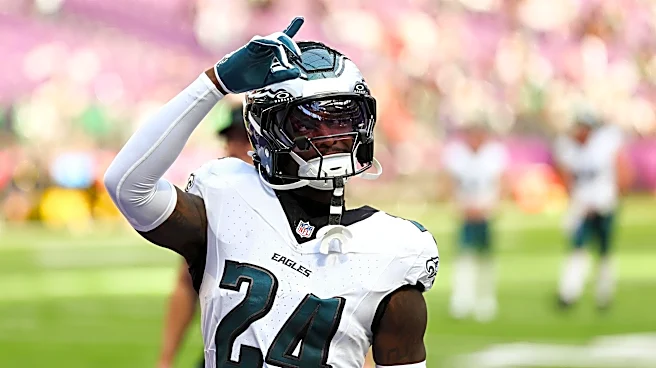
Andrew Mukuba
Before the draft, I had Andrew Mukuba as my fifth-ranked safety, so I wasn’t as high on him as some. I did think there were better safety prospects, but I still gave Mukuba a second-round grade and thought Pick 64 was about the right range for him. The more I watched him after the draft, the more I liked him.
My overall summary before the draft was this:
“At worst, Mukuba should be a passing game specialist due to his outstanding ball skills and instincts. He’s a really good football player. He might struggle to be a full-time player due to his size, but he will have a role in the NFL due to his instincts.”
I also wrote this after watching even more of his film:
“The simple truth is that I do not know if he can play the way he currently does at his size. It’s not simply a case of being undersized. He has small arms too and doesn’t wrap up when he tackles. He hits hard and dominates at the point of attack. The highlight reel hits are great, and I would love to say he can play this way at the next level, but I do not know if he can.”
I wasn’t worried about Mukuba because I thought he lacked talent. Quite the opposite. I thought he had some of the best football instincts in the class.
My concern was that his physical limitations might eventually stop those instincts from consistently showing up against NFL athletes, and keep him off the field. Which, did eventually happen.
One thing I felt strongly about before the season was his fit within Fangio’s defense. I wrote:
“He is going to be fantastic as a split-safety in this defense. His recognition of route concepts is outstanding. He already knows how to play many of Fangio’s coverages, and he has an instinctive nature of spacing and where the football is going, which is almost impossible to teach.”
Mukuba consistently looked one step ahead of quarterbacks in college. He understood route combinations, recognized concepts developing in front of him, and played with an anticipation that isn’t common coming out of college. As early as week one, look at how fluid he executes a roll turn to cover CeeDee Lamb. Phew.
That’s why I expected him to become a useful player immediately, but…
“He must change how he plays. I expect him to come downhill quickly in the run game, but he will have to learn to wrap up better and stop flying into offensive players as he did in college. He might need to become a bit more passive in the run game… I can’t see him hitting elite running backs in space like he did in college.”
I still feel very much the same about Mukuba after one year.
Things I Expected
The easiest projection with Andrew Mukuba was never his athleticism. It was his football intelligence. His route recognition, understanding of spacing, and anticipation consistently stood out on film, and those traits were always going to translate.
One of the most encouraging parts of Mukuba’s rookie season was how naturally he looked playing from depth. Fangio entrusted him with a proper starting safety role rather than asking him to start out as a role player. The coaching staff clearly believed he could handle the mental demands of playing safety, and I think the film justified that confidence. There were several examples in which he peeled off one receiver to help elsewhere, recognized developing concepts before the quarterback released the football, and simply looked like someone who understood the defense rather than someone who was lost.
He wasn’t like this all season. He absolutely improved as the season went on, which is exactly what you want to see from a rookie. He did have some bad moments at the start, but it’s not easy starting in this defense as a rookie. I expected Mukuba to become the Eagles’ starting safety.
I think he will become the Eagles’ starting safety and beat out Sydney Brown. I think he will be significantly better in coverage than Brown.”
Fangio didn’t ease him into the lineup or protect him with a limited role. He trusted him very early on. As early as week 4, he was playing 100% of the defensive snaps. As early as week 1, he was being used in multiple positions, highlighting his versatility.
Another thing that translated immediately was his competitiveness. One concern that’s often raised about lighter defensive backs is whether they’ll shy away from contact against NFL athletes. Mukuba did the opposite. He triggered downhill aggressively throughout the season and never looked reluctant to throw his body into the run game.
Ironically, that willingness is also where one of my biggest pre-draft concerns still exists.
Before the draft, I wrote:
“He must change how he plays. I expect him to come downhill quickly in the run game, but he will have to learn to wrap up better and stop flying into offensive players as he did in college. He might need to become a bit more passive in the run game… I can’t see him hitting elite running backs in space like he did in college.”
After watching his rookie film, I still worry about the way he plays. The missed-tackle numbers themselves aren’t bad, but the film worries me more than the statistics. Mukuba still relies on explosion and timing more than consistently wrapping through tackles, and although that aggressive style produced plenty of big plays in college, I’m not convinced it’s sustainable against NFL athletes over a seventeen-game season. He had some bad moments last year, when he didn’t wrap up.
He hits hard and plays with a fearlessness that every coach wants to see, but I’d still like to see him become a little more controlled as a finisher. That doesn’t mean becoming passive. It just means wrapping up and tackling with good technique.
The reasons I liked Mukuba have translated almost exactly as I’d hoped. He’s an extremely natural fit in Fangio’s coverage structure and already looks far more comfortable playing from depth than many young safeties. At the same time, the physical questions that made him a slightly riskier projection haven’t disappeared either.
Things That Surprised Me
The biggest surprise was how quickly Mukuba earned Fangio’s trust as a full-time deep safety. I expected him to beat out Sydney Brown eventually; however, I still thought there might be a longer adjustment period before the Eagles were comfortable giving him such an important role. Instead, he was regularly trusted to play as the deepest defender and handle the communication responsibilities that come with the position from week one.
That matters because I viewed Mukuba as a player with a relatively wide range of outcomes.
“At worst, Mukuba should be a passing-game specialist due to his outstanding ball skills and instincts.”
His rookie year suggested that the floor should be higher than that. He was not simply brought onto the field in obvious passing situations or protected with a limited package. He played meaningful snaps as a starting safety and looked increasingly comfortable as the season progressed. He did struggle quite a bit early on, and I didn’t think he would have so many issues in coverage as he did, but I do think by the end of his rookie season he was playing a lot better and the game had slowed down for him.
I was a little surprised at just how aggressive he played all year. I did wonder whether his lack of size would force him to become more cautious at the NFL level.
“He might need to become a bit more passive in the run game,”
I could not see him consistently attacking NFL running backs in the same way he did in college. Well, he didn’t change. Mukuba continued to trigger downhill aggressively and showed no hesitation when facing contact.
I worried more about him missing tackles than I did fighting through blocks, but I think fighting through blocks was a bigger issue than tackling. Wide receivers could control him more easily than I expected, and he struggled to disengage once they got their hands into his frame. I expected the size concerns to show up against running backs and tight ends, but they were sometimes most obvious when he was trying to beat blocks from receivers.
To be fair to Mukuba, his improvement over the course of the season surprised me as well. Early in the year, there were moments where his aggressiveness pulled him out of position or where he reacted slightly too late to what was developing in front of him. He had a real issue with trying to do too much, and getting caught looking at the QB when in man coverage. It was a big issue after a few weeks.
There were moments I was very critical of Mukuba last year, because he was struggling midway through the season. It surprised me how much he struggled in coverage at times.
By the time his season ended, he looked far more settled. His route recognition became quicker, his positioning improved, and he appeared more confident deciding when to stay deep and when to attack underneath routes. The instincts were always present, but I did not necessarily expect the progression to be quite so visible within his rookie season. He really did look better before his injury than he did at the start of the season. Which is a great sign.
Questions I Still Have
1. Can he stay healthy playing this style?
One of my biggest pre-draft concerns was whether Mukuba’s frame would allow him to play the same fearless style he showed in college. Unfortunately, we still don’t have an answer. His rookie season ended with a fractured ankle and fibula, but that was a freak injury caused by another defender landing on his leg rather than the result of his aggressive tackling style. Even so, availability is now part of the conversation. Until Mukuba proves he can get through a full NFL season, durability will remain a fair question.
2. Can he become more than just a split-safety?
I still think Mukuba is at his best playing from depth where his instincts, anticipation, and route recognition can take over. That’s where he looked most comfortable throughout his rookie season. However, whenever he was asked to spend longer periods covering in the slot against receivers or tight ends, he didn’t look very comfortable and had issues with his technique.
I’m not yet convinced he’s someone I’d want playing over the slot and handling man coverage responsibilities. If he can become more comfortable in those situations, his value within Fangio’s defense increases dramatically.
3. Can he take another step with a new partner?
Year Two won’t simply be about Mukuba improving individually. Reed Blankenship’s departure means he’ll be developing alongside a new safety partner. Marcus Epps is likely to handle nickel responsibilities with Cooper DeJean dropping back in base personnel. Communication is everything in Fangio’s defense, and building chemistry on the back end is just as important as individual talent. Mukuba was improving before the injury interrupted his season. But this season won’t be as straightforward for Mukuba.
The Future
I think Andrew Mukuba is one of the most important players on the Eagles’ defense heading into 2026. Not because he’s already one of their best defenders, but because there are still so many possible outcomes and he is expected to be ‘the guy’ at safety.
The Bull Case: The instincts continue to stand out, the understanding of Fangio’s defense takes another leap forward, the tackling becomes more controlled, and the physical questions gradually fade away. If that happens, the Eagles will have found themselves a long-term starting safety with outstanding football intelligence and the kind of range that every modern defense covets. I mean, come on…
The Bear Case: The tackling remains inconsistent. The physical limitations continue to show up, and the injuries become a recurring issue rather than an isolated piece of bad luck. If Mukuba misses time next year, the Eagles might have issues at safety. Even in this case, I can still see Mukuba becoming a valuable contributor in passing situations and within Fangio’s coverage structure. He just might never become the every-down safety I hoped he could be if he can’t physically handle the demands of the NFL.
After one year, my overall opinion of Mukuba hasn’t dramatically changed. The instincts I loved before the draft translated almost immediately. His understanding of coverage improved as the season progressed, and by the time his year ended with injury, I thought he was playing his best football. Equally, the physical questions that made him a slightly riskier projection remain unanswered.
That’s why I’m still sitting somewhere around 50/50 on whether Mukuba will develop into an excellent full-time starting safety. The film gave me enough to believe that he can become the Eagles’ long-term answer at safety. It just didn’t give me enough to stop asking the same questions about his physical limitations and play style. I really wish he didn’t get injured, or I might feel better heading into year two.
If you want to go much deeper into Mukuba’s film, I will have a video breakdown on Patreon that goes into each play in more depth. I’d appreciate your support if you’d like even more Eagles film content.