




After much speculation, we finally know that the Colorado Avalanche and Minnesota Wild will start their second-round series on Sunday. The when might have been a mystery, but who and where are not as Ball Arena is the stage and two of the Central Division’s best meet in the second round of the playoffs.
This series features a litany of big names and star power, with players like Nathan MacKinnon, Cale Makar, Quinn Hughes, and Kirill Kaprizov, and two goalies who have arrived on the scene at opposite
ends of the timeline.
Both teams sport plenty of forward depth and have proven back-end guys with playoff experience.
There are some wrinkles to the stylistic differences between these two clubs that will come into play, but I’d say for the most part they stack up as formidable foes.
Let’s take an in-depth look at each position group and see who has the advantage!
Forwards
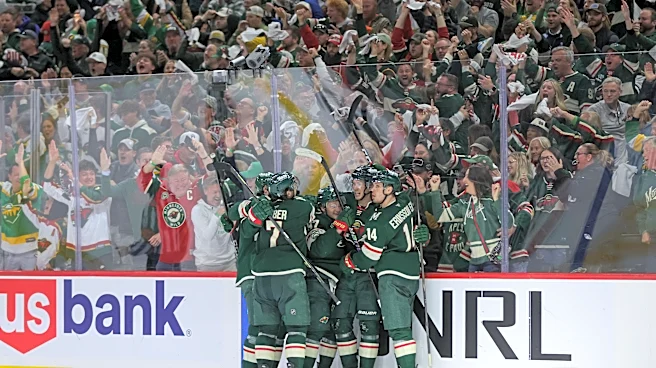
The Minnesota Wild have a bona fide elite top line with Kirill Kaprisov tied for the team lead in playoff points (9) after one round against Dallas.
His six goals and three assists in just six games are very impressive. Given that he pulled this off against one of the best regular-season teams in the league, it should be respected both in preparing for this matchup and for the Colorado side.
Matt Boldy (who’s currently playing RW2) also had 9 points in the first round and, of course, looked very good in Team USA’s gold medal victory back in July and continued that into the remainder of the regular season and now the playoffs.
Both players listed above are gamers and are downright skilled. Although LA couldn’t capitalize, Wedgewood made sure of it. If the Avalanche affords Minnesota the same opportunities, it could spell trouble for Bednar and the boys.
We know Yakov Trenin from his brief visit here in Colorado, and we know Vlad Tarasenko from his time in St. Louis and Florida. Michael McCarron was a solid addition by Bill Guerin and the Wild, bringing a big-bodied and capable forward to the bottom six.
The Wild 4th line will be checking to their hearts’ content, and I don’t know that they can ever be satiated.
Physically was up in round one, but it’s about to ‘go to 11’ with the Foligno brothers down on the bottom line with another former Av, Nico Sturm, on the wing.
Wild Projected Forwards:
Kirill Kaprizov — Ryan Hartman — Mats Zuccarello
Marcus Johansson — Joel Eriksson Ek — Matt Boldy
Yakov Trenin — Michael McCarron — Vladimir Tarasenko
Marcus Foligno — Nick Foligno — Nico Sturm
Avalanche Projected Forwards:
Artturi Lehkonen — Nathan MacKinnon — Martin Necas
Ross Colton — Brock Nelson — Valeri Nichushkin
Gabriel Landeskog — Nazem Kadri — Nicolas Roy
Parker Kelly — Jack Drury — Logan O’Connor
For Colorado, the focus will be on coming out of their shell a little offensively while maintaining their dominance defensively.
Nathan MacKinnon had a breakout night in game four that sent the Kings packing, but I think he and the team will need him to stunt his hart-worthy talents early on in the series.
Martin Necas was good in the first round, but in the flow of a game with two teams playing shutdown hockey, his skill was slightly nullified. It’s also possible that he just didn’t shoot enough.
Artturi Lehkonen was the NHLPA player of the week following his performance in round one, and rightfully so. It’s a truth that’s been hammered home, but the playoffs bring about a style that truly lets Lehkonen flourish.
Speaking shooting-wise, Ross Colton’s shooting percentage has to improve at some point, and no better time than right now. No player had more SOG/60 than Ross Colton in the first round, and I’m betting we don’t see him scratched to start this series.
Brock Nelson will be put to the test in this matchup. Still, his defensive commitment aims to effectively erase any advantage Minny might sense on the second line, and Val Nichushkin was truly ‘right there’ all series against LA, so keep an eye on him.
Who Colorado scratches from the forward group remains a mystery to some extent, but we know who absolutely won’t fall into that distinction: Gabe Landeskog.
The Nordic Captain of the Colorado Avalanche has followed his performance in last year’s playoffs with an excellent first round, posting a team-leading four points against LA (tied with MacKinnon and Lehkonen).
An Avalanche roster that can afford to put Landeskog on the third line would have plenty of top-six talent, and that’s exactly where we stand today.
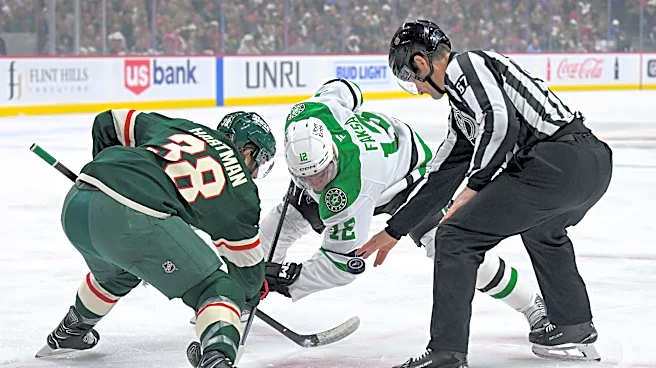
Nazem Kadri’s hand injury has clearly limited his ability to both take faceoffs and shoot the puck, which is something to monitor early on.
If Kadri can heal up enough to truly weaponize what he brings to the table, he could be the second-round X-factor.
Lastly, it’s the fourth line. I’m a smidge worried about the size differential on Colorado’s fourth line compared to Minny’s, but LA’s size wasn’t the advantage some thought it might be, so who knows.
Either way, Parker Kelly and Jack Drury will bring their budding friendship and chirps along with them, and Logan O’Connor will be there to oversee as the Mayor of Denver.
Defenders
Minny has one of the few top defensive pairings in the NHL that actually stacks up against Colorado’s.
Quinn Hughes vs. Cale Makar has long been a debate, but their partners (respectively) in Brock Faber and Devon Toews would be the number one gun on plenty of teams.
Hughes is a playmaker with skating and puck-handling abilities similar to Makar’s, just in a slightly smaller frame.
Brock Faber averaged a point per game in round one against Dallas, and his performance was vital to Minnesota’s success against Dallas.
We know Jacob Middleton’s brother, so we can get a bit of a beat on him as a big-bodied, stout defender, and Jared Spurgeon is the lone holdover from the Parise and Suiter days, bringing a veteran presence to the room and ice.
Jeff Petry is a good right-shot puck mover with playoff experience, and the same is true for Zach Bogosian, who will bring a physical stay-at-home presence to the bottom of the Wild D core.
Projected Kings Defenders:
Quinn Hughes — Brock Faber
Jacob Middleton — Jared Spurgeon
Jeff Petry — Zach Bogosian
Projected Avalanche Defenders:
Devon Toews — Cale Makar
Brent Burns — Nick Blankenburg
Brett Kulak — Sam Malinski
I’ll keep it brief with the Avalanche defenders since we are all pretty aware of their star-studded capabilities.
Cale Makar is Cale Makar, and Devon Toews is his partner. They are really good at hockey.
The Big question mark is the status of Josh Manson, who was awkwardly hit into the boards during the first round and missed game four. Against a team as offensively capable as the Wild, Colorado’s health on the back-end is paramount.
The Wild forwards have sent a clear message in the build-up to this series: they will want to hit the Avalanche defenders at an ungodly rate.
Although I’ve seen Blankenburg be up to the challenge, the choice between him and Manson is glaringly obvious this time of year.
Sam Malinski is still doing great things in the playoffs, and his partner, Brett Kulak, is hardly talked about. When you are a third-pair defender, that’s a good thing.
Goaltenders
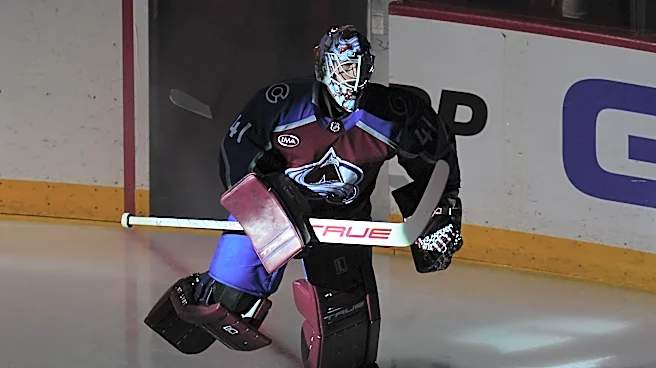
The Colorado Avalanche led us to believe that they would honor the tandem approach in the playoffs, but weren’t required to in round one, with Scott Wedgewood getting all four starts, all four victories, and exactly 24 saves in all four games.
Wedgewood kept things comfortable for Colorado in round one, and had he not, things could have gotten a bit more hairy.
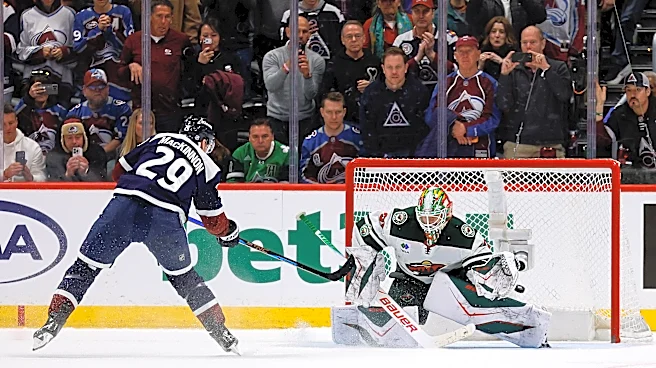
Colorado’s triumph never really felt in question; however, Scott’s save on Byfield’s penalty shot attempt and a barrage of stops on breakaways and odd-man rushes left no doubt.
The Avalanche would do well to shelter their netminder from those breaks and odd man rushes in round two, as Minny has the shooting talent to really cash in on those opportunities.
That said, it’s possible we haven’t even seen Scott Wedgewood’s ceiling yet.
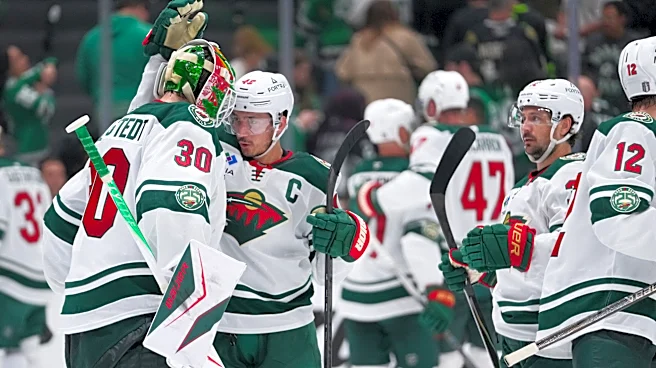
Jesper Wallstedt has burst on the scene as Minny’s goalie and has been better than I think he’s gotten credit for. Dallas basically only scored with the man advantage (outside of a Bunting goal), and Wallstedt was a big part of that.
Avalanche fans saw Jesper in the regular season and should know he’s plenty capable at just 23.
His calm demeanor is a positive for any goalie, but his positionally sound nature and ability to make the stop on a high-danger chance slot him into the upper echelon of NHL goalies, in my opinion.
Advantage: Pick Em’
My final say on this series is that it’s as close to a true pick em’ as a series gets. Both teams are capable of winning the series in five or six games if they get some lucky bounces, but also willing and able to go the full seven games if need be.
I think if the scoring stays low, the series will go six or seven games. If one side or the other has defensive or structural issues revealed and things get high scoring, it might end in 5.
The keys for Minnesota are relatively straightforward: don’t overcommit offensively, but cash in on your looks and check everything that moves. If it has a pulse, the Wild will attempt to lay the body. How effectively they get to Colorado’s defensive group could prove paramount to their success.
For the Avalanche, on the other hand, it’s about awakening their power play unit, staying out of the penalty box, and letting their speed and transition game flourish.
Speaking of special teams, both the Avalanche and Wild struggled to cash in on the power play in round one, with the Avalanche getting their first in eleven tries in game four.
A key to any series is who wins the special teams battle, and this one is no different. Let’s see if Colorado can get the power play back to how it looked after the Olympic break.
Let us know what you think in the comments!