



Mike McCarthy confirmed during his introductory press conference that he will assume play-calling duties for the Pittsburgh Steelers’ offense, signaling a notable shift in the team’s offensive structure under his leadership.
McCarthy, who was officially introduced as the franchise’s new head coach, said he will be directly responsible for designing and running the offense. The
decision aligns with his long-standing approach, as he called plays for the majority of his coaching career, including successful stints with the Green Bay Packers and the Dallas Cowboys.
McCarthy’s offenses have consistently ranked among the league’s most productive. His tenure in Green Bay was defined by sustained success alongside Hall of Fame quarterbacks Brett Favre and Aaron Rodgers, while his time in Dallas featured strong offensive output with Dak Prescott at the helm. McCarthy has long been regarded as an offensive-minded coach who prefers a hands-on role in shaping game plans and in-game adjustments.
During the press conference, McCarthy also addressed the future of Rodgers, whom he coached for more than a decade in Green Bay. When asked about the possibility of a reunion in Pittsburgh, McCarthy made his stance clear, stating that he “definitely” would like the four-time NFL Most Valuable Player to return.
McCarthy and Rodgers previously reached the pinnacle of the sport together, winning Super Bowl XLV in the 2010 season — a game that saw the Packers defeat the Steelers, a moment that now adds an intriguing layer to McCarthy’s new role in Pittsburgh.
Another key takeaway from McCarthy’s introductory press conference was his clear commitment to maintaining the franchise’s defensive foundation.
McCarthy emphasized the importance of elite defense, noting that the lone season in which he coached a top-five defense, it culminated in that aforementioned Super Bowl victory.
With that in mind, McCarthy indicated that Pittsburgh’s long-established 3–4 defensive scheme will remain intact if the unit continues to perform at a high level. He spoke candidly about his familiarity with — and respect for — the system.
“I mean, this defense’s system has been here since 1992,” McCarthy said. “I came into the league with Coach Cowher and Dom Capers, so I’ve always been a fan of it. I always felt like it was one of the toughest defenses to compete against as an offensive coach. That’s part of the reason why I went to it.”
For context, the Steelers were among the pioneers in adopting the 3–4 defense as their primary scheme in the early 1980s, and it has been a constant part of the organization’s identity ever since. The system places a heavy emphasis on edge rushers generating pressure, a role the franchise has historically filled with elite talent.
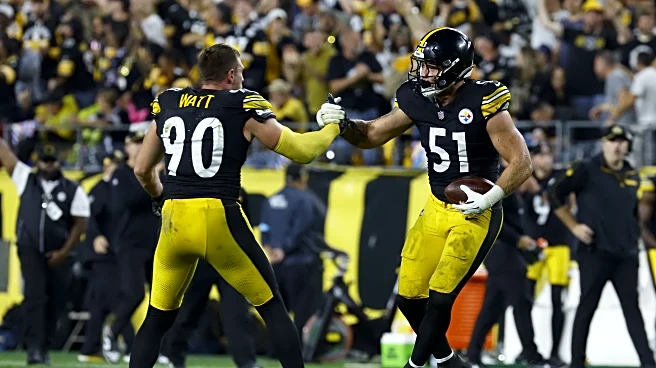
From Joey Porter and James Harrison to current superstar T.J. Watt, Pittsburgh has consistently produced premier pass rushers who thrive in the scheme. Those players have been supported by physical defensive linemen who absorb blocks and control the line of scrimmage, allowing linebackers to make plays. Cam Heyward has embodied that role in recent years.
Given the current roster construction, McCarthy’s decision to preserve the 3–4 appears logical. Young linebackers such as Nick Herbig and Jack Sawyer were drafted specifically to fit the system and continue to develop within it, making a wholesale schematic change both unnecessary and potentially disruptive.
As McCarthy begins his tenure in Pittsburgh, his remarks suggest a blend of new leadership with organizational continuity — particularly on defense, where the Steelers’ identity has been forged for decades.