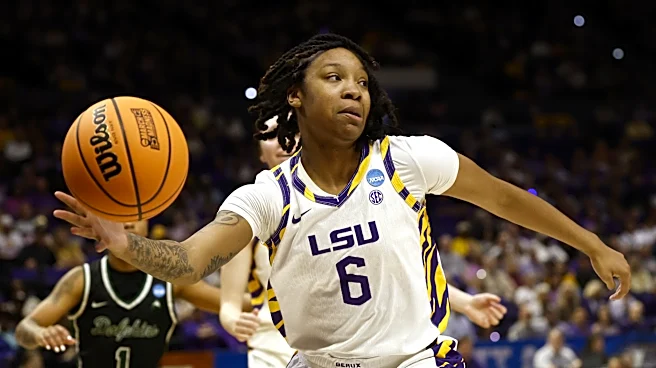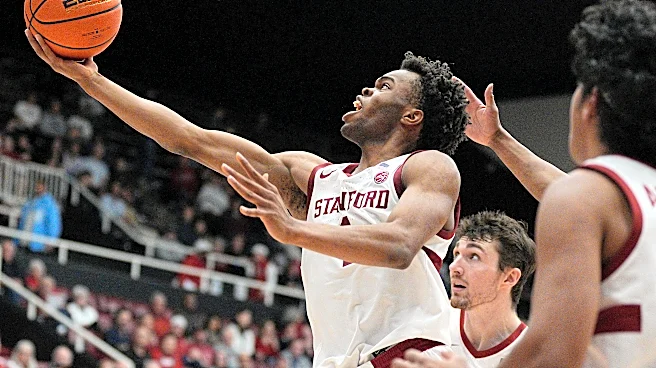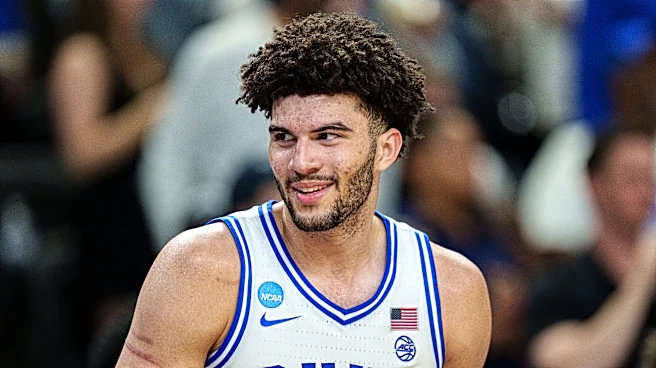






Of course, Utah is throwing every good luck charm they have into acquiring a top 3 selection in this year’s draft. AJ Dybantsa would be a match made in heaven. Darryn Peterson has the best fit. Cameron Boozer follows in Papa Carlos’ footsteps. Utah is also perfectly fine standing pat at 4, if it means not converting their pick to the Galactic Presti-pire. Caleb Wilson could have risen into the top 3 if he had been able to participate in the March Madness Tournament.
But what if Utah drops into the
unorthodox spot where they — inevitably — drop down one or two tiers and out of the superstar conversation?
Be wary, Darius Acuff Jr. and Kingston Flemings lurk in these parts. It’s a tricky part to be in, considering Utah is not in dire need for another point guard after Keyonte George’s breakout, and Isaiah Collier headlining as the lead backup guard. Of course, the Jazz could look to prioritize fit here and select one of Nate Ament or Brayden Burries.
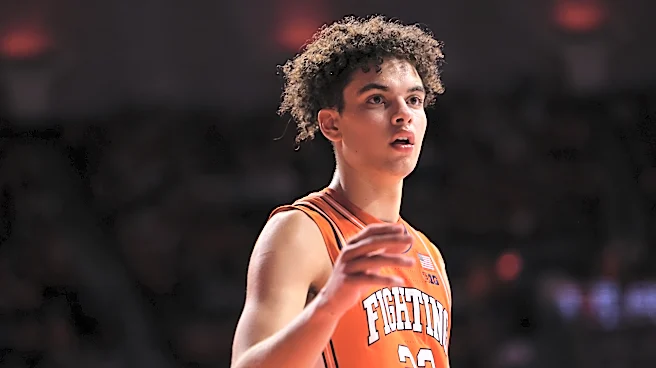
I introduce Keaton Wagler to the corporate office. All things considered, Wagler would be the ’best fit’ guard in the pool with a 6’6” frame who plays the brain of a veteran and the range of a flamethrower. This feels like the missing piece of Danny Ainge’s art gallery.
NBA Draft Profile: Keaton Wagler
Bio: 6 ft, 6 in | 185 lbs | 19 yrs old | Illinois University
2025-26 regular season stats: 17.9 PPG, 5.1 RPG, 4.2 APG STL, 44.5% FG, 39.7% 3PT
Accolades: Jerry West Shooting Guard of the Year, Second-Team All-American, Big Ten Freshman of the Year, NCAA Tournament South Region Most Outstanding Player
NBA Comparison: D’Angelo Russell, more polished Jeremy Lamb
Mastery
Wagler is arguably the most polished pick-and-roll operator in this class. His 12.4% turnover rate is elite for a high-usage freshman. He manipulates defenders with bendy, herky-jerky movements, often putting his opponent in a blender just by changing his face.
He isn’t a stopper on the defensive end yet, but his 1.7 BLK% and 1.3 STL% show active hands and high-level positioning. At 6’6”, he’s not a target that teams can easily hunt. A solid creator, Wagler doesn’t turn the ball over often and can create shots for his teammates as a decent level.
His primary calling card is a flamethrower of a jump shot; he’s a dynamic threat who can knock cow. triples off screens or deep pull-ups from well beyond the NBA line. He’s the kind of high-IQ player who always seems to make the right pass, acting like the glue that keeps an offense from getting stagnant. His shot diet is extremely healthy — no trips to the doctor’s office for you, sir.
Another positive sign for his offensive resume is his solid 81% rate at the charity stripe. Players who both generate and convert free throws tend to translate well as NBA scorers, applying the right amount of pressure on defenses.
Illinois uses him to crash boards, and responds with solid rebounding numbers for a guard. He’s a grab-and-go rebounder who immediately initiates transition, which would fit perfectly in the third-fastest pace team in the league. That speaks to his competitiveness and willingness to impact the game beyond scoring.
Margin
His biggest flaw is his lack of athleticism, which really shows on defense. Wagler struggles to slip screens and once beaten, fails to recover and consistently has to play behind his opponents. He’s underwhelming defensively, considering his 7’0” wingspan.
Currently, his finishes rely on angles and timing rather than elevation. It works for him fine at the collegiate level, but it won’t slide against NBA-level rim protectors. Some of those attempts will likely get stuffed if he doesn’t adjust his approach. Defenders at higher levels will quickly recognize his tendency to attack with his left hand, and start shading him in that direction. Wagler needs to depend on countering his flaws or equal comfort attacking right, because opponents will have a much easier assignment to contain him.
His ball-handling is servicable, but he needs to work on tightening his handle, especially when pressured by defenders or navigating crowded areas of the floor. Working on that would help him become a more consistent creator and allow him to operate more comfortably in pick-and-roll situations.
Wagler is ‘Crafty’ with a capital C, but he isn’t ‘Fast’ with a capital F. He lacks a lightning-quick first step, meaning he has to work twice as hard to create separation. If he can’t get defenders off-balance with his hesitations and pump fakes, he may struggle to create his own shot consistently at the pro level.
Mandate
When I project Wagler at the NBA level, I see a player who has a clear scoring foundation but still needs to round out the rest of his game — similar to how Keyonte had to rebuild his offensive character after his first couple of years in the league. The shooting alone gives him value, but he won’t be a primary offensive initiator as of now.
The Jazz could be comfortable fitting him into a secondary creator or complementary scoring role, where he can space the floor, attack closeouts, and make simple reads within the offense. If he imrpvoes his handle and becomes more balanced attacking the basket, there’s a realistic pathway for him to develop into a reliable NBA rotation guard.
Lineups with Keyonte George, providing downhill aggression, and Wagler, providing surgical distribution and spacing, would give Utah some of the tallest and most versatile young backcourts in the league. If the Jazz want to double down on their positionless length identity, Wagler is the connective tissue.
But in the meantime, we’re all hoping the Jazz front office goes palooza in reaction to Utah receiving their first franchise #1 pick.