

There’s a lot of old timey baseball things that don’t exist in the modern MLB. One notable one is ties. Now, it’s not that they didn’t play extra innings back in the early decades, they did. The issue was that for a long time stadiums did not have lights. Eventually, things got to a point where you literally could not play anymore. Leagues like NPB in Japan still have ties, but MLB has specifically created rules (the extra innings automatic runner) to ensure that games don’t go too long and end with
a winner.
However, that wasn’t always the case. Sometimes, that could lead to some funny box scores, like this one from 1919.
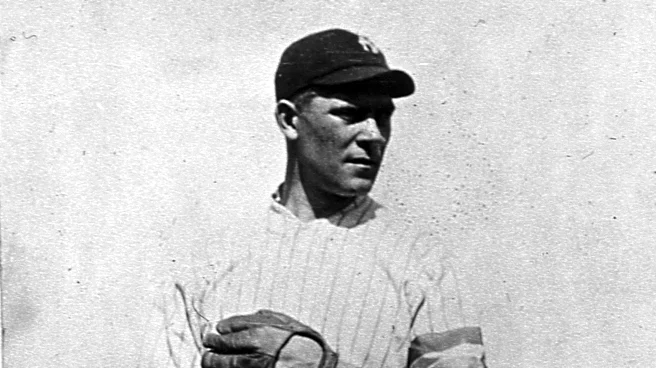
Very early in the 1919 season, the Yankees were hosting the Washington Senators on May 11th. The game that day was a makeup one after a scheduled meeting two days prior was postponed due to “wet grounds.” There’s another old timey baseball thing that you don’t really see today.
The Yankees faced a difficult task that day as starting on the mound for Washington was future Hall of Famer Walter Johnson. However, Yankees starter Jack Quinn was up to the challenge himself, although it would be a difficult journey. In the second inning, the Senators put their first two runners on base thanks to a single and an error, but Quinn managed to work around that by getting two big strikeouts for the first two outs.
That would become a pretty common occurrence for the Yankees on the day. In the third, Quinn allowed a single to Johnson himself, before getting out of the inning with a double play. In the fourth, Quinn got an out on a fielder’s choice play at home and then had to strand the bases loaded, but managed to do so.
Meanwhile, the Yankees’ offense wasn’t exactly holding up their end of the bargain against Johnson. Roger Peckinpaugh had actually singled in their second at-bat of the day, but he ended up stranded at second. After that, Johnson retired the next 28 batters. If you did the math correctly, you may have realized that’s more consecutive batters retired than what a pitcher does in a regulation perfect game. Johnson was already an all-time great at this stage of his career, but he was especially dealing in this one.
Meanwhile as his offense was giving him nothing, Quinn was continually having to dodge bullets. He had to work out of further bases loaded jams in the sixth and eighth innings. Eventually, the game drifted into extra innings. In the 10th, Quinn worked around two runners. The Yankees’ offense then finally ended their dry spell when Home Run Baker drew a two-out walk. Somewhat understandably, he tried to make something happen by stealing second, but he got thrown out to end the inning.
After all that, the Yankees arguably had the better of the chances in extras. Quinn only allowed one runner in extra innings and promptly picked him off. Meanwhile, the Yankees had two runners on against Johnson, but failed to capitalize. Finally in the 12th, when George Halas (yes, that one) grounded out to end the inning, that also ended the game. It was believed that there was a law at the time that said Sunday games had to be over by 6:00 PM. The clock was nearing that time, and the game was called after a conference between umpires and managers. Reportedly, the law did not actually state the game had to end by 6, but it was a cold and damp day and neither team looked likely to cash in.
Both starting pitchers ended up going all 12 innings, but their stat lines couldn’t look any more different other than the runs column. Quinn allowed 10 hits and four walks in his 12 innings, facing 49 batters. Meanwhile, Johnson allowed just two hits and a walk, and his 37 batters faced was only one more than the minimum possible for his day.
At the end of every season, I like to write a “Stupidest Game of the Season” retrospective post. Had Pinstripe Alley been around in 1919, I think there’s a good chance this game would’ve made that list.