


Whenever you critique a team that’s racked up 44 wins in 66 games — and was the first in the NHL to hit every major points milestone from 10 through 90 — you risk sounding overly nitpicky. At times, it can even come across as downright foolish.
Mark Twain once observed, “It’s easier to fool people than to convince them they’ve been fooled.” So let me ask: Have we been fooled into believing this Avalanche team has the necessary depth on the back end?
It certainly feels that way when, even with all seven
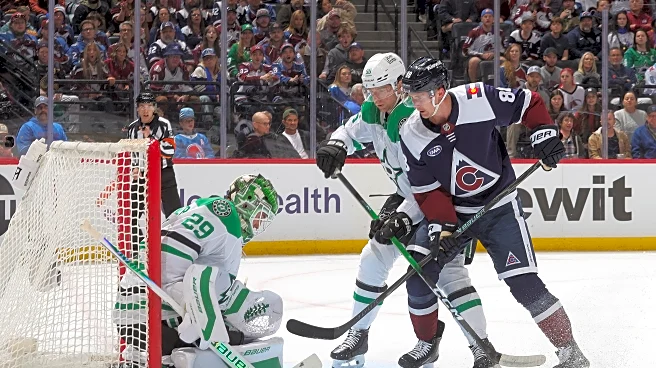
defensemen available, Colorado continues to surrender far too many high-danger net-front chances.
The recent loss to the Edmonton Oilers felt like a comfortable write-off. I shrugged and told myself, “You can’t win them all,” before turning off the TV. But then came another late-night disappointment — and an even more lackluster effort to protect the net front and the net-minders who have supported this team all season.
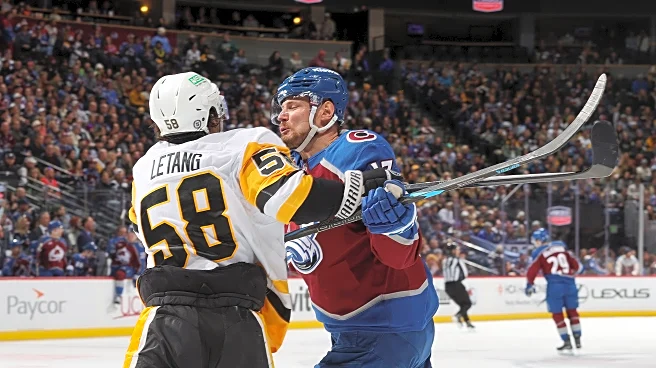
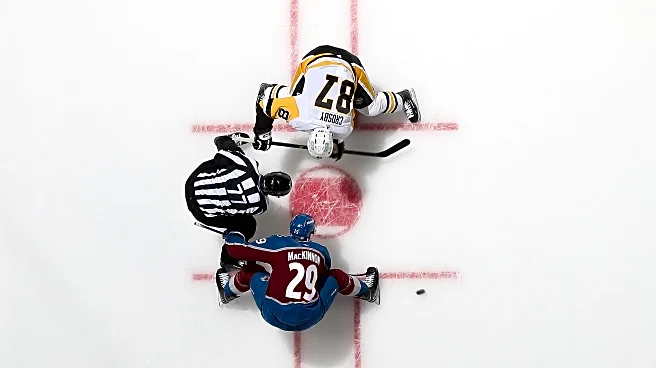
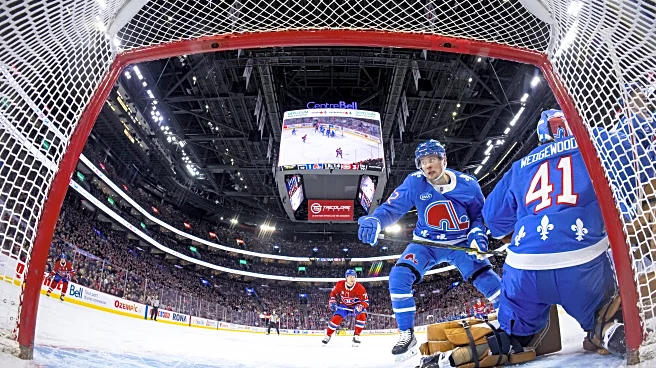
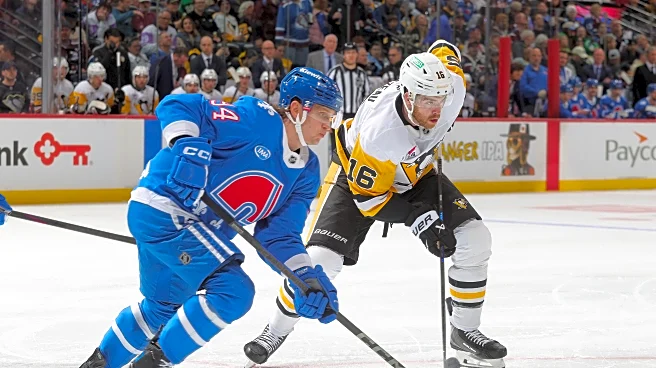
Monday night’s 7-2 defeat to the Crosby-less but very much Malkin-ized Penguins stung for more than just the final score. It was even more bitter because, just as most fans, coaches, and players had finally agreed that Scott Wedgewood deserved the net, he was pulled after the first period. Two of the goals against came on plays where he had virtually no chance to make the save — an all-too-common theme as of late.
Not the Net-Minding
I don’t buy the narrative that this Avalanche team has a goaltending problem. We saw what a real goalie crisis looked like last season. This year, the Blackwood-Wedgewood tandem has been a major reason the league’s winningest club has stayed atop the standings for the vast majority of the campaign.
Sure, you could flip the script and argue that Colorado’s early success was simply the product of strong support for goaltending. I get it. A good team in front can inflate a goalie’s traditional numbers. But if you’ve been watching closely, Scott Wedgewood has been stealing games for the Avalanche all season long.
The numbers tell the story. Among goalies with at least 35 games played, Wedgewood leads the NHL with a 2.23 GAA and sits at the top with a .915 save percentage. The advanced metrics reinforce it: he ranks 9th in Goals Saved Above Expected (GSAx), and he leads the league in save percentage against high-danger and unblocked shots (per 60).
Mackenzie Blackwood would probably be the first to admit he hasn’t been at his absolute best. But let’s not forget he underwent offseason surgery, missed training camp, and sat out the first three weeks of the season. Throw in any additional bumps and bruises since his return, and the picture changes. Even so, among goalies with at least 29 games played, Blackwood posts the 6th-best GAA at 2.48 and a .904 save percentage. On the fancy side, he sits in the top half of the league with +0.245 GSAx and a Save Percentage Above Expected of +0.0046.
Bottom line: this tandem has delivered elite results behind a team that still surrenders too many net-front chances on some nights. The real question isn’t whether the goalies are the problem — it’s whether the defense in front of them has the depth to stop bleeding those high-danger opportunities.
Always Protect the House
Growing up, I was always told that defensemen are “the goalie in front of the goalie.” We called it the “No-Fly Zone” and screamed “Clear the crease!” — which basically meant it was open season on anyone near the netminder. That primitive, blood-and-guts approach might sound infantile now, but it’s exactly what the Colorado Avalanche need more of.
Meghan Angley from Guerrilla Sports joked on Off-Ice that not enough blood has been exchanged for the amount of net-front presence this team has allowed. I tend to agree. I’m not advocating cheap shots or plays meant to injure, but opposing forwards need to know that crashing the crease comes with a real cost — something fearsome enough to act as a deterrent.
It’s not just players lingering in the blue paint. Too often, attackers are left completely unmarked in front. Three of Edmonton’s goals last Tuesday came because Connor McDavid and Ryan Nugent-Hopkins were given far too much space and comfort in the most dangerous area of the ice.
We’ve also started to see two Avalanche defenders collapsing on the puck carrier or a loose puck, leaving another attacker wide open. Nathan MacKinnon chalked it up to the 11-7 roster construction forced by injuries, noting that constantly mixing partners kills cohesion. He’s probably right about that. The deeper issue still seems to be a lack of depth and options.
Nick Blankenburg deserves time to adjust and Brett Kulak is a welcomed presence, but is this blue line actually good enough to win it all?
Josh Manson and Brent Burns have been split up at times simply because both can’t struggle simultaneously. Brett Kulak would have been a strong addition rather than a swap, and Devon Toews seems to have fully embraced “just pass it to Cale” mode.
Colorado’s defense was a clear competitive advantage in 2022. Now it feels like a group that needs to be “good enough” to survive Dallas late push for the Central — but may not be for a deep playoff run. With the gap between Cale Makar and everyone else in the group growing wider, commitment to structure and phyical buy-in are more important than ever.
Let us know what you think in the comments!