





Aren’t you glad you cheer for a team with a decentralized ownership structure with the ability to raise capital as needed? I know I am. Makes me happy.
The Chicago Bears, though. The Bears are owned by the McCaskey family, and their primary business is the Bears. They’re not owned by billionaires who made their money in finance or oil or insurance or AI, and sometimes that’s a good thing. While all rich people care mostly about becoming richer, the McCaskeys, I think, do care about football in a way
that goes beyond “this is my rich person’s toy.”
But there’s a downside as well, which is that the McCaskeys don’t have the hard-nosed business experience you get in some of those other fields. Sure, they can hire firms and advisors and lobbyists (and Kevin Warren) to do that work, but they’ve made several high-level tactical blunders in this process, and it’s hard not to push that blame all the way to the top. I doubt the idea was ever to wind up in Hammond, Indiana, but it’s becoming more and more likely as time goes on. As the Bears have boxed themselves into a stupid corner of their own making, it is increasingly hard to see a way out. But where did this all go wrong?
Leverage is Everything
The business of getting the public to pay for a new stadium is a dirty one, but it’s also pretty simple, and it all boils down to leverage. When a team has an expiring lease in a so-so market, it’s incredibly plausible that they might move, like the Cardinals in St. Louis or the Rams in St. Louis. All you need to do at that point is put together a plan for a new stadium, preferably with some additional development around it, put together a BS economic study about how it will help the area, and then pitch it to politicians and voters. You’ll know you’ve done a good job if JC Bradbury yells at you.
However, it’s VERY important that you proceed in the proper order, that you have a plan, that you have a BS economic study to point to, and that your threat to relocate is an actual relocation to an actual new physical space, many many miles away. The Bears have messed up every last one of these things. Let’s take it one stupid step at a time.
- The Bears’ lease is NOT up!
One of the underdiscussed, and frankly, crazy things about all of this stadium drama is that the Bears’ lease still has nine years on it! Now, you do have to start planning these things well in advance, but if the team keeps hitting roadblocks and whatnot, they can still play at Soldier, and in fact are technically obligated to play at Soldier, until 2033! And if they leave early, they will have to pay penalties up to $90 million! The only real urgency here is the McCaskeys’ missing out on that sweet entertainment district money that many other teams get. There is also likely some pressure from the NFL itself, as their raison d’etre is to increase franchise values, and the Bears being stuck in the largely undeveloped lake shore home doesn’t help. And so the urgency here is fake, but so is all of the other leverage.
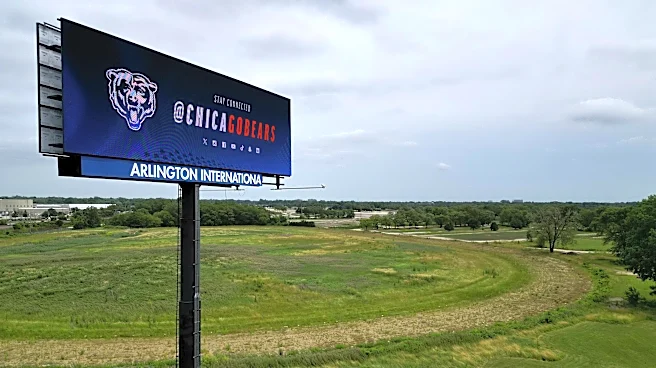
2. The Bears purchased the racetrack in Arlington Heights before they did anything else.
The deal began way back in 2021 with Ted Phillips still in charge of the team and closed in February of 2023 under new CEO Kevin Warren. The 326-acre parcel cost the Bears 197.2 million, plus whatever they paid to demolish the course starting in May of that year. If you are trying to shake down governments for tax money/tax breaks/development assistance, spending $200 million on land and locking yourself into a location for SOMETHING is a bad way to start. Ideally, you want the areas courting you to be proposing the land you might develop. This was a WEIRD way to start.
It still would have been fine had they taken all of the other steps, maybe put together a traffic study, talked to the public transit people at Metra, etc., but it became very clear very quickly that they had no plan at all, and we know this because,
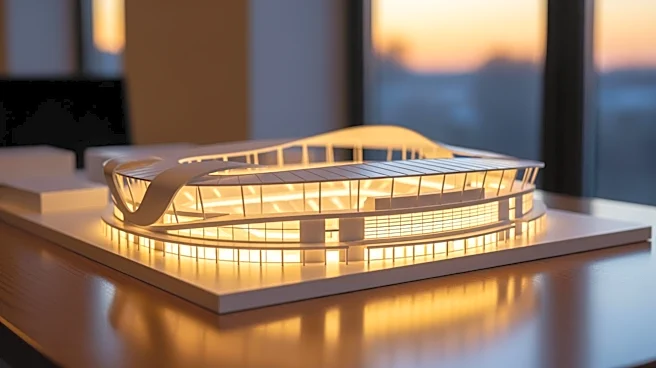
3. In April of 2024, the day before the NFL Draft, Kevin Warren announced plans to build a $4.7 billion domed stadium/development on the lakefront in Chicago. The Bears would kick in $2 billion.
If you don’t live in the Chicago area as I do, you may not realize just how stupid an idea this is, but it all goes back to a prohibition on developing the land east of Lake Shore Drive, most famously weaponized by a local advocacy group against the George Lucas museum. That law is also the reason that Soldier Field currently looks like a space toilet crammed inside a Roman coliseum, as the already developed land was the only land that could be used for the refurbished Soldier Field.

The only rational explanation for this move was to create some leverage with Arlington Heights because, as previously explained, when they spent all that money on the land to build the stadium, they surrendered most of their leverage. However, “rational” is probably not quite the right word because the government of the city of Chicago and the Pritzker administration are well aware that you can’t build there. It’s like playing poker and bluffing that you have an extra ace shoved up a nearby unicorn’s butt.
Anyway, you will note at this point in our story that moving to Indiana is not on anyone’s radar, and that is because literally no one wants to move to Indiana. But Indiana also knows this which is why some savvy Indiana politicians (motto: You can make it happen if you have more courage than former Governor Mike Pence) decided they would try to get the Bears to move there by paying them a bunch of money and giving them environmentally contaminated land in Hammond near Wolf Lake. Wolf Lake has a storied history as Wikipedia so colorfully describes:
“Despite years of environmental damage caused by heavy industries, transportation infrastructure, urban runoff and filling of wetlands, it is one of the most important biological sites in the Chicago region.”
They go on to note that First Lady Mary Todd Lincoln almost drowned there.
4. Hammond is attractive to Illinois city and State officials, but outside of the money they’ll be getting, it’s not attractive to the Bears.
The fact of the matter is that Hammond IS suburban Chicago as much as Arlington Heights is. It’s physically closer to downtown, the Metra goes there, and for the 99.9999% of Bears fans that don’t often attend games, it hardly matters, and it’s hardly unprecedented. The Jets and Giants have played in New Jersey for quite a long time, and urban-to-suburban migrations are now the norm, not the exception. It’s likely that the city of Chicago views Hammond as a way to keep the team without paying for the team, and while some will make fun of them as the Indiana Bears, a enduring a few little humorous digs is probably worth an extra billion or two to the city/state.
And of course, the Bears don’t actually want this. The Wolf Lake region and neighboring golf course that would become part of the site is highly contaminated, as per the Chicago Tribune:
“The result was a golf course built on top of a mountain of slag — a rocky waste product from steel production — that was capped with bio-solids that are treated human waste.”
But, while most local pundits believe a stadium would be possible in the area despite the area’s environmentally questionable history and persistent egg scent, there is less optimism about creating bars, restaurants and the coveted “entertainment district” in a contaminated area. Throwing interceptions on slag is a lot easier than serving Italian beef.
The other reason this is not attractive to the Bears is that the small percentage of fans that actually do attend games tend to live further North. I suspect Arlington Heights would have actually been quite convenient for a great many season ticket holders. Hammond is quite accessible from downtown, but if you’re driving from like, Winnetka to Hammond, that’s a solid two hours! Which is only one hour less than it takes to drive to Lambeau from Winnetka.
Bears fans are among the most dedicated fans in the world, and I am sure a significant portion will routinely make the trek, but probably not all of them. For people with enough money to go to Bears games, convenience matters too.
5. The Bears are the only ones to screw this up.
The most embarrassing thing for Kevin Warren and the Bears is that teams are building stadia ALL OVER the Chicagoland area. Northwestern University is set to open a brand-new Ryan Field this fall in Evanston, while the Chicago Fire of Major League Soccer is building a new 22,000-seat stadium on the near South Side. Everyone else has gotten their places built except the big bad Bears.
The bottom line in Chicago is that the city and the Illinois burbs are willing to do business with you as long as you’re willing to do the work and be somewhat reasonable. The Bears have done neither, but they want money, and so they’re now likely to flee to the only spot willing to give them any.
When you’ve bluffed your way into building on “treated human waste,” it may be time to reexamine your priorities.