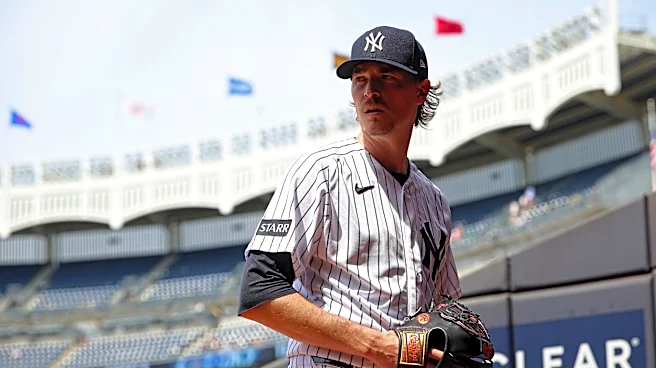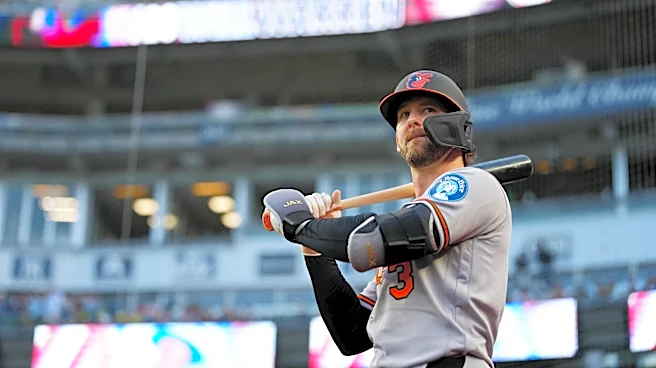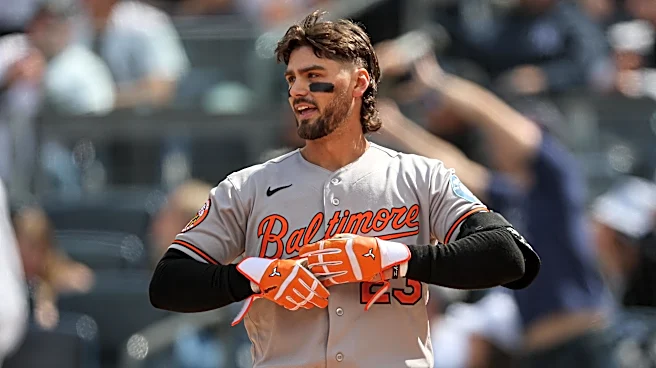

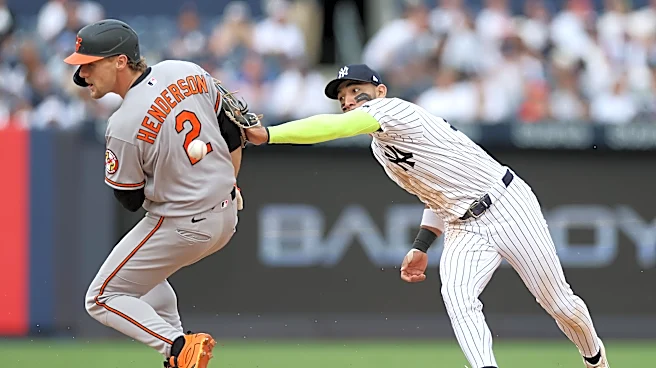
The Orioles went into New York this past Friday trying to prove they were better than their middling record. Instead, they walked away on the wrong end of a four-game sweep, looking more like a team trying to avoid a last-place finish than one contending for a playoff spot.
Each of the four losses in New York followed a similar script. The O’s always fell behind early, as they were outscored 14-2 in the first three innings across the four games. And every time we saw the Orioles’ bats shrink under
the pressure of that early hole. The Baltimore bats put up 37 Ks while going 4-for-27 with runners in scoring position.
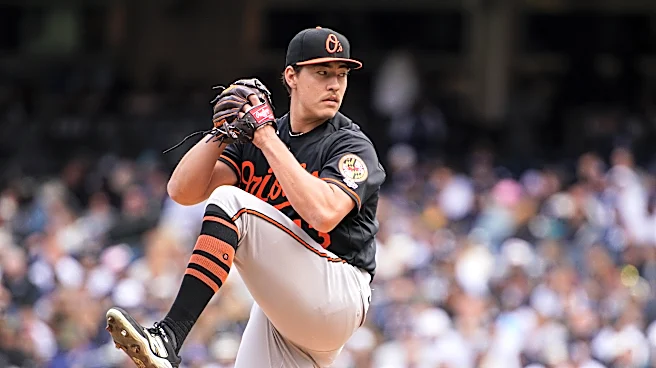
Rough opening frames from Oriole starters are nothing new. A month ago, I wrote about how terrible 2nd innings plagued the O’s over their first ten games. Since then, it hasn’t gotten any better. Heading into their final game against the Yankees, the Orioles had a 4.59 ERA in innings 1-3 (compared to the league average of 4.03). The 2nd inning is still their biggest downfall, as they have a league-worst 7.68 ERA and 1.015 opponent OPS. Of Orioles starters to make 3+ starts this year, only Trevor Rogers has a 2nd-inning ERA below 5.00.
These struggles to open games are something the O’s will have to improve if they want to undo the damage of another disappointing start to the season. Some of that improvement should come from positive regression; the O’s have an opposing BABIP of .314, whereas the league average is .285. However, much of the improvement will have to come from better execution—the likes of which we expected but have rarely seen from Rogers, Kyle Bradish, Shane Baz and Chris Bassitt.
However, these struggles from the starters have exposed a flaw in the construction of this lineup. Mike Elias and the rest of the front office built this offense to be a battering ram, the type of overwhelming force that gets the Orioles ahead, keeps them ahead, and papers over any deficiencies in the rotation.
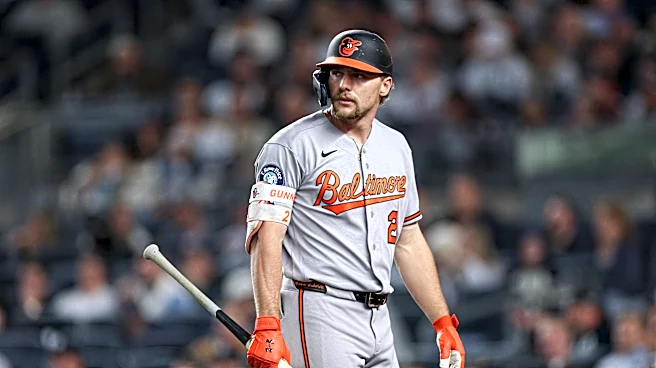
The problem with this particular battering ram is that it comes with a lot of swing and miss. Of the 10 qualified Orioles hitters, seven have a swing and miss rate below the 50th-percentile, with Jeremiah Jackson, Coby Mayo, Blaze Alexander and Samuel Basallo all below the 30th percentile. The strikeout rates aren’t any better. Six of the 10 Orioles’ qualified hitters rank in the 40th percentile or below in strikeout rate, with Gunnar Henderson sitting down at the eighth percentile with a 31.4% K rate.
The profile of this offense shouldn’t come as a surprise. Pete Alonso, even for all his offensive output, has always had a fair amount of swing-and-miss in his game—as evidenced by his career average of 159 Ks per 162 games. We’ve seen similar levels of aggression from Gunnar throughout his Oriole career, whose career 23.6% strikeout rate is just a tick above Alonso’s. Adding another big-time power hitter like Samuel Basallo to the lineup was always likely to bring more whiffs as well. It is simply the price you pay for having guys with 30+ HR potential in your lineup.
Having a high-slugging, high-strikeout lineup isn’t a problem in and of itself. The problem arises when you ask those sluggers to try and methodically chip away at a deficit and help the Orioles get back into game they’re trailing. Heading into the series finale in New York, the O’s were third in baseball with 510 ABs when behind. In those situations, they rank 20th in batting average, 22nd in on-base percentage and dead last with 157 strikeouts.
Through this season’s first 35 games, the O’s have only had two hitters who have consistently shown the patience needed to claw yourself out of early holes. Taylor Ward and Adley Rutschman area the only Orioles who are above average in both strikeout rate and whiff rate this season. They go about it different ways, with Ward seeing the most pitches of any Oriole and leading baseball with a miniscule 10.9% chase rate. Adley is a little less selective, but makes up for it by making contact on damn near everything he swings at—as evidence by his 12.2% swing-and-miss rate.
The Orioles have built the whole offensive ethos of their franchise on the value of the three-run home run. And yet, too often, it feels like everyone in the lineup wants to be the guy to hit the Weaver and not enough players want to be the guys on base. The Orioles aren’t great at playing station-to-station baseball, as seen by the fact that 48% of their RBIs come via the long ball (majoe league average is 41.8%). And yet, it is that type of station-to-station approach that you need if you want to score come-from-behind victories.
The O’s have 15 more games this month against current Top 5 teams in the AL—including nine against the Yankees and Rays. Which means they have at least 15 more changes to prove that the double disfunction of their starting staff and lineup is more fluke than reality. But just like Colton Cowser against non-fastballs, this team has a clear flaw that so far has doomed them to a massively underwhelming start to the 2026 season.