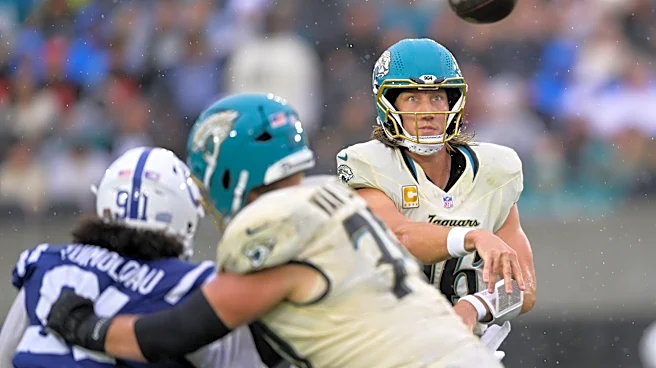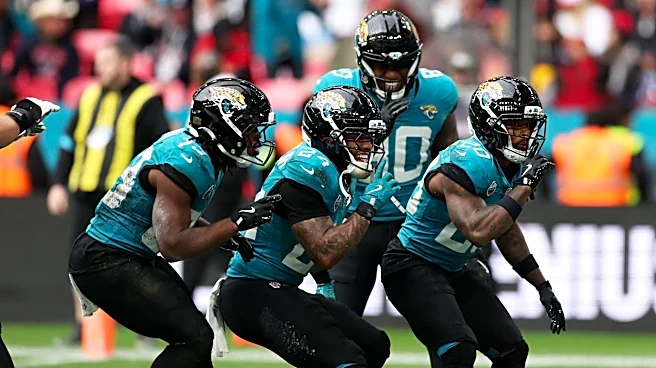



The Indianapolis Colts are in a difficult position, and after Sunday’s humiliating 42-7 loss to the Jacksonville Jaguars, it’s becoming increasingly clear that the franchise is much further away from contention than many originally believed. At 2-6, with Chris Ballard having already been fired and two of the organization’s most accomplished players traded away, Indianapolis appears headed toward another significant rebuilding period.
Unfortunately, this may not be a particularly quick turnaround.
The Colts have already surrendered their 2027 first-round pick in the Sauce Gardner trade, and with several established veterans approaching free agency or the later stages of their careers, there is a legitimate argument that Indianapolis will struggle to compete next season as well. Even if the organization manages to find its next franchise quarterback in 2028, expecting that player to immediately transform the team into a contender would be unrealistic.
With that in mind, I’m looking at 2029 as the first reasonable target for Indianapolis to become a legitimately competitive team again. That doesn’t mean the Colts cannot improve before then, but building a roster capable of consistently competing with the NFL’s best will require several successful drafts, meaningful player development and a much clearer long-term plan from whoever takes over as general manager.
So rather than evaluating who deserves to start for the Colts today, I wanted to examine which players currently on the roster could realistically contribute to a winning team in 2029. Just as importantly, what roles should those players occupy? Someone might be a starter in Indianapolis right now but only qualify as a rotational player on a Super Bowl contender. Others could become genuine building blocks who remain with the franchise for the next several years.
Age, contracts, performance and potential development all factor into these evaluations. I’ve separated 50 players into five categories, ranging from established players worth building around to those who likely won’t be part of the organization’s next competitive window. The projected ages refer approximately to the 2029 season, while several players would need extensions or new contracts to remain with Indianapolis by then.
1. Build around them
These are the players I believe could hold legitimate starting roles on a competitive Colts team in 2029. Some are already among the best at their positions, while others are young enough to develop into important long-term contributors.
Sauce Gardner — CB1 | Age 29 in 2029
Gardner is arguably the easiest player to include in this category. The Colts invested two first-round selections to acquire him from the New York Jets, and his four-year, $120.4 million extension runs through the 2030 season. While injuries have limited him at times, he remains one of the NFL’s premier cover corners and should still be performing at a high level in 2029. Indianapolis has already committed significant resources to making him a cornerstone of its defense, and barring a dramatic decline, Gardner should remain the team’s No. 1 cornerback throughout its next competitive window.
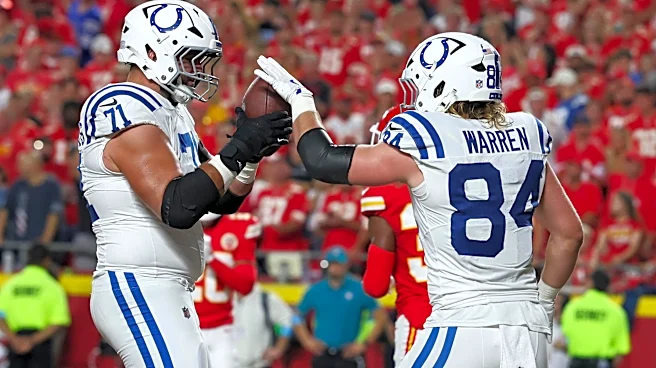
Tyler Warren — TE1 | Age 27
Warren is another relatively straightforward selection. The former first-round pick has already demonstrated the versatility and receiving ability necessary to become one of the league’s better tight ends, and he should be entering his physical prime by 2029. His rookie contract runs through 2028, with Indianapolis holding a fifth-year option for 2029. Given his potential, I would expect the Colts to exercise that option if he continues developing as anticipated. Warren could become a foundational piece of the next offense, particularly if Indianapolis finally finds a long-term answer at quarterback.
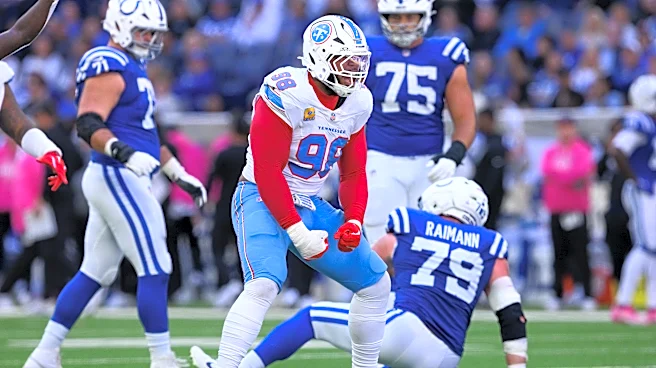
Bernhard Raimann — LT1 | Age 32
Raimann has experienced a somewhat disappointing 2026 season by the standards he established over the previous few years, but that shouldn’t erase the fact that he remains a quality starting left tackle. Indianapolis signed him to a four-year, $100 million extension running through 2029, providing valuable stability at one of the NFL’s most important positions. Although Raimann will be entering his early 30s by then, offensive tackles can remain effective well beyond that age, and there is little reason to believe the Colts should be looking for his replacement anytime soon. He might not be among the five best tackles in football, but he’s more than capable of protecting the blind side of a quarterback on a winning team.
Alec Pierce — WR2 | Age 29
Pierce received a substantial four-year, $114 million extension during the 2026 offseason, meaning Indianapolis has already committed to keeping him around through 2029. His combination of size, speed and downfield ability makes him a valuable offensive weapon, although I believe his ideal role on a genuinely competitive team is as a complementary No. 2 receiver rather than the primary receiving option. Pierce can stretch defenses vertically and create explosive plays, but the Colts would benefit from eventually finding a more complete WR1 who can consistently win in multiple areas of the field. That would allow Pierce to focus on the strengths that make him such a dangerous player.
Adetomiwa Adebawore — DT1 (3-technique) | Age 28
Adebawore might be the most exciting developmental piece on the Colts’ defensive line. His athleticism and ability to generate interior pressure have become increasingly apparent, particularly following his recent two-sack performance against Minnesota. With DeForest Buckner now in San Francisco, Adebawore has an opportunity to establish himself as the organization’s long-term starter at the three-technique position. However, his rookie contract expires after this season, making an extension an immediate priority. If Indianapolis can retain him and his development continues, he has the potential to become one of the defense’s most disruptive players by 2029.
CJ Allen — MLB1 | Age 24
Allen is one of the few players on the roster who could still be several years away from reaching his prime when the Colts are ready to compete again. The 2026 second-round pick has started showing encouraging signs in recent weeks, demonstrating the instincts, physicality and range necessary to eventually become a reliable starting middle linebacker. His rookie contract runs through 2029, providing Indianapolis with a young defensive player who should still be relatively inexpensive during the proposed competitive window. While it’s far too early to call him a star, Allen has shown enough to make me comfortable projecting him as the long-term MIKE linebacker, assuming his development continues.
Matt Goncalves — RG1 | Age 28
Goncalves has quietly developed into one of the more dependable young players on the offensive line and looks capable of holding down the starting right guard position for years to come. His rookie contract expires after the 2027 season, meaning Indianapolis would need to negotiate a second deal to retain him through 2029. Given his age, versatility and improvement since arriving in the league, that should be a priority if his performance remains consistent. The Colts have already lost Quenton Nelson and cannot afford to keep replacing quality offensive linemen. Goncalves may never reach Nelson’s level, but he has the potential to become a long-term starter on a competitive offensive line.
Cam Bynum — FS1 | Age 31
Bynum is somewhat different from the younger players in this category because he will be entering his 30s by the time Indianapolis is ready to compete again. However, I still believe he could be a valuable starting free safety in 2029, particularly given his intelligence, communication and leadership abilities. His current contract expires after 2028, so the Colts would need to extend him or negotiate another deal to keep him around. While he may eventually lose some athleticism, Bynum has the experience and understanding of the game to remain effective, and his presence could be particularly important for a defense that will likely feature several younger players.
Spencer Shrader — K1 | Age 30
A reliable kicker is an underrated part of building a competitive roster, and Shrader has provided Indianapolis with the consistency it has often lacked at the position. His current deal expires after 2026, making another contract necessary, but there is little reason to move on from a quality specialist simply because the organization is rebuilding. He should still be well within his productive years in 2029, and if he maintains his current level of performance, Indianapolis would be wise to keep him around rather than spend additional resources searching for a replacement.
2. Keep them in the mix
These players have the potential to start on a winning team, although I am not entirely convinced they should be considered long-term foundational pieces just yet. At worst, I believe they could provide valuable rotational contributions or high-quality depth.
Tanor Bortolini — C1 | Age 27
Bortolini has been somewhat inconsistent throughout his early career, showing flashes of quality play while also experiencing stretches where his performance has been less convincing. However, he is still young and has enough ability to develop into a dependable starting center over the next few seasons. His rookie contract expires after 2027, meaning the Colts will eventually have to decide whether he deserves a second deal. For now, I would continue developing him as the starting center rather than immediately investing significant resources in replacing him. He may not become an elite player, but being a competent starter on a good offensive line is certainly within reach.
AJ Haulcy — SS1 / S3 | Age 25
Haulcy has shown promising ability during his rookie season and could become an important part of Indianapolis’ secondary over the next several years. The 2026 third-round pick is under contract through 2029, making him a natural fit for the team’s projected competitive window. His ideal role could be as a starting strong safety alongside Bynum, although I would also be comfortable with him developing into a third safety who contributes in different defensive packages and on special teams. Either way, his age and potential make him someone the Colts should prioritize developing rather than replacing.
Seth McGowan — RB2, with RB1 potential | Age 28
McGowan has been one of the more encouraging young players on an otherwise disappointing Colts team. The rookie has flashed good vision, power and burst in limited opportunities, raising the possibility that Indianapolis may already have a useful long-term contributor in its backfield. He remains under his rookie contract through 2029, which makes his development particularly interesting given Jonathan Taylor’s uncertain future. I believe McGowan could become a very good No. 2 running back on a winning team, with the potential to eventually take on a starting role if he continues improving. The Colts should give him more opportunities over the remainder of this season to determine exactly what they have.
Jalen Farmer — LG2, with starter potential | Age 25
Farmer is another young player who could benefit from the increased opportunities created by Indianapolis’ roster overhaul. With Nelson now in Seattle, there should be additional snaps available along the interior offensive line, giving Farmer a chance to demonstrate whether he can eventually develop into a starting guard. The 2026 fourth-round pick is under contract through 2029, providing the Colts with several years to evaluate his progress. I would currently project him as a quality interior backup with the potential to become a starter, although he needs considerably more experience before Indianapolis should feel comfortable penciling him into the long-term starting lineup.
3. Depth worth keeping
Not every player on a championship-caliber roster needs to be an established starter. Good teams rely on inexpensive backups, reliable special teams contributors and developmental players capable of stepping into larger roles when injuries occur. These are the players I believe could serve those purposes in 2029.
Justin Walley — CB3 / CB4 | Age 27
Walley has enough talent to develop into a capable outside cornerback, although I would currently feel more comfortable projecting him as the third or fourth corner on a genuinely competitive defense. His rookie contract expires after 2028, meaning Indianapolis would need to retain him on a second deal. Given the importance of cornerback depth and the frequency with which teams use nickel and dime packages, having someone capable of playing meaningful defensive snaps without being relied upon as a primary starter would be valuable.
JT Tuimoloau — EDGE3 / Rotational EDGE | Age 26
Tuimoloau has shown some encouraging improvement this season, including several impressive moments as a pass rusher and run defender. However, I still view him as a complementary edge rather than someone capable of anchoring a defensive front. His rookie contract runs through 2028, giving Indianapolis another two seasons to evaluate whether he deserves an extension. On a strong defense, Tuimoloau could be an effective third or fourth defensive end who rotates into games and contributes in specific situations, particularly if the Colts eventually acquire a legitimate premier pass rusher.
Jalen Travis — Swing OT | Age 27
Travis possesses excellent size and intriguing physical tools, but there is still considerable uncertainty about his ability to develop into a dependable starting tackle. His rookie contract expires after 2028, and I would be reluctant to enter the 2029 season relying on him as an unquestioned starter. However, quality swing tackles are difficult to find, and having someone capable of providing depth on either side of the offensive line would be worthwhile if Travis continues progressing. That feels like his most realistic long-term role.
Ashton Dulin — WR depth / Special teams | Age 32
Dulin has been one of Indianapolis’ more dependable special teams contributors for years, providing the kind of effort and reliability that rarely receives much attention but remains important to winning football teams. His current contract expires after this season, and at 32 in 2029, he would no longer be a particularly young player. However, I wouldn’t rule out keeping him around if he remains productive, especially if the cost is reasonable. His receiving ability is relatively limited, but good special teams players have value beyond their offensive statistics.
Deion Burks — WR depth / Special teams | Age 26
Burks is still very early in his NFL career and has enough athletic ability to develop into a useful depth receiver. The 2026 seventh-round pick remains under contract through 2029, giving Indianapolis several seasons to determine how much he can contribute offensively and on special teams. I wouldn’t project him as a future starter at this stage, but becoming a dependable fourth or fifth receiver who can contribute on coverage and return units would be a perfectly reasonable outcome.
Bryce Boettcher — LB depth / Special teams | Age 27
Boettcher has shown the physicality and effort necessary to become a useful special teams contributor and rotational linebacker. However, I haven’t seen enough to suggest he should be relied upon as a full-time starter on a playoff-caliber defense. His rookie contract runs through 2029, making him an inexpensive depth option during the proposed rebuilding period. If he develops into a reliable backup who can step into games when necessary, that would be a worthwhile return on the Colts’ investment.
Austin Ajiake — LB depth / Special teams | Age 29
Ajiake fits into a similar category as Boettcher, although he is somewhat older and offers less developmental upside. He has demonstrated enough ability to contribute on special teams and provide emergency linebacker depth, but there is little reason to project him as a future starter. His long-term future would depend on earning another contract before 2029, and I would only retain him if he remains inexpensive and continues contributing in the kicking game.
Caden Curry — EDGE depth / Special teams | Age 26
Curry brings energy, physicality and a willingness to contribute in less glamorous roles along the defensive front. The 2026 sixth-round pick is under contract through 2029, giving Indianapolis time to continue developing him without making a major financial commitment. I don’t currently view him as a future starting defensive end, but he could become a valuable fourth or fifth edge defender who rotates into games, plays the run and contributes on special teams.
George Gumbs Jr. — EDGE depth / Special teams | Age 27
Gumbs is another developmental defensive player whose long-term value may come primarily from his versatility and ability to contribute in multiple roles. He possesses intriguing physical tools, but there is still considerable work to do before he can be trusted as a consistent defensive contributor. His rookie contract runs through 2029, and I would be comfortable keeping him as an inexpensive rotational player, provided he continues showing progress.
Hunter Wohler — Safety depth / Special teams | Age 26
Wohler projects as the type of versatile defensive back who could provide useful depth at safety while making his biggest impact on special teams. His rookie deal expires after 2028, meaning Indianapolis would need to re-sign him to keep him for 2029. I wouldn’t count on him becoming a starting safety, but having a dependable fourth option behind the primary rotation would be valuable, particularly given the physical demands of the position.
Riley Leonard — QB3, with QB2 potential | Age 27
Leonard is still young enough to develop into a useful NFL backup, although there is little evidence at this stage that he should be considered a legitimate future starter. His rookie contract expires after 2028, and I would be open to retaining him as a third quarterback if he continues progressing. A reliable backup capable of operating the offense and occasionally stepping into games has value, but Indianapolis needs to look elsewhere for its long-term answer at quarterback.
Luke Rhodes — LS1 | Age 36
Long snapper is not a position that requires much discussion when the player is consistently doing his job, and Rhodes has been a dependable contributor for years. His contract runs through 2027, meaning another deal would be necessary for him to remain with Indianapolis in 2029. Although he would be 36 by then, long snappers can remain productive well into their late 30s, and I would have no issue retaining him if his performance remains consistent.
4. 50/50
These are the players I wouldn’t necessarily give up on, but I also wouldn’t make significant long-term commitments to them based on what we’ve seen so far. Their futures will depend heavily on development, contracts and whether they can establish a clearly defined role over the next couple of seasons.
Laiatu Latu — EDGE3, potentially more | Age 28
Latu might be the most frustrating player to evaluate on the entire roster. The former first-round pick arrived in Indianapolis with considerable expectations, but his production has yet to consistently match the investment the Colts made in him. While he has demonstrated flashes of high-level pass-rushing ability last season, I currently view him as a complementary edge defender rather than a true No. 1 option on a winning defense. His rookie contract expires after 2027, with a fifth-year option available for 2028, leaving the organization with an important contractual decision approaching. I would not rule out an eventual breakout, but I also wouldn’t be comfortable giving him a lucrative extension without substantially more consistent production.
Will Mallory — TE3 | Age 30
Mallory has shown some ability as a receiving tight end, but with Tyler Warren firmly established as the team’s future at the position, his path to meaningful playing time is limited. His rookie contract expires after this season, and any future with Indianapolis would likely come through relatively inexpensive short-term deals. I wouldn’t completely dismiss the possibility of keeping him as depth, although the Colts could probably find similar production from a younger player.
Dalton Tucker — Backup IOL | Age 29
Tucker has provided useful interior offensive line depth, but I don’t see enough upside to consider him a long-term starter. His current contract expires after 2026, and Indianapolis will have opportunities to add younger competition through the draft over the next few seasons. I wouldn’t object to retaining him on a modest deal, particularly given his familiarity with the system, but he shouldn’t be guaranteed a roster spot several years from now.
Anthony Gould — WR depth / Return specialist | Age 28
Gould has enough speed and return ability to remain an intriguing depth option, although his offensive production has been limited. His rookie contract expires after 2027, and with younger receivers like Deion Burks competing for similar roles, it may become difficult for Indianapolis to justify keeping both players long-term. I wouldn’t rule Gould out entirely, but he needs to establish himself as a consistently valuable return specialist or develop into a more reliable offensive contributor.
Rigoberto Sanchez — P1 | Age 35
Sanchez remains a quality NFL punter and is under contract through 2028, making him one of the few veterans whose deal nearly reaches the proposed competitive window. He would be approximately 35 years old in 2029, which is not necessarily a problem for a punter, although age and declining performance could eventually become factors. I would be open to keeping him around if he maintains his current standard, but this is not a position where Indianapolis should feel obligated to make a significant long-term commitment.
5. Won’t be part of the future
This category doesn’t necessarily mean these players are incapable of contributing to a winning team. Some remain very good NFL players, but their age, contracts, performance or likely career trajectories make them poor fits for what Indianapolis should be trying to build toward in 2029.
Daniel Jones — QB | Age 32
Jones has struggled considerably this season, and despite being under contract through 2027, I don’t believe he should have any meaningful role in the Colts’ long-term plans. Indianapolis needs to find a younger quarterback capable of becoming a legitimate franchise player, and continuing to invest in Jones would only delay that process. I would be surprised if he remains with the organization beyond the next couple of seasons.
Anthony Richardson — QB | Age 27
Richardson is still young enough to theoretically develop into a productive quarterback, but the situation in Indianapolis has deteriorated to the point where a long-term future seems extremely unlikely. He requested a trade earlier this year, has struggled to establish himself as a consistent starter and will become a free agent after the season following the team’s decision not to exercise his fifth-year option. There are simply too many obstacles to envision him remaining with the Colts through 2029.
Jonathan Taylor — RB | Age 30
Taylor is still one of the NFL’s best running backs, and his current contract runs through 2028. However, he will be 30 years old by the time Indianapolis is theoretically ready to contend again, with an enormous amount of mileage accumulated throughout his college and professional career. Running backs can certainly remain productive into their 30s, but I wouldn’t want the Colts investing another substantial contract in Taylor at that stage. If Indianapolis receives a strong trade offer before his current deal expires, moving him would make more sense than building around an aging running back during a long-term rebuild.
Josh Downs — WR | Age 28
Downs is a difficult player to include here because I genuinely believe he could be a very good No. 3 receiver operating primarily from the slot on a competitive team. At 28 in 2029, he should still be in his prime and could provide valuable production alongside a stronger receiving corps. However, his rookie contract expires after this season, and with reports that he has requested a trade, I have a difficult time envisioning him remaining in Indianapolis for another three years. His potential departure would have more to do with the circumstances surrounding the organization than any lack of ability.
Keenan Allen — WR | Age 37
Allen remains a technically gifted receiver with excellent route-running ability, but he is already 34 years old and playing on a short-term contract. He would be approximately 37 by 2029, making him an unrealistic long-term option regardless of what he contributes over the remainder of this season.
Laquon Treadwell — WR | Age 34
Treadwell has provided veteran depth at receiver, but he is already in his 30s and does not offer enough offensive upside to justify keeping him through another rebuilding period. His current deal is short-term, and Indianapolis should be looking to younger players with greater developmental potential to fill its backup receiver positions.
Grover Stewart — DT | Age 36
Stewart remains an important run defender, and his absence would be noticeable given Indianapolis’ struggles at linebacker and the lack of quality alternatives at nose tackle. However, he will be 36 by 2029, and his current contract expires after this season. Even if the Colts decide to bring him back on a short-term deal, they need to begin searching for a younger long-term replacement capable of anchoring the middle of the defensive line.
Charvarius Ward — CB | Age 33
Ward is a capable starting cornerback when healthy, but his injury history and substantial contract make him a difficult player to project several years into the future. His current deal runs through 2027, and he would be approximately 33 by the proposed competitive window. With Gardner already occupying one outside cornerback position, Indianapolis should focus on developing a younger and more affordable starter opposite him rather than committing additional money to an aging veteran.
Cam Taylor-Britt — CB | Age 30
Taylor-Britt has demonstrated the ability to contribute at the NFL level, but injuries and inconsistent performances have prevented him from establishing himself as a dependable long-term option. His current deal expires after this season, and I don’t see enough upside to justify making him part of the team’s plans for 2029. Indianapolis would be better served searching for younger competition in the secondary.
Arden Key — EDGE | Age 33
Key has provided veteran experience and rotational pass-rushing ability, but he would be entering his mid-30s by 2029. His current contract runs through 2027, and while he can still contribute in a complementary role, the Colts should be looking to younger pass rushers capable of developing alongside the rest of their defense. Retaining him beyond his current deal would do little to address the team’s long-term needs.
Micheal Clemons — EDGE | Age 32
Clemons brings physicality and experience to the defensive front, but he has never established himself as a consistently productive starting edge rusher. His current contract runs through 2028, potentially keeping him around during much of the rebuilding process, although I wouldn’t view him as an important piece of the 2029 roster. Indianapolis should be able to find younger rotational defenders with greater upside by then.
Jerry Tillery — DT | Age 33
Tillery has struggled to provide the kind of interior defensive production Indianapolis needs, particularly against the run. Even as a rotational player, his performance has not been convincing enough to warrant a long-term commitment. With his current contract approaching expiration and younger players needing opportunities, I would look elsewhere for defensive tackle depth.
Akeem Davis-Gaither — LB | Age 32
Davis-Gaither has not performed at the level Indianapolis needs from its starting linebackers, and at 32 in 2029, he would be a poor fit for a defense attempting to build around younger talent. His current deal is short-term, and with CJ Allen emerging as a potential long-term answer in the middle, the Colts should focus their resources on finding additional young linebackers rather than retaining Davis-Gaither.
Jaylon Carlies — LB | Age 28
Carlies is still relatively young, but his performance has not been convincing enough to project him as a contributor on a playoff-caliber defense. His rookie contract expires after 2027, and I don’t see a compelling reason to prioritize giving him another deal. Indianapolis needs to substantially improve its linebacker group, and keeping players who have struggled to establish themselves would only make that process more difficult.
Jonathan Owens — S | Age 34
Owens has provided veteran experience and special teams contributions, but he will be 34 by 2029 and is currently playing on a short-term contract. With younger safeties such as Haulcy and Wohler already on the roster, Indianapolis should be developing those players rather than allocating additional resources to an aging backup.
Mo Alie-Cox — TE | Age 36
Alie-Cox has been a dependable blocking tight end for several seasons, but he is approaching the end of his NFL career and will be 36 by 2029. His current contract is short-term, and Warren’s emergence makes it even more important for Indianapolis to find younger complementary tight ends capable of supporting its future offense.
Drew Ogletree — TE | Age 31
Ogletree has flashed some useful ability as a blocking and receiving tight end, but he has not developed into a particularly impactful offensive player. His contract expires after this season, and with Warren firmly established as the long-term starter, Indianapolis should have opportunities to find younger and more affordable depth at the position.
Luke Tenuta — OT | Age 30
Tenuta has not shown enough to suggest he can become a reliable NFL starter, and even as a backup, his performance has been unconvincing. With the Colts needing significant improvements along the offensive line following Nelson’s departure, retaining players without meaningful developmental upside would accomplish very little. I wouldn’t include him in the organization’s plans for 2029.
DJ Giddens — RB | Age 26
Giddens is still young and has shown occasional flashes, but I haven’t seen enough to consider him an important part of Indianapolis’ long-term running back plans. With McGowan demonstrating more encouraging potential and additional talent likely to become available through future drafts, I would be comfortable moving on from Giddens before his rookie contract expires after 2028. The Colts should continue evaluating him in the meantime, but he wouldn’t be someone I would prioritize retaining.
Sedrick Van Pran-Granger — C | Age 28
Van Pran-Granger has provided depth at center, but he hasn’t demonstrated enough to suggest he should be part of a competitive starting offensive line. His rookie contract expires after 2027, and with Bortolini currently offering a more convincing long-term option, I would prefer Indianapolis search for a younger developmental center rather than committing to another contract with Van Pran-Granger.
What would the 2029 Colts actually look like?

Looking at these evaluations, the Colts do have some interesting young talent worth retaining. Gardner, Warren, Raimann and Pierce provide established building blocks, while players such as Adebawore, CJ Allen and Goncalves could develop into important starters over the next several seasons. There is also enough young depth across the roster to potentially fill several rotational roles without requiring significant investment in free agency.
However, the number of holes remaining is concerning.
Indianapolis still needs to find a franchise quarterback, a legitimate No. 1 wide receiver, a starting running back and potentially multiple offensive linemen. Defensively, the Colts desperately need a premier edge rusher, a long-term nose tackle, another starting cornerback and significant improvements at linebacker. Even if every player in the first two categories develops as anticipated, there would still be substantial work required to turn this roster into a serious contender.
The encouraging part is that the Colts don’t necessarily need to find all those answers immediately. With 2029 as the target, the organization would have three offseasons to accumulate draft capital, develop younger players and make strategic additions in free agency. That requires patience, something the fan base has understandably grown tired of hearing, but it also requires a clear understanding of which players are genuinely worth keeping around.
The goal shouldn’t be to retain every recognizable name on the roster or replace every veteran simply because the team is struggling. It should be to identify players who can realistically contribute to a championship-caliber team, determine their appropriate roles and build around them accordingly.
Indianapolis has some of those players already. The challenge for the next general manager will be finding enough additional talent to turn a collection of promising pieces into a competitive football team, something this franchise has struggled to accomplish for far too long.