





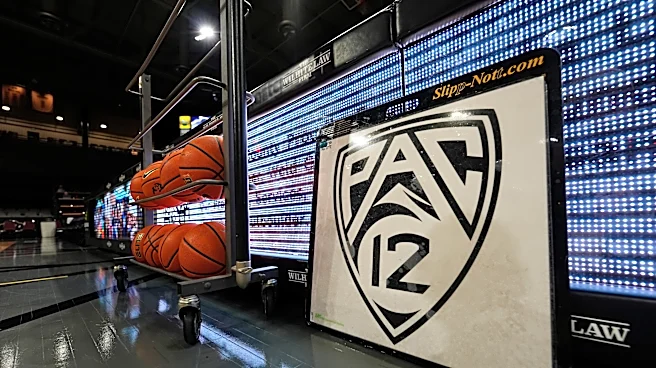

What was once unthinkable became reality when the Pac-12 lost 10 member schools in a historic wave of departures, triggering massive financial losses, major television uncertainty, and a rebuilding effort that reshaped the balance of power across the Mountain West and beyond.
Recent conference realignment has dramatically reshaped the college sports landscape, and no league has felt its impact more than the Pac-12.
Once considered one of the nation’s premier “Power Five” conferences, the Pac-12 was
reduced to just two members — Oregon State Beavers and Washington State Cougars — after 10 schools departed for the Big Ten, Big 12, and ACC ahead of the 2024-25 academic year.
The financial impact was expected, but the numbers still show how dramatic the collapse was.
According to a USA Today report, the Pac-12 generated only $111.5 million in revenue for fiscal year 2025, a sharp decline from the $566.6 million recorded the previous year.
Much of that decrease occurred after the conference lost its previous television agreements following the departure of most of its member schools.
Media-rights revenue reportedly plummeted from $381 million in fiscal year 2024 to just $3 million in 2025.
Although the Pac-12 maintained national visibility through temporary television partnerships with The CW and Fox Sports, those short-term agreements generated only a fraction of the revenue the conference had previously earned.

The conference also reported $133.2 million in expenses and ended the fiscal year with a deficit of approximately $21.7 million.
Pac-12 officials described 2025 as one of two transition years as the conference prepares to relaunch with a rebuilt membership structure beginning in 2026.
The rebuilding effort accelerated after Teresa Gould replaced former commissioner George Kliavkoff and began reshaping the conference’s future.
Beginning with the 2026-27 season, the Pac-12 will add Boise State Broncos, Colorado State Rams, Fresno State Bulldogs, San Diego State Aztecs, Texas State Bobcats, and Utah State Aggies to its football lineup, alongside Oregon State and Washington State. In basketball, Gonzaga Bulldogs will also join the conference after departing the West Coast Conference.
Those additions came directly at the expense of the Mountain West Conference, which lost several of its most established and nationally recognized programs.
Boise State long served as the conference’s flagship football program, while San Diego State and Colorado State, representing major media markets, were making increasing athletic investments.
Fresno State and Utah State also brought strong football traditions, competitive basketball programs, and passionate fan bases.
Their departures created uncertainty about the Mountain West’s future strength and national perception.
In response, Mountain West Commissioner Gloria Nevarez moved quickly to stabilize the conference and position it for the future.
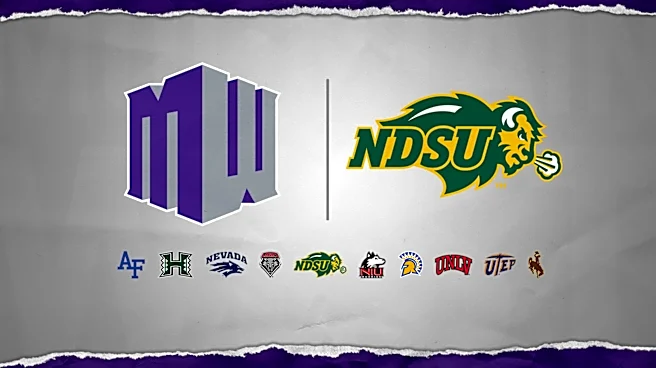
One of the league’s most notable additions was the North Dakota State Bison, a football-only member beginning in 2026.

NDSU brings one of the most successful resumes in college football history, having won 10 FCS national championships over the past 15 years.
The addition is seen as a major move to strengthen the Mountain West’s football profile and maintain national relevance after the loss of several marquee programs.
For the remaining schools, including New Mexico Lobos, UNLV Rebels, Air Force Falcons, and Wyoming Cowboys, the changing landscape could create new opportunities in conference championship races and for national exposure as the Mountain West enters a new era.
What happens next could redefine the future of college athletics across the western United States.
The Pac-12 is fighting to rebuild its national identity after standing on the brink of collapse, while the Mountain West is fighting to prove it can remain competitive and nationally relevant after losing several cornerstone programs.
In many ways, the next chapter of Western college football and basketball will be shaped not by what was lost during realignment — but by which conference adapts, grows, and survives the fastest in this rapidly changing era of college sports.