





It’s been a tremendous season of Cubs baseball so far with the team putting together two 10-game winning streaks and still in the midst of a 15-game home winning streak before Memorial Day. Neither of those events have happened since 1935, and you know when a team with a 150-year history is doing things that haven’t been done in more than 90 years good things could be on the horizon.
Unfortunately, there are also storm clouds brewing for Major League Baseball as a whole. Earlier this week the MLBPA
and MLB presented their opening proposals for this offseason’s looming CBA negotiations. Al already covered the main headlines from Tuesday’s meeting. I’m not going to rehash that here. “Reading the CBA leaves” will be a periodic column here at BCB covering some of the elements that may not be getting the headline on a particular day, but are just as important to understanding the coming CBA battle. Sometimes, like today, it will highlight stories from the last year that are important context for current conversations, other days it might look at under-covered stories from the negotiations or historical context from previous CBA negotiations.
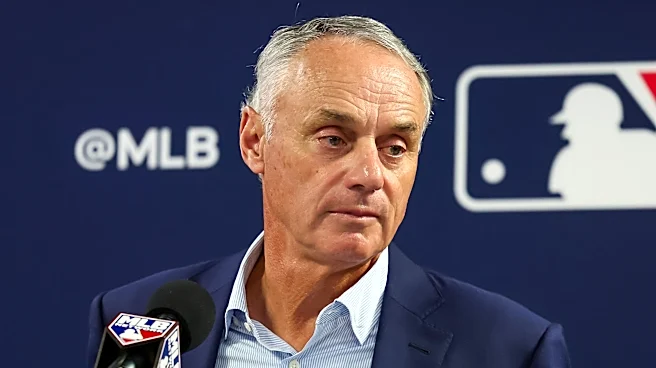
As I was reading coverage of this week’s meeting, I couldn’t help but think of a couple of developments in the last year that really color how contentious the bargaining next offseason could be, specifically, how things actually went when Commissioner Rob Manfred acted on his preferred strategy of “to get directly to the players.”
That’s a reference from this section of Evan Drellich’s piece in The Athletic:
MLB has not explicitly said it will propose a cap but commissioner Rob Manfred has made many references to major economic change.
“The strategy is to get directly to the players,” Manfred said last summer. “I don’t think the leadership of this union is anxious to lead the way to change. So we need to energize the workforce in order to get them familiar with or supportive of the idea that maybe change in the system could be good for everybody.”
It’s curious that Manfred believes his best strategy is to go straight to the players considering the MLBPA has long been opposed to a salary cap. Frankly, MLB heading into clubhouses to hash out their preferences with the players seems akin to union busting tactics that require employees to attend management led meetings that suggest management has the best interest of employees at heart.
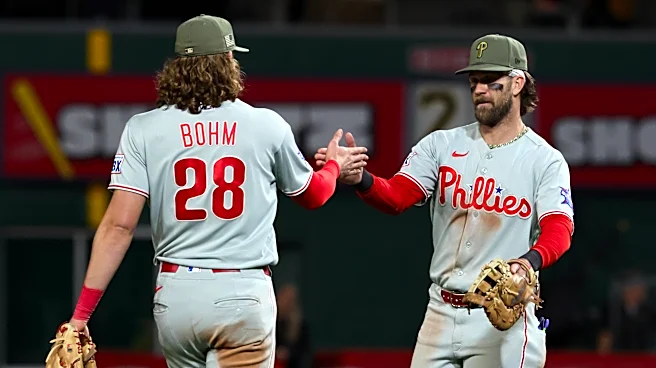
Apparently some players felt similarly last summer as MLB made their tour of clubhouses. Who can forget the tension that arose between Manfred and Bryce Harper when MLB visited the Phillies clubhouse last season? Here at reading the CBA leaves we’re all about refreshing your memory:
Philadelphia Phillies star Bryce Harper stood nose to nose with Rob Manfred during a meeting between the Major League Baseball commissioner and the team last week, telling him to “get the f— out of our clubhouse” if Manfred wanted to talk about the potential implementation of a salary cap, sources told ESPN on Monday.
The confrontation came in a meeting — one of the 30 that Manfred conducts annually in an effort to improve his relations with every team’s players — that lasted more than an hour. Though Manfred never explicitly said the words “salary cap,” sources said the discussion about the game’s economics raised the ire of Harper, one of MLB’s most influential players and a two-time National League MVP.
That’s not a “friendly meeting” to talk about what MLB believes is in the players’ best interest. That’s a team leader reacting in a pretty predictable way to MLB campaigning for the economics behind their salary cap argument in a team clubhouse.
In fact, last offseason we got more information about that meeting in Newsweek and via the Agent Provocateur podcast that I wrote up for BCB at the time:
Manfred was visiting with the Phillies as part of an annual visit he hosts with all 30 clubs’ players. Harper reportedly told Manfred to “get the (expletive) out of our clubhouse,” when Manfred mentioned the idea of a salary cap. Manfred reportedly replied by saying he would not leave and continued the meeting.
Those details from ESPN were the only details on the altercation until a new report from sports agent Allan Walsh. During an appearance on “Agent Provocateur,” Walsh reported that, later, a “deputy” of Manfred’s allegedly threatened Harper.
“Don’t ever say that again to the commissioner,” Walsh said, quoting what was allegedly said to Harper. “Don’t ever disrespect him again publicly like that. That’s how people end up in a ditch.”
It later came out this was Mark DeRosa who was “making a bad joke” as Molly Knight posted on Bluesky:
To be clear, I love DeRosa as much as any Cubs fan who cheered for the team circa 2007. I’m also not sure it’s that much better to have likeable guys who are great on TV cracking jokes to current players about ending “up in a ditch” for disrespecting the Commissioner of MLB.
The bottom line is there is a lot of subtext buried in Rob Manfred’s friendly campaign to chat with the players directly. According to the excellent CBA primer published at ESPN this week, last time a disconnect between the MLBPA Executive Committee and the rank and file players is what ultimately ended to lockout:
Near the end of the previous CBA negotiations, the executive committee — a group of active players elected to represent their peers — unanimously recommended rejecting the owners’ last offer. However, the rank-and-file overwhelmingly voted to go back to work, rejecting the advice of their leadership.
A question, then, will hover over these forthcoming talks: Will the rank-and-file be in lockstep with whatever direction the union leadership points? A critical element during the players’ strike that ended the 1994 season and impacted the start of the 1995 campaign is that, generally speaking, the players maintained a resolute front with the leadership and the players unified. — Olney
It seems plausible that fissure is what Manfred and company are hoping to exploit as one place to gain leverage on pushing a salary cap and floor in this year’s negotiations. That’s an argument MLB has failed to win in the past and it’s a key element to keep an eye on as the sides stake out their ground for the terms of the next CBA.