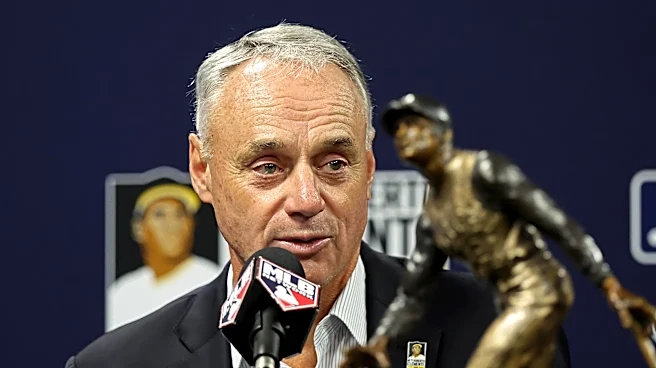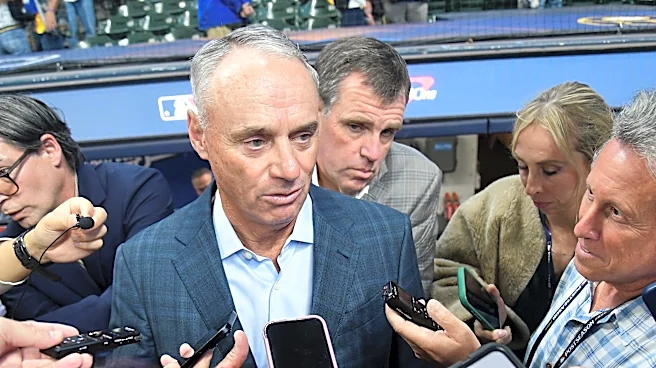


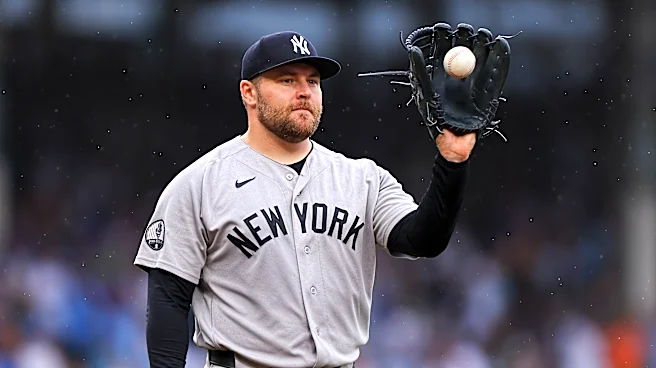
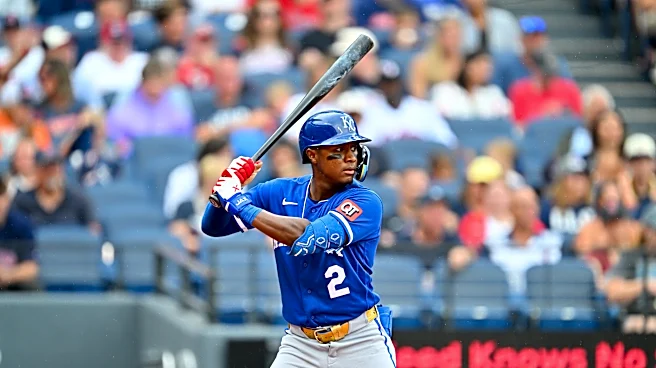
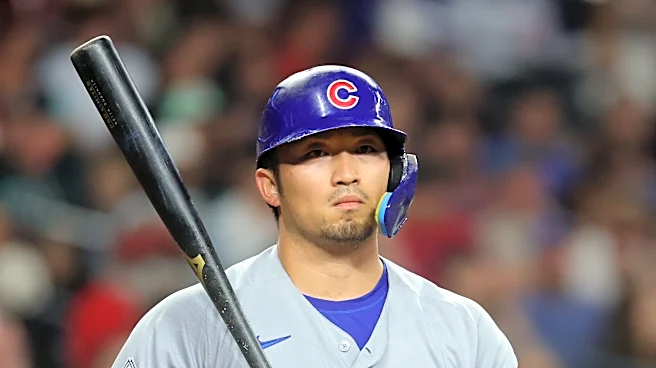
When the lockout begins on December 1, there are going to be two words that we’re going to hear ad nauseam through the owners’ propaganda machine: competitive balance.
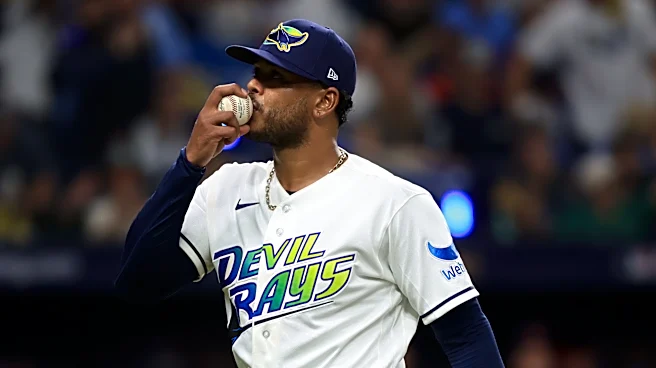
MLB is the only major North American sports league without a salary cap, which leads to large differences in payroll between the haves (Dodgers, Mets, Yankees) and the have-nots (Guardians, Marlins, Rays). The campaign from Rob Manfred and MLB will screech competitive balance and how the “have-nots” have no chance under the current
system. Disregard that we just saw a World Series between two of the cheapest teams in baseball who got ahead by finding market inefficiencies, and the winner of said World Series has consistently dominated their division for a half-decade despite being outspent by their biggest rivals 2-to-1 the entire time, the system is unfair and needs to be fixed!
I’m skeptical we see a salary cap, but it’s pretty rich to cry about the lack of competitive balance currently in the sport when MLB is also the only league that repeatedly rewards and incentivizes lower-revenue teams to not spend money. Sure, some of these teams can’t spend $400 million, but suddenly you propose a cap-and-floor system where half the league is raising payroll by $50-100 million? Why can’t they do that now?
The system has rewarded being cheap for over a decade now. There are Competitive Balance picks that go to the lowest-revenue teams every year at the end of the first round. There are higher draft pools to allow them to pick more high-ceiling high schoolers. There are dramatically higher monetary pools provided to sign international free agents. There’s a luxury tax that disperses all the money spent over it in a Robin Hood-esque nature to small market teams.
But no system is worse than the one that fortunately seems to have the biggest push to be repealed: the qualifying offer.
Every offseason, teams ponder whether to offer their top free agents a one-year pact worth the average of the top 125 salaries (worth a tad over $23 million this year) to secure draft compensation if they depart. The premise exists, in some capacity, across the other three major sports.
In the NFL, restricted free agents are rare and usually reserved for players who hit free agency prior to accruing four years of service time, usually undrafted free agents. There’s also the non-exclusive franchise tag, which works most similarly to the MLB qualifying offer, but the most common one-year tender in the NFL forces a player back onto the roster in the regular franchise tag.
In the NHL, qualifying offers can be extended to restricted free agents, but they are also fairly uncommon. The only system of draft compensation is if there is an unmatched offer sheet, which acts similarly to the NFL’s non-exclusive franchise tag. In the NBA, a qualifying offer is much more common to extend to any player hitting free agency after their rookie contract, but is rarely excepted. Almost always, an extension is agreed to or the player agrees to an offer sheet elsewhere.
MLB is the only sport where the qualifying offer is actually ever considered by a certain number of those who are offered. It’s also the only sport where the rules are different depending on which team extends the qualifying offer and who signs a player with one attached.
If a team receives revenue sharing and they lose a player to a contract worth more than $50 million, they are awarded a pick at the end of the first round in the ensuing MLB Draft. If the contract is less than $50 million for those teams, or any other non-luxury tax team, it’s after the second round. If you happen to lose a player on a QO as a luxury tax team, as the Yankees did with Juan Soto? You only get a pick after the fourth round.
Putting aside how dumb it is that a team can get a pick four times as valuable for losing a guy on a $50 million deal than a team losing an $800 million man, a system that gives draft compensation for losing free agents makes sense, especially in a non-cap system. What doesn’t make sense? Punishing teams for signing players with a qualifying offer attached.
Revenue-sharing teams forfeit their third-highest pick, normal teams lose their second-highest pick and $500,000 in international signing money, and luxury tax teams? They lose their second and fifth highest picks, as well as a full million in international signing money.
Putting aside the fact that it’s insane to punish a team for signing a good player and actively trying to win, the sliding scale is ridiculous. These luxury-tax teams already get punished with their first-round picks getting moved back at a certain threshold, usually having lower picks in general, and already get millions less in international signing money, and they get punished for trying to spend money?
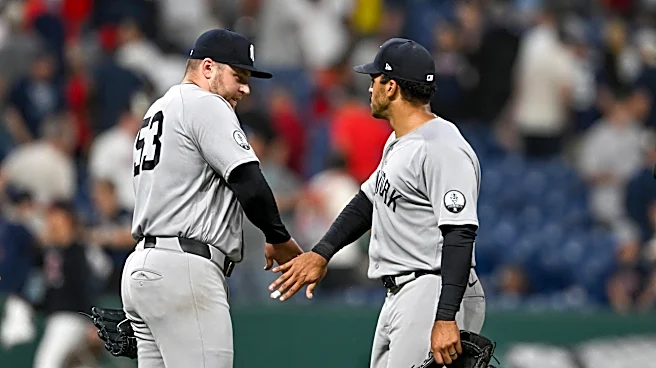
Take the Yankees’ current situation for example. As of right now, their first-round pick slides back 10 spots and goes to No. 35. They have all of their picks, but they’re at the back of their respective rounds. They’ll have under $6 million to spend internationally.
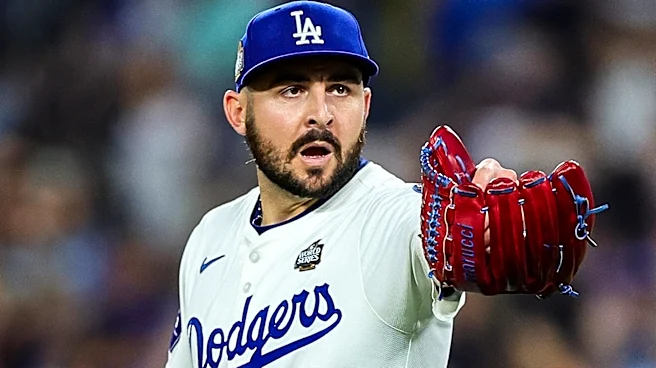
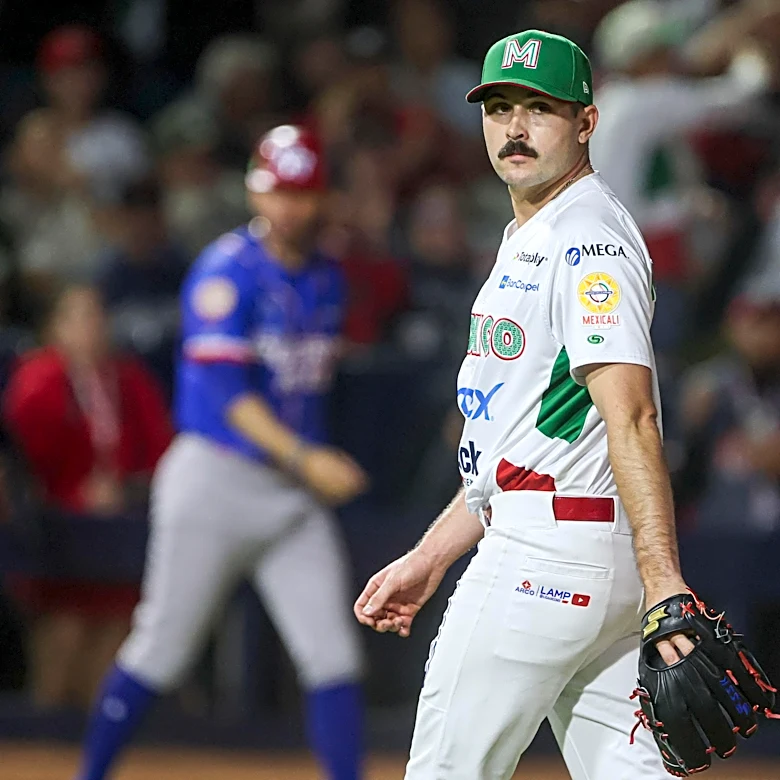
If they sign a guy like Adrian Morejon or Randy Arozarena with a qualifying offer, they lose their second- and fifth-round picks and $1 million off a league-worst total internationally. If they sign two? They lose four of their top six picks and $2 million. Only one team has ever signed two, the 2025-26 Dodgers (Kyle Tucker and Edwin Diaz), and both signings blew up in their faces.
It caps your offseason as a team, but the most reprehensible part of it all might not even be team-related. It’s the fact it’s a salary suppressor.
Because all teams, not just luxury tax teams, lose draft picks and international bonus pool money for any qualifying offer signing, the mid-level players who would normally challenge for $20 million a year will see dramatically depressed markets. We saw this to the extreme with Craig Kimbrel and Dallas Keuchel being forced to wait until June to sign back in 2019.
The depressed markets also have an added effect on teams extending the offers themselves. It not only gives them significantly more leverage, as the only team that won’t lose draft compensation, but you also get the situation the Yankees have seen themselves in the last two years with Trent Grisham and David Bednar, and even to an extent, Jazz Chisholm Jr.
Because the market gets depressed, these borderline players are significantly more likely to sign the one-year tender. Grisham, without a QO attached, could’ve tried for a multi-year deal at over $15 million a year, but instead decided to sign the tender in hopes of replicating his 2025, which went about as badly as possible.
Bednar could’ve challenged for A-tier reliever money on a multi-year deal, but because he’s not considered an Edwin Diaz-type closer, he decided that taking the QO was the best move for him. Even Chisholm, who didn’t get the tender, will undoubtedly have more interest with less risk attached and has the pedigree and floor to make $23 million worth it, but the Yankees didn’t wan to risk him accepting it.
Maybe 15 years ago when the qualifying offer was established, it made sense as a tool for competitive balance back when not many teams had the financial bandwidth to exceed the luxury tax and the poorer teams weren’t as cutting edge, but nowadays as franchise values have exploded and we’ve seen teams be able to contend and realistically compete for championships with minimal payrolls, it just doesn’t make sense anymore.
Fortunately, it should be the last offseason of this mess. The qualifying offer was nearly removed last time around, but it was tied to an unpopular international draft. I expect the MLBPA to strongly push for its removal and might be more open to said international draft if they can avoid the cap at any cost.
For the Yankees especially, they should hope it’s dead and buried.