

Everybody knows that one of the best parts of being a sports fan is debating and dissecting the most (and least) important questions in the sporting world with your friends. So, we’re bringing that to the pages of LGHL with our favorite head-to-head column: You’re Nuts.
In You’re Nuts, two LGHL staff members will take differing sides on one question and argue their opinions passionately. Then, in the end, it’s up to you to determine who’s right and who’s nuts.
Today’s Question: What does success look like against Oregon, other than just getting a win?
Jami’s Take: Play a more disciplined game
One of the most frustrating things about watching the Buckeyes so far this season has been the ways in which such a talented team continues to beat itself. This issue didn’t start this past weekend against USC, but they were perhaps felt more acutely because of the loss.
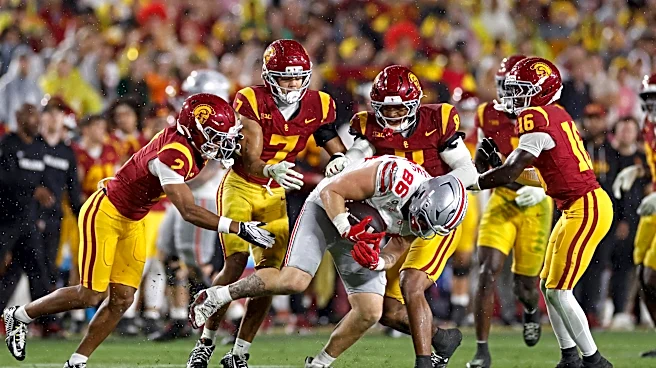
Against the Trojans, the Buckeyes had 11 penalties, which ultimately resulted in 75 free yards for USC. It was the most penalties Ohio State has had since November 2022, when they logged 11 penalties against Maryland.
Still, even in games they’ve won, there have been costly penalties that made the win harder to come by. Against Indiana, for example, Bo Jackson had a 20-yard run called back after Carson Hinzman was called for holding, leading to 1st-and-20 from the OSU 17-yard line instead of 1st-and-10 from midfield. The Buckeyes were ultimately forced to punt on the drive. Later in the game, Hinzman—the center—was called for a false start.
Similarly, against Maryland, Ohio State committed several preventable penalties that either gave the Terps a fresh set of downs, sacrificed costly yardage, or both. In one instance, Beau Atkinson was called for roughing the passer after a late hit on Maryland quarterback Malik Washington, who had already released the ball on what was ultimately an incomplete pass. Instead of punting on 4th down, the Terps were gifted a new set of downs on a drive that ultimately ended in a touchdown.
Now, the Buckeyes find themselves in a position where they have no room for error, and keeping their eyes on the prize (the national championship) is going to require significantly more discipline from them. Despite Oregon’s 5-3 record, there is a lot of talent on that Ducks team, and the two teams feel much more evenly matched with Buckeye quarterback Julian Sayin sidelined. In neck-and-neck games, penalties can be the difference between staying in control and fighting for your life.
So much of football comes down to momentum, and penalties can be the death of it. For Ohio State, it’s not just about committing fewer penalties overall, though they certainly cannot commit 11 of them against this Ducks team and expect to win. It’s especially about minimizing the cost of these penalties. They cannot afford to put themselves in the position of erasing big plays, extending Oregon’s drives, or having scoring plays get called back.
In short, the Buckeyes cannot give the Ducks extra opportunities.
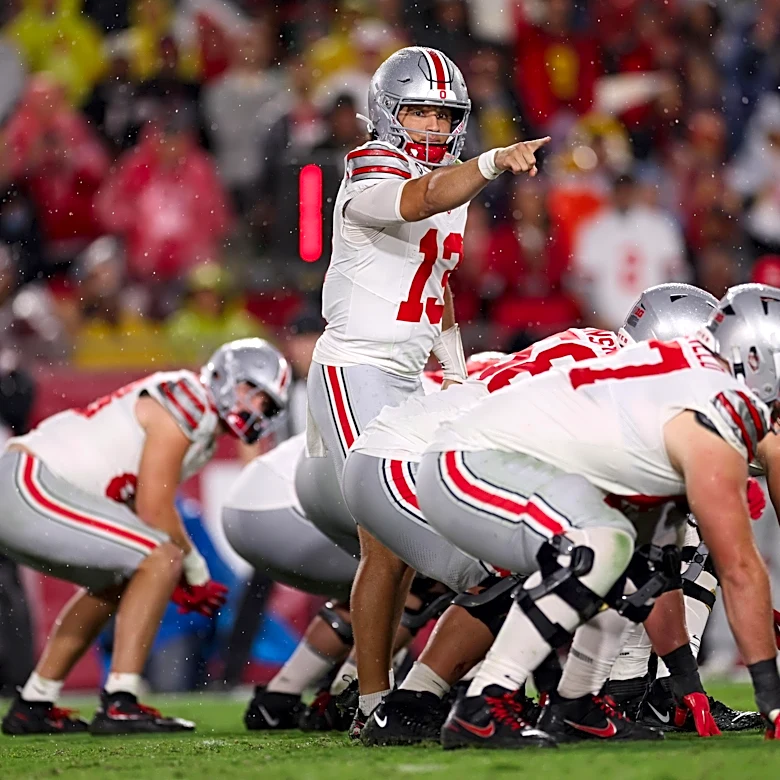
It’s particularly important that they play more disciplined football with Luke Fahey at quarterback. Fahey has tremendous potential, but his inexperience requires his teammates to take the pressure off him a bit. Playing clean football can help him and the offense stay ahead of the chains. The Buckeyes are already playing with a more limited playbook to account for Fahey’s inexperience. Second-and-long or third-and-long situations that result from penalties make the offense more predictable, and as a result, easier for the Ducks to shut down.
Oregon’s defense is comparable to USC’s, though the Ducks technically rank higher nationally in total defense (No. 52 compared to the Trojans’ No. 57). The Buckeyes have a really strong opportunity to learn from their mistakes in Southern California by avoiding costly penalties that make Fahey’s job harder than it needs to be.
On the other side of the ball, the Buckeyes need to keep Oregon’s offense off the field. Penalties like the Atkinson one mentioned earlier create more opportunities and extend drives, something that could wind up backfiring in a very big way for the Buckeyes. Realistically, another Buckeye loss would all but destroy their playoff hopes, and one penalty could make the difference in getting Oregon off the field versus handing Oregon the momentum they need to find the end zone.
None of this is to say I don’t want the Buckeyes to play aggressive football. Quite the contrary, in fact. One of my biggest gripes with this team this season has been the conservative approach. But that aggression has to be contained rather than devolving into recklessness. The Buckeyes need to be physical, but they also need to maintain their composure, limiting personal fouls after the whistle, defensive pass interference calls, and pre-snap penalties that back the offense up.
If the Buckeyes can leave the field Saturday with a win, I’ll be happy. I’ll be happier if that win was the result of smart, disciplined football with fewer avoidable mistakes and better situational awareness. To me, that would be a strong indicator that this team can continue to succeed in Sayin’s absence without falling apart at the seams.
Matt’s Take: Looking like a well-coached football team again
At this point in the season, I don’t particularly care whether Ohio State beats Oregon by three points or 30, as long as they win. But after watching this Buckeye team repeatedly make life more difficult for itself than it needs to be, what I really want to see on Saturday is something that has been frustratingly elusive for much of the season: a football team that looks well-coached, well-prepared, and capable of executing at a level commensurate with its considerable talent.
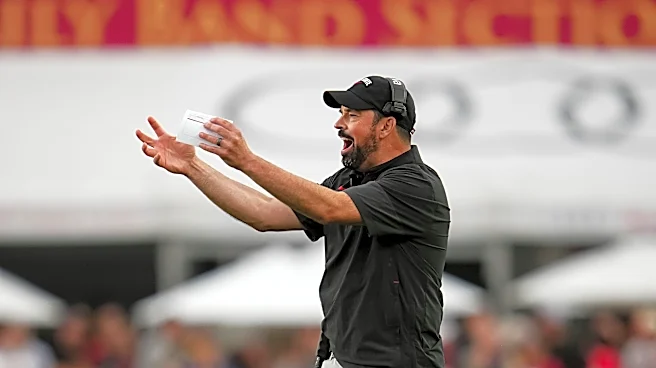
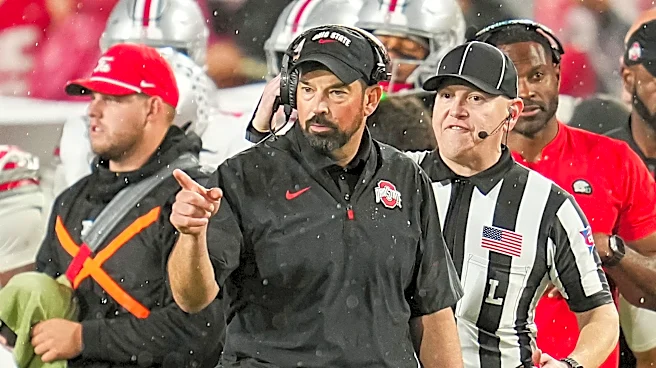
And to be clear, when I say that I want Ohio State to look like a well-coached football team, I’m not putting all of the responsibility on Ryan Day and his staff, even though they certainly deserve a substantial portion of it.
There is no question that the coaching needs to be considerably better than what we’ve seen in recent weeks. That starts with player development, because despite having one of the most talented rosters in the country, the Buckeyes have too often looked like a collection of gifted individuals rather than a cohesive football team. Players need to be improving as the season progresses, especially at positions where injuries and inexperience have forced younger guys into more prominent roles.
It also means developing game plans that actually accentuate the strengths of the available personnel, making adjustments when something clearly isn’t working, and managing games with the kind of situational awareness that should be expected from one of the highest-profile coaching staffs in college football. The repeated red-zone failures, questionable decisions, and inexplicable lapses in urgency simply cannot continue.
But here’s the thing: Even the most brilliantly conceived game plan in the world isn’t going to accomplish much if the players don’t execute it.
Coaches aren’t the ones committing unnecessary penalties that wipe out positive plays. They aren’t dropping catchable passes, missing assignments, or failing to make tackles that should be routine. Certainly, preparation, discipline, and fundamentals are coaching responsibilities, but at some point, the players have to take ownership of their own performances as well.
And I don’t think expecting that from a team that came into the season as the national championship favorites is unfair, nor do I think it is too much to ask from one of the most highly paid coaching staffs in the country to demonstrate some sort of leadership in the meeting room, on the practice field, or on the sideline.
Quite the opposite, actually. I believe this roster is capable of playing considerably better football than we’ve seen, which is precisely why the recurring mistakes have become so maddening. Unfortunately, I am quickly losing faith in the coaching staff’s ability as a whole (though not in all of the individual members) to appropriately prepare the team to meet the goals that they have expressly set for themselves.
What I want against Oregon is to see everyone involved take collective responsibility for making this team better. I want coaches putting players in positions to succeed and players rewarding that confidence by doing their jobs. I want an offensive line that plays with purpose, receivers who make the catches they’re supposed to make, defenders who tackle with conviction, and an entire team that understands how costly even seemingly minor lapses can become.
I also want a coaching staff who understands basic game theory and doesn’t cower when things don’t go their way, nor do they pull back when things are.
I don’t expect perfection, and I certainly don’t expect a team dealing with significant injuries and an undersized true freshman quarterback to suddenly eliminate every mistake. But there is an enormous difference between understandable growing pains and the same preventable problems appearing week after week, year after year.
Ultimately, success against Oregon would mean seeing a team that looks like it has actually learned something from its struggles, rather than one that simply hopes its talent will be enough to overcome them, when clearly that talent is neither prepared nor playing at the level it needs to be.
Ohio State doesn’t need to prove that it has good football players; we already know that. It needs to prove that those players, and the coaches responsible for preparing them, can finally start playing like a good football team.