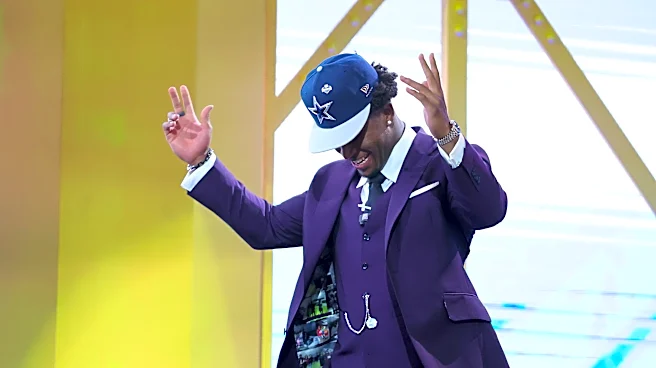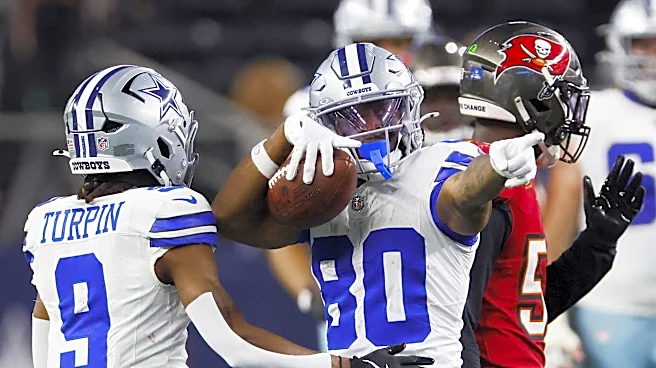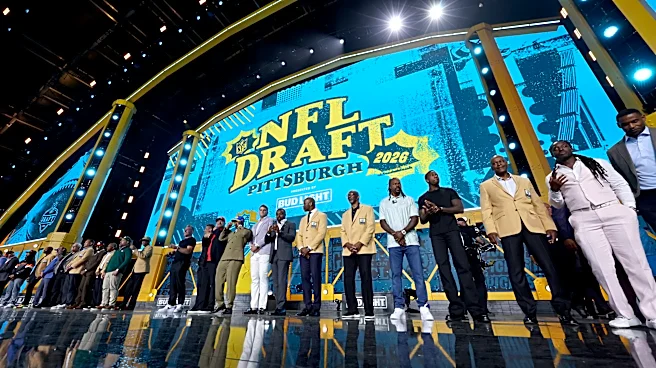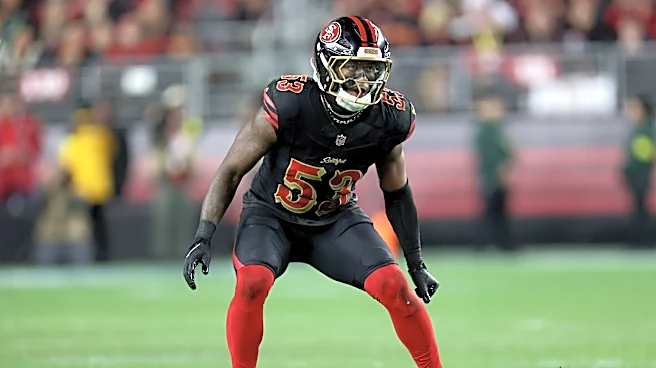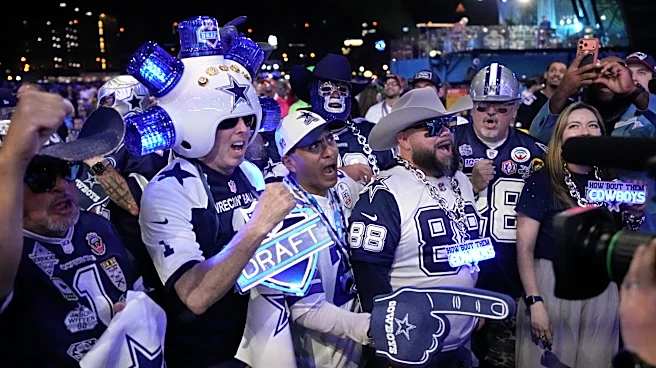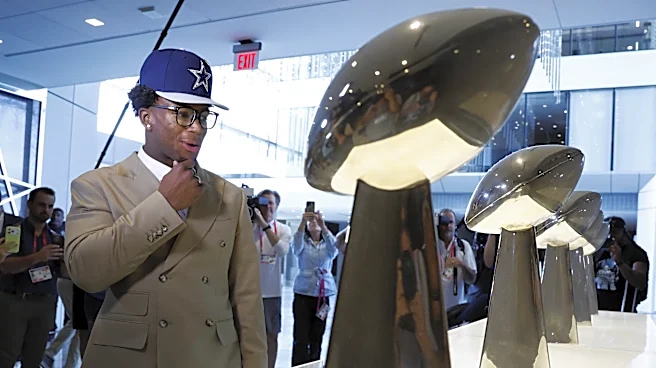


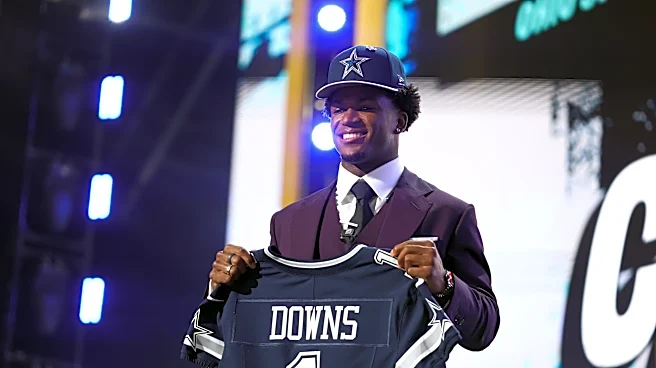
The 2026 NFL Draft has come and gone, and the Cowboys added seven new players. Make it eight if you want to count the trade for 49ers linebacker Dee Winters. In total, five of their picks were on the defensive side of the ball, delivering on a clear imperative to beef up that side of the ball for new defensive coordinator Christian Parker.
So how did they do? Let’s hand out some grades for each pick, and then a total overall grade.
S Caleb Downs
This one is easily the best pick of the draft, and maybe not just for
the Cowboys.
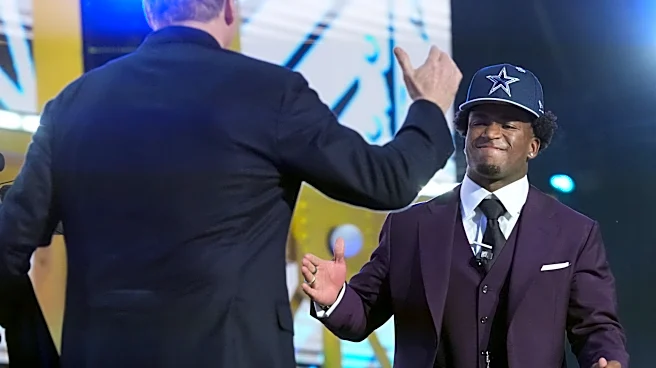
Caleb Downs was the pie-in-the-sky target for many fans, but it seemed unlikely he’d be there. Considered by some the most likely player in this entire draft to become a Hall of Famer, Downs is a do-it-all defensive back with legitimate blue-chip value. He’s drawn favorable comparisons to the likes of Derwin James and Kyle Hamilton.
Not only did the Cowboys manage to land Downs, they did so without jeopardizing the rest of their draft. After the Giants – whom many believed to be infatuated with Downs – passed on him for a tackle, Dallas moved up from 12 to 11 to ensure nobody would snipe him. The best part: they gave up two fifth-round picks, which were replenished (and upgraded) later that same night.
Downs will immediately start at the all-important nickel position in Parker’s defense, a major indicator of success for the defense as they go through this rebuild.
Grade: A+
EDGE Malachi Lawrence
Just a few picks after the Downs selection, the Cowboys were right back on the clock again. And instead of selecting anyone, they made a move that became a big story of the first round of the draft.
Dallas traded back three spots with the Eagles. And in the process, Philadelphia sniped wide receiver Makai Lemon away from Mike McCarthy’s Steelers, who were on the phone with Lemon aiming to draft him at 21. In exchange for that move, Dallas got two fourth-rounders, making up for the price they paid to get Downs earlier.
Then, at 23, they took UCF EDGE Malachi Lawrence. He now joins Rashan Gary and Donovan Ezeiruaku in what should be a better edge rushing group than last year, at the very least. Lawrence is an extremely athletic prospect whose upside has been cited by nearly everyone as being among the best in this class, while still having enough talent to get on the field as a rookie.
Grade: A-
OLB Jaishawn Barham
It was a very long wait for Cowboys fans after the excitement of the first night. During said wait, they got the news of the Winters trade, which erased their biggest need at linebacker and freed them up to take their best player available in the third round.
That approach came true when they took Michigan’s Jaishawn Barham. Originally an off-ball linebacker at Michigan, Barham gradually moved into an edge rushing role for the Wolverines, showing off his versatility in the process. He notched 3+ sacks in three of his four years in college, offering a consistent pass rush with added in position flexibility.
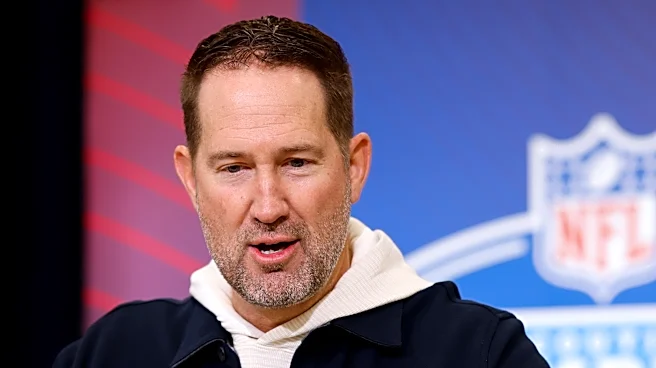
Brian Schottenheimer later said that Barham will start out as a linebacker for the Cowboys, but with the intent of moving him around to rush the quarterback. Schottenheimer invoked Zack Baun, a former off-ball linebacker who thrived in Philadelphia when Vic Fangio (and Parker) used him in a more hybrid pass rushing role.
Grade: A
OT Drew Shelton
Offensive line depth was an underrated need for the Cowboys coming into this draft. Their first pick of Day 3 also became their first pick to come from the offensive side of the ball when they took Penn State tackle Drew Shelton.
A two-year starter for the Nittany Lions at left tackle, Shelton built his game off his top-end athleticism. His vertical and broad jump numbers were both in the 90th percentile for tackles in this class, though Shelton struggled with his play strength at times.
Shelton is a bit of a developmental prospect at this point, but the Cowboys weren’t in need of a starter here. He has the raw physical traits to grow into a starter, but for now provides valuable depth at the most important position on the offensive line.
Grade: B+
CB Devin Moore
After taking Downs to be the starting nickel, cornerback became less of a need for the Cowboys. They already have their two likely starters outside in DaRon Bland and Shavon Revel, while free agents Cobie Durant and Derion Kendrick have starting experience too. But cornerback is something a team can never have enough of.
Devin Moore was a three-year starter at Florida, though injuries kept preventing him from playing a full season. When healthy, Moore was a monster in coverage. He gave up a 48.2% completion rate with five picks in three years, thriving in the zone-heavy scheme that Florida ran.
Moore would have been a top 50 pick if not for the injury concerns. His talent is undeniable, and here in the fourth, he’s an excellent gamble. The Cowboys also don’t need Moore to be a starter right away either, giving him time to build up his body better than before.
Grade: A-
EDGE LT Overton
Parker’s defense likes to have bigger bodies on the defensive line, and they already have that in spades with Quinnen Williams, Kenny Clark, and Otito Ogbonnia. But depth behind that trio was still needed, and LT Overton is a great piece to add into the fold.
At 6’5” and nearly 280 pounds, Overton is a bit of a tweener. Alabama used him at every spot on the defensive line besides nose tackle, and he averaged 31 pressures and four sacks over the last two years. In the press conference afterwards, Jerry Jones compared Overton’s game to Osa Odighizuwa, perhaps offering an idea of how they see him fitting in.
Reception to the Overton pick was mixed, as many mock draft experts had Overton going a round later. But this was also a draft bereft with surprising moves and perceived reaches, and Overton was hardly the biggest reach of this draft. If he can offer depth on the defensive line while developing, he’ll be perfectly worth this draft slot.
Grade: B-
WR Anthony Smith
Some consider a golden rule of the draft to be that teams should draft a cornerback and a wide receiver every year, just to keep those rooms well-stacked. Will McClay clearly subscribes to that rule: for the sixth time in seven years, Dallas drafted both positions, this time using their final pick on East Carolina wide receiver Anthony Smith.
Not exactly a big name, Smith stood out in the draft process for his blazing speed. He ran a 4.40 40-yard dash, and his 10-yard split was in the 98th percentile for receivers in this class. His 9.20 Relative Athletic Score was the highest RAS of any receiver that was drafted this year.
Smith started the past two years for the Pirates, topping 1,000 yards this past year, but he had problems with drops, with a 9.2% drop rate over the course of his college career. Of course, in the seventh round, every prospect will have blemishes. You can teach someone how to secure the ball, but you can’t teach speed, and the Cowboys are betting on that with Smith.
Grade: A
Overall
The Cowboys came into this draft with one very clear objective: rebuild the defense. They spent some money in free agency to start that objective, but this draft needed to be the piece de resistance.
Two words: mission accomplished.
Downs is almost surely going to be an impact player for years to come, and Lawrence should be a productive rotational rusher right out the gate with potential to become a premier edge rusher. Barham, Moore, and Overton all bring value as rotational pieces, rounding out the depth that was sorely lacking last year, with potential to grow into bigger roles over time.
Factoring in the trade for Winters, who should slide in nicely as a starter next to DeMarvion Overshown, it’s hard to find anything about this draft to really be upset about. The Cowboys did what they came here to do, and now it’s on the coaches to put all these impressive pieces together.
Overall grade: A+