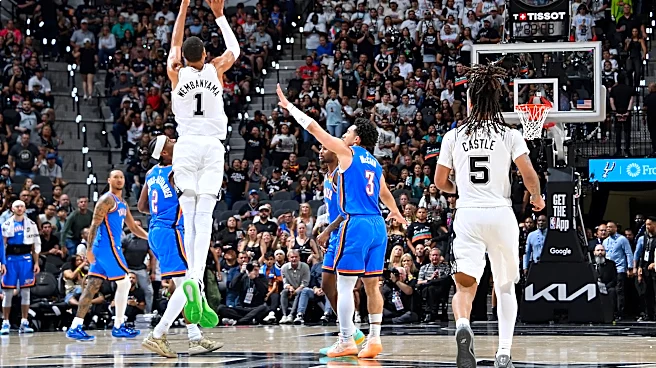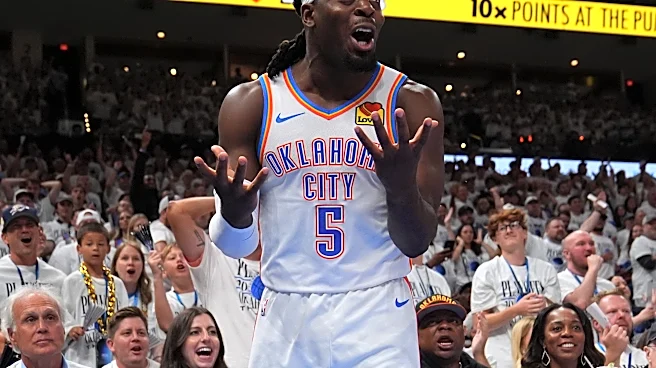





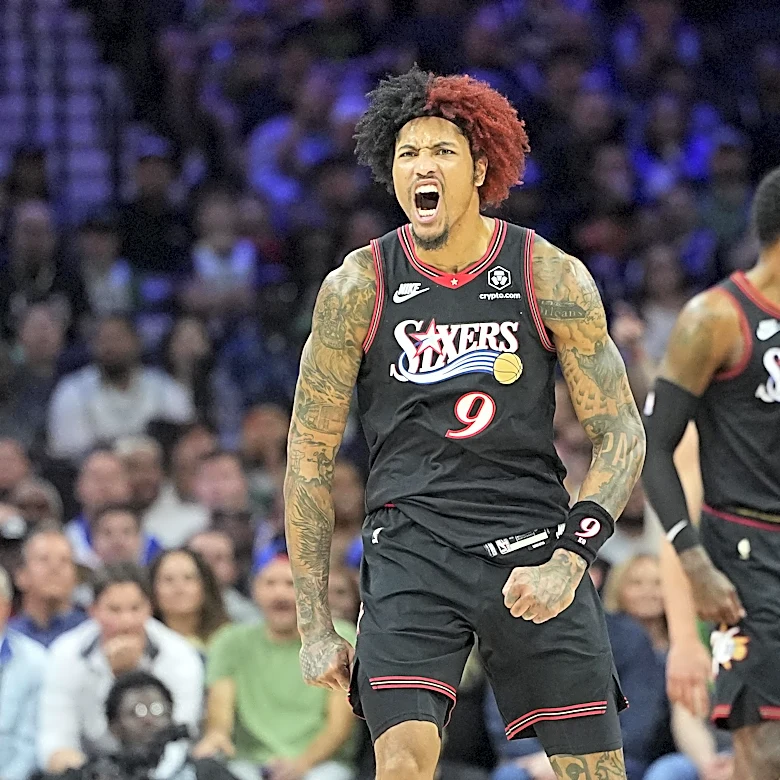
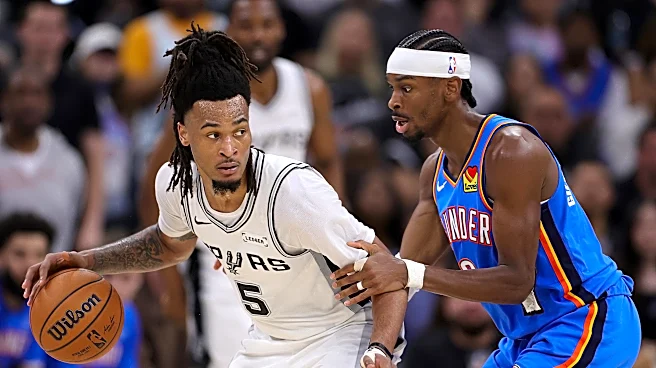

Flopping and falling. That has somehow become one of the primary conversations around the NBA during this postseason, which in and of itself is pretty embarrassing for the league. Then again, when you’re on the biggest stage and viewers are constantly watching players embellish contact and hit the floor trying to sell a whistle, people are going to notice. They’re going to talk about it. They’re going to analyze it. And now they are.
Tom Haberstroh of Yahoo Sports recently published an article in
which he studied five players during this postseason, watching every shot attempt, both fouled and non-fouled, and tracking how often each player ended up on the hardwood.
The goal was simple. Find the data. See how often these guys actually fall. To the surprise of absolutely no one, Shai Gilgeous-Alexander led the pack when it came to ending up on the floor during shot attempts.

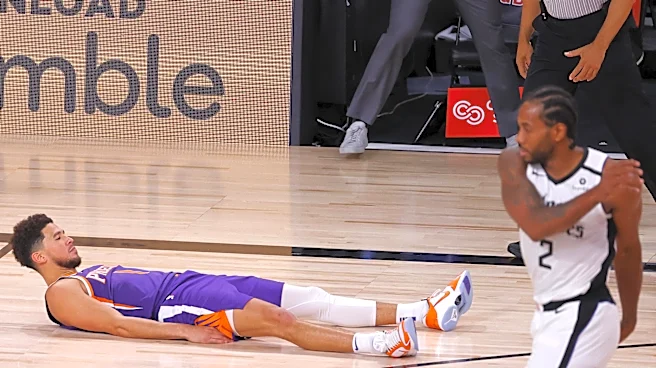
The question becomes, how often does this happen with the Phoenix Suns star Devin Booker?
Using the same methodology, and keeping it to this postseason as the sample size (because I definitely didn’t have time to go back through all 1,198 of Booker’s shot attempts this season), I figured it was a worthwhile thought exercise. So I spent a couple of days digging through the footage, watching shot after shot from Booker. All 70 of them in the First Round. That includes 63 official field goal attempts and seven additional shots that don’t count as FGA because they came on fouls and didn’t turn into an and-1.
I’ll start with this. You have to remember the Suns played the Oklahoma City Thunder, and there are only four games of data here. So while Tom Haberstroh had a much larger sample size to work with, going through 1,152 shots from five different players after the Western Conference Finals, Booker gave us 70 total attempts. That means every time he hit the floor, he carried more weight simply because the sample size was smaller.
That said, Phoenix faced Oklahoma City, a team well known at this point for its physicality and constant contact. And before I even get to the results, one quick observation.
Devin Booker has a beautiful jump shot. Sure, from beyond the arc it doesn’t always fall as often as we’d all like. And his 46/25/79 splits this postseason were certainly underwhelming. Still, when you’re sitting there watching shot after shot after shot, you really come to appreciate how clean the mechanics are. It’s smooth. It’s balanced. It’s just a damn pretty jumper.
So what did the numbers say?

Your initial reaction is probably to jump straight to the final number, 10%, and compare it to everyone else. On the surface, that places Devin Booker near the top of the list. Only Shai Gilgeous-Alexander at 17.4% and James Harden at 11.9% fell more on total shot attempts. One out of every 10 shots, you’ll Booker on the floor. Dig a little deeper, and the context matters. That number is driven heavily by Booker’s 30% fall rate on shots where he was actually fouled. That inflates the overall percentage. When you isolate non-fouled attempts, his fall rate drops to 6.7%, which is below everyone on Haberstroh’s list not named Wemby.
My biggest takeaway after watching all of Booker’s postseason attempts was how well he stays on his feet through contact. Does he seek contact to draw fouls? Absolutely. Does he try to manipulate officiating the same way plenty of stars around the league do? Of course. Unfortunately, that’s part of the NBA.
What stood out is that he doesn’t take it to a point where he’s constantly ending up on the floor trying to sell every whistle. Those three falls on 10 fouled shot attempts were legitimate. He wasn’t kicking his legs out, he wasn’t collapsing into a heap after release, he wasn’t hunting for dramatic reactions. He got hit. The contact knocked him down.
The more impressive number to me is what happened on the other 60 attempts. That’s the larger sample in this exercise, and based on the data available, Booker did a really strong job staying balanced, absorbing contact, and getting back on defense without falling to the hardwood. There were numerous occasions where, had it been SGA, he would’ve been on the floor. But Booker fought to keep the balance rather than succumb to it.
Now, don’t get me wrong, this isn’t to say that Devin Booker isn’t an actor at times. He’s not somebody who consistently ends up sprawled on the floor, but you’ll definitely catch him doing his fair share of flailing his arms or looking straight at the officials, wondering why contact on him didn’t get a whistle. Watching the footage, that happened. A lot. Perhaps I should do a flail rate percentage.
A 10% total fall rate, even with the smaller sample size, is still higher on the list than you’d probably want it to be. It also fortifies what our eyes tell us night in and night out. Devin Booker is an elite shot maker (inside the arc). He’ll seek contact and try to sell calls as every star does, but he’s never really been a consistently effective manipulator of officials.
Devin Booker definitely plays the foul-drawing game because every star in the league does at this point. That’s part of the modern NBA ecosystem, whether we love it or roll our eyes at it. The difference is in how often the theatrics become the story. Watching Booker possession after possession, the overwhelming impression wasn’t somebody trying to manufacture contact and live on the floor. It was a player trying to create clean looks, absorb physicality, and keep moving.
He’ll lobby officials. He’ll throw his arms up. He’ll give you the occasional stare that says, “Really?” We’ve all seen it. Still, compared to some of the postseason’s most discussed whistle hunters, Booker’s game still feels rooted far more in shot-making than in selling the performance around it.