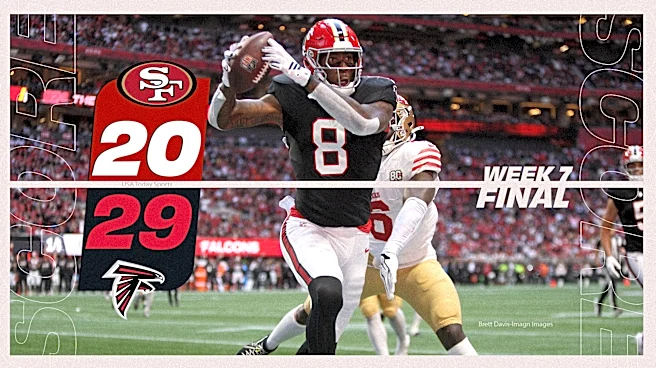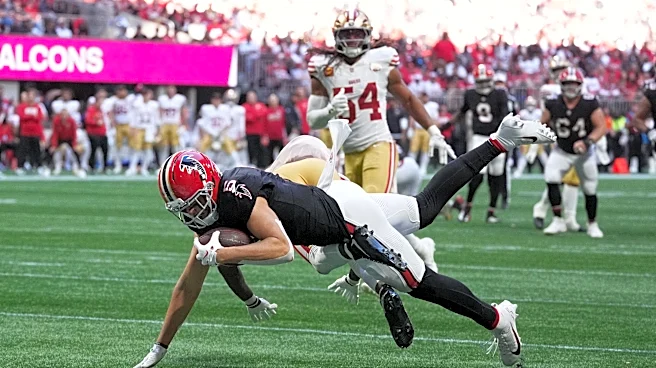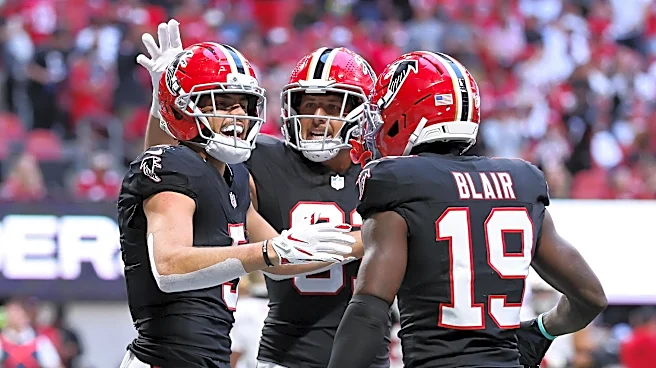


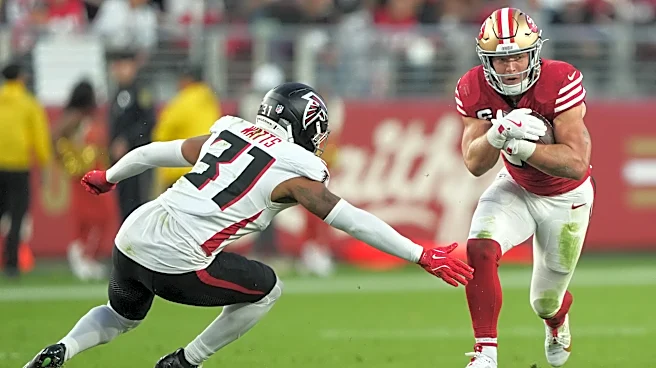

The San Francisco 49ers dropped their first game of the season as penalties and turnovers cost them on both sides of the ball, and a missed extra point made the final drive moot.
Let’s look at the Week 7 grades against the Atlanta Falcons to help tell the story of the game.
Quarterback: B
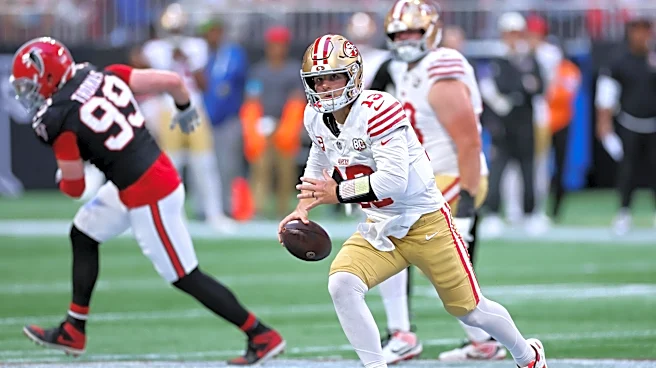
Brock Purdy finished 21st in EPA per play in Week 7, but sixth in passing success rate. Interceptions heavily influence that EPA number, so that’s not a surprise. Purdy still completed 67% of his passes, with a respectable 7.2 yards
per attempt.
Purdy only had two deep attempts. His EPA is probably much higher if he completes the second deep attempt. One area where Purdy stood out was his ability to create. He ran out of a pair of sacks and turned those into first downs, keeping the offense on the field.
Atlanta did a good job of keeping Purdy at bay from a scrambling perspective. He had zero scramble yards.
Scanning advanced stats, Purdy had the 8th-highest on-target percentage, but did throw short of the sticks more than usual.
A fourth-down sack and the first interception hurt Purdy’s grade. He’s a playmaker, and the Niners are always in the game with Purdy under center. A team that can win when its quarterback throws a pair of interceptions is a contender.
Running backs: B+
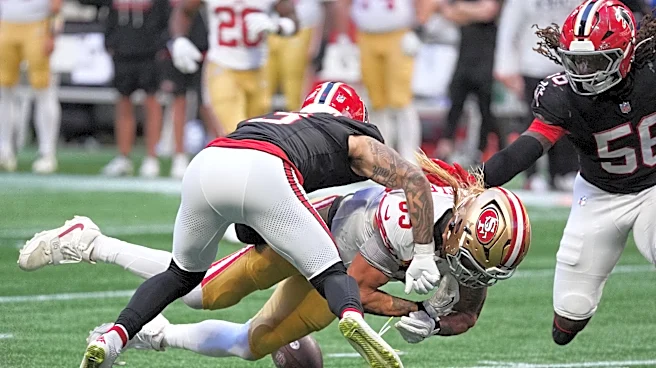
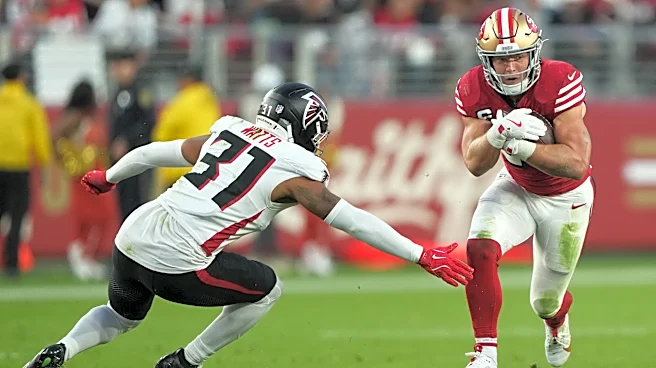
Christian McCaffrey only had seven carries after leaving with a thigh injury. He returned, probably by necessity. You can’t ignore the fumbles, which is why the grade is B+, but the runners ran well. McCaffrey had a 71.4% success rate. James spun off a tackle for six yards.
Black had a great jump cut on his touchdown run and averaged 5.25 yards per carry. Black also picked up 61 of his 63 yards after contact while forcing two missed tackles. Jordan James and Kaelon Black had fumbles on back-to-back plays.
Kyle Juszczyk had a terrific block to spring Black on his touchdown run. Juszczyk played a big part in the 49ers’ rushing success, no surprise there.
McCaffrey caught six of his seven receptions for 61 yards. James took his one pass for 11 yards. Juszczyk caught a touchdown on all three of his targets.
It was the best Black looked all season. But the fumble and a couple of stuffed runs
Pass catchers: B
Luke Farrell caught a first down and blocked well. George Kittle was all over the place, catching eight of his 19 targets for 88 yards, including 40 yards after the catch. Kittle fumbled to end the game. I was more disappointed that he didn’t catch either of his contested catches.
Purdy targeted four wide receivers who either weren’t on the roster, weren’t active, or weren’t running routes in Week 1. Technically, the first interception was a target to Jacob Cowing, who caught a first down as the team was driving. Cowing caught his other two targets, totaling 38 yards. He was 1-for-2 in contested situations and did well adjusting to lower throws. Cowing wasn’t an issue in this game. He was open.
The same cannot be said for Brandin Cooks, who caught one of three targets. He turned a 3rd and 4 into a 3rd and 9. Cooks did not catch the third-down target.
He had another play where he got too deep and nearly ran into Kittle for the second straight week. The margin for error when targeting Cooks is non-existent. I wouldn’t be surprised if he’s released by the time the Niners take the field.
Cautiously optimistic describes Jordan Watkins in this game.
Watkins made a great fingertip grab in the third quarter where he dove for a throw. At the beginning of the fourth quarter, Watkins was wide open down the seam on a play that was underthrown. If he’s hit in stride, it’s arguably a touchdown.
On the first pass where Watkins didn’t complete the catch through the ground, it was a great release to get open, but you have to secure the catch. The same is true for his end zone target. Both were A+ throws that you have to reward your quarterback.
If you simulate the final two targets to Watkins 100 times, he probably catches it 97 times. Unfortunately, the Niners were on the wrong end of variance in Atlanta.
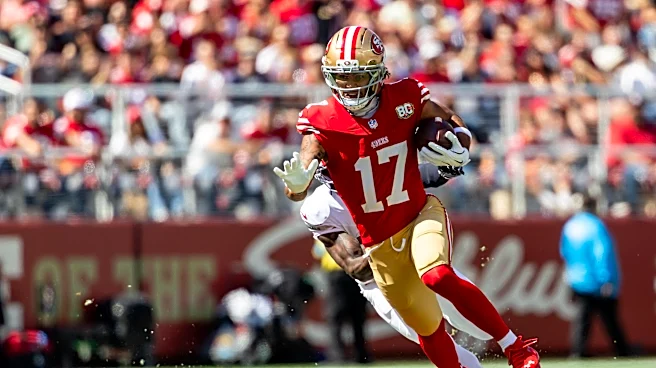
Christian Kirk wasn’t targeted, but he ran away from A.J. Terrell on multiple crossing routes. On some plays, he was open while Cooks struggled. He didn’t get the ball, but it was a promising debut for Kirk. He ran only 14 routes but reached 20.42 miles per hour. The 49ers will lean on that speed moving forward.
Offensive line: B+
Jake Brendel got beaten, and Connor Colby watched the defender run right by him on the first sack of the game. Black didn’t do a good job chipping, either. The only other sack came on 4th and 10, when the Falcons brought six, Trent Williams helped off his defender, and Purdy couldn’t get the ball out.
Connor Colby gave up 5 pressures. Nobody else had more than two. Purdy was pressured 6% below league average on 42 dropbacks.
McCaffrey and James each had 2.0 yards before contact. The rushing lanes were huge, especially early in the game. Colby’s holding call set the offense back. Trent had a false start on the first play. But the offensive line never seemed to prevent the offense from moving the ball. They were quite good once again, as they’ve been all season.
Defensive line: D+
The group that has punched above its weight class all season finally came back down to earth. We’ve been spoiled by defensive tackles who controlled the game. That was not the case in Atlanta.
Gracen Halton was invisible for the first time.
Sebastian Valdez’s only stat was a missed tackle.
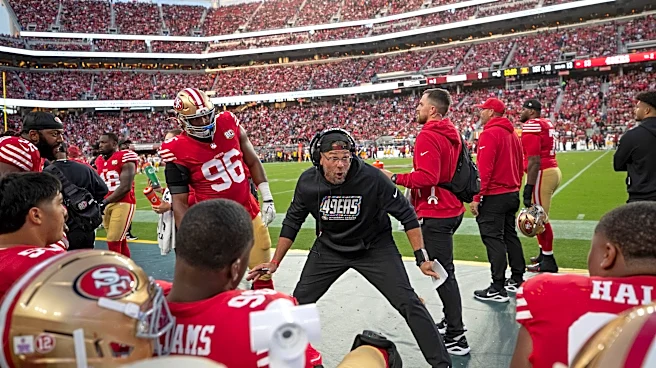
Osa Odighizuwa has the same pass-rush win rate as Kyle Shanahan, who tore Odighizuwa a new one on the sideline after the veteran jumped offside on 4th and 4.
Rookie James Thompson was the most active, with a pressure and two run stops. But, and this wasn’t on him, a penalty gifted Atlanta a fresh set of downs on 3rd and 2.
Three edge rushers played over 30 snaps: Romello Height (38), Keion White (35), and Mykel Williams (31). The edge group had zero tackles for loss. Mykel missed a pair of tackles. He had one pressure. Keion had two. Romello had zero, but he and Williams both had run stops.
They bottled up Bijan Robinson, who had only one 10+ yard run, but they still moved off the ball more than usual. Robinson had 19 yards before contact, and Khalil Herbert had four on two carries.
It was the defensive line’s first true stinker of the season. That’s acceptable, but it still doesn’t change the fact that it happened.
Linebackers: B-
Fred Warner and Dre Greenlaw combined for 25 tackles and only missed two. They also had 6 run stops. The problem was in coverage.
Warner did his job. Jaden Dugger limited the damage, allowing 12 yards on four targets. Pre-snap motion messed with Greenlaw. He was consistently out of position and never gave himself a chance to compete. Greenlaw allowed seven receptions on eight targets for 64 yards, including three first downs.
It’s a shame, because they played well on the run, and Dugger looks more confident with every snap. Neither of the trio generated a pass rush on nine attempts, either.
Cornerbacks: C-
The more we see from the cornerbacks, the less confidence there is. Upton Stout was active but served more as an emergency player while nursing a shoulder injury.
When rookie Ephesians Prysock has to play, you know something did not go your way. After the game, Shanahan said it wasn’t part of the plan to play Prysock, but the team wanted to try something new.
The initial plan was Ashytn Davis in the slot. He lasted seven snaps before giving up a six-yard catch. Then the defense turned to Jack Jones, who has quickly fallen out of favor.
Jones had two penalties; the defense declined one, and the other resulted in 20 yards for defensive pass interference. He gave up 24 yards on five targets. It doesn’t seem bad, but Jones is way too grabby for a cover corner.
Renardo Green gave up all three of his targets for 41 yards. He also had a back-breaking penalty on 2nd & 20. Deommodore Lenoir gave up only two catches for 17 yards and had a run stop, but the coaching staff doesn’t seem confident in either of them.
Safeties: C+
It’s a good thing when we’re not talking about the safeties. Ji’Ayir Brown is happy about all of the mishaps in this game, because he gets lost in the shuffle. Brown was not good, and that has not been something you can say this season. He allowed all three of his targets to be completed for 26 yards. Brown also missed three tackles.
Malik Mustapha continues to look like one of the best players on this side of the ball. He’s always flying around, limits damage in coverage, didn’t miss a tackle, and takes away deep throws.
Special teams: C+
Corliss Waitman’s lone punt was inside the 20 and a fair catch, but only went 37 yards.
Cowing has clearly been instructed to fair catch everything as a punt returner. Each running back had a 30+ yard kickoff return. They’re helping the Niners get good field position, and that’ll come in handy as the season goes on.
Eddy Pineiro is a missed kick away from a kicking competition. After everything we’ve discussed, if Pineiro makes an extra point, the best unit in the NFL could tie the game and send it to overtime.
Coaching: B-
I had no issues with the sequencing of Shanahan in this game. The run game was rolling, and they fumbled. He leaned on McCaffrey early and Kittle late. Receivers were open. The offense gained 400 yards and scored touchdowns on both red-zone possessions.
During the week, we hinted that Week 7 would be a “scheduled loss” for the 49ers. It played out that way. Still, it felt like the first time Raheem Morris didn’t put his best foot forward.
I have some theories, and most of them come back to the franchise where Morris coached, which knew his pressure packages and tendencies and was ready for what’s coming. Michael Penix faced the least pressure of any quarterback in Week 7. The games and stunts we’re used to seeing from the defensive line didn’t work.
So far this season, the Niners get you behind the sticks and then can play coverage on obvious passing downs. They bank on the opposing quarterback getting greedy and forcing a throw downfield. Penix didn’t. Instead, he willingly took the underneath throws.
Penix had one completion over 10 yards. One. Everything felt easy, because he genuinely took what the defense gave him. Morris was reluctant to adapt and get more aggressive until the final two drives, which is how you end up with five red-zone drives.