
It was about as big a weekend in Chicago sports as any of us have experienced since 2016. With all due respect to four playoff teams the Cubs have had since 2016 and the 2020-21 White Sox, they didn’t
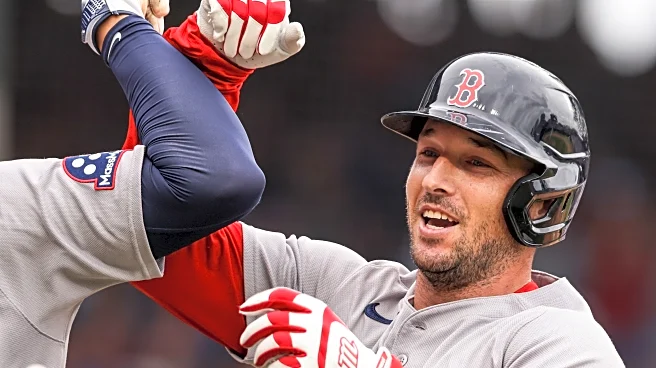
quite ignite the same frenzy in Chicagoland we saw on Saturday. First the Bears came back to beat the Packers at Soldier Field in the Wild Card round of the NFL playoffs. As that comeback was happening the Cubs signed Alex Bregman to a five-year, $175 million deal. The vibes all weekend were elite, so today let’s take a closer look at the numbers behind the Bregman signing.
The player
Bregman has basically been between a 2 and 5 fWAR player since 2021. He has two MVP-caliber outliers prior to the pandemic putting up 7.9 fWAR in 2018 and then following it up with an 8.3 fWAR season in 2019. He’s entering his age 32 season, so those 7+ fWAR performances are likely a thing of he past, but consistent 4 fWAR players don’t exactly grow on trees. He’s a much needed additional bat in a Cubs lineup that made the playoffs last season but lost Kyle Tucker to free agency. You can see each of his seasons offensively below:
Fun fact: Bregman had the best and second best fWAR seasons for those Astros teams between 2016 and 2024. However, for the Cubs he represents a considerable upgrade at the hot corner, where last year Matt Shaw flashed some defensive promise but never really put it all together at the plate. Last season Cubs third basemen combined for exactly 0.0 fWAR while posting the following slash line over 738 plate appearances: .210/.276/.328 with 14 home runs, 32 stolen bases and a wRC+ of 71. The Cubs will lose some of those stolen bases at the hot corner, but pretty much every other aspect of Bregman’s game at the plate should be an improvement. Perhaps my favorite stat in the above chart is that Alex Bregman has never posted a wRC+ below 114.
It’s not all offense, though. Bregman is an excellent defender at third base. By Statcast’s fielding run value Bregman was a positive contributor notching three FRV last season in 972 innings. By comparison, Matt Shaw had -1 FRV in 1010 innings for the Cubs last season.
The park
The biggest question mark for Bregman heading to Chicago is how his batted ball profile will play at Wrigley Field. Bregman’s power comes almost exclusively from pulled fly balls and Wrigley Field has the deepest left field corner in baseball. You might remember a similar story from the Isaac Paredes trade. There are some who have questioned whether Bregman’s batted ball profile will suffer in Chicago.
That is a valid concern, but Bregman is a very different player compared to Paredes. For starters, Paredes’ pull-side tendency is extreme and very isolated to the corner as you can see from park overlays linked in the above piece. Bregman’s power ranges across left field, beyond the corner and into the alleys (which are shorter at Wrigley Field) as you can see below:

Could Alex Bregman lose a home run or two in the corner at Wrigley Field? Of course he could, but so could Manny Ramírez on a day where the wind was howling in from left. Bregman might actually gain some long balls in the alley. You can see how Bregman’s power has played at Wrigley Field for yourself last July [VIDEO]:
In fact, according to Statcast, if Bregman had played all of his games at Wrigley Field last year he’d have one more home run than playing all of his games at Fenway Park. Obviously that doesn’t take into account wind on any given day, but it does highlight that the dimensions of Wrigley Field aren’t quite the barrier for Bregman that they were for Paredes. Brett Taylor over at Bleacher Nation overlaid Bregman’s 2025 hit chart on Wrigley Field and you can see the results here:
It’s not just the power, though. Bregman has an elite approach at the plate that should complement the rest of the Cubs lineup even if he experiences a decline in power due to the park or as he ages. In an episode of Rates & Barrels earlier this week, Eno Sarris had an excellent deep dive on why Bregman’s approach at the plate may age better than people expect. It’s the first topic discussed in the below video:
The money
Five years and $175 million is one of the biggest contracts in the history of the Cubs. Bregman’s teammate Dansby Swanson is currently guaranteed slightly more money at seven years and $177 million, however by AAV Bregman’s deal blows every former nine-figure contract the Cubs have offered to any free agent out of the water. Jason Heyward’s AAV was $23 million per year over eight seasons. Dansby’s current deal is actually the franchise record holder at just over $25 million per year. Bregman’s sticker price AAV of $35 million would set a new franchise mark.
But that’s not the most interesting part of Bregman’s deal. This contract defers $70 million to keep the Cubs just under the luxury tax for now. Given the time value of money that lowers the AAV to approximately $31 million, which would still be the franchise mark. Fans should expect the Cubs to exceed the first tier of the luxury tax this year as they’ll likely need to add around the edges at the trade deadline. However, it’s a big deal that they were finally willing to jump in the deferred money game. That self-imposed restriction has likely made it difficult for the team to compete for some of the bigger free agents in the game. Don’t expect them to defer more than a billion dollars like the Dodgers anytime soon, but this should keep them more competitive in the free agent market.
Take aways
This deal lands the Cubs a middle of the order bat and an excellent defender at the hot corner. I find Eno’s arguments for Bregman aging better than projection systems believe he will compelling given his elite approach at the plate. While he could lose a home run or two in the corner due to the wind at Wrigley Field, his power to the alleys should play in Chicago as well or better than other parks. This is an excellent signing by the Cubs, even before you realize he’s already cheering on the Blackhawks in Chicago days before Cubs Convention.