




The trade deadline will be Dana Brown’s ultimate “ride or die” moment.
Four days ago, Astros GM Dana Brown was reported to be telling other teams they were “wasting their time” calling him about being a seller. The Astros intend to be buyers at the deadline, and specifically are seeking bullpen help and a lefthanded hitting outfielder.
The team is getting healthier, they have won four straight series for the first time all season, and have climbed to within 4 games of .500, 2.5 games of the AL West
Division lead, and 1 game of the final Wild Card spot. As of today, the Astros are technically in 2nd place in the AL West behind the Mariners, and closest to the Blue Jays for the final Wild Card spot.
Houston has improved it’s playoff chances from a low of 10.7% May 15 to 33.1% today according to Fangraphs.
Brown has also been reported to be on the hottest of seats this season, with the combination of his being in the final year of his contract without an extension and the team’s dismal start (mostly due to being ravaged by injury for the third straight season). It is expected that for him to have any chance to save his job, he cannot miss the postseason.
Owner Jim Crane is not known for his patience, and missing the postseason in two consecutive seasons would almost definitely result in not getting the opportunity for a third straight shortcoming.
Brown has been under pressure for not being able to retain key talent, failure to significantly bolster the starting rotation after the loss of Framber Valdez, and inability to find a proven outfield bat as the young players the team has relied upon have not been nearly as successful as hoped for.
Brown’s best prospects in his minor league system are very young, and years away from being MLB ready.
Therefore, it stands to reason that making the postseason is the only shot Brown has to keep his job. Doing so will require the Astros add pieces by the trade deadline, and not simply fringe pieces.
Brown will have to pick up at least one significant add, possibly two. He doesn’t have a great deal of minor league depth from which to deal.
The Astros are currently 19-12 since May 21, and have won four straight series for the first time this season. The team is giving him the improvement he needs to see in order to be a legitimate buyer and get Crane to be willing to exceed the luxury tax for the third straight season (and eat the penalties that come with it).
Crane has not been afraid of big deadline moves (see Verlander, Justin 2x, and Correa, Carlos) and if he feels the move can be a real difference maker, he has shown he will authorize it.
All of this added together can only come to one conclusion: in order for Dana Brown to keep his job, he must be a buyer and he can’t buy small.
Fringe moves aren’t going to push the Astros over the top. The moves he makes at the deadline have to be able to insulate the Astros from another injury or two, things that given the last three years history of this team are bound to happen.
Crane is aggressive. He is competitive. He wants to win, injuries be damned.
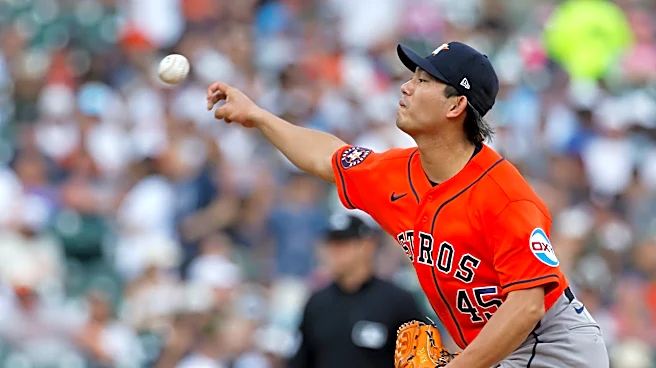
Brown is the same, and thus far it is injuries that have primarily gotten in the way. This year, his offseason moves (Imai, Burrows, Weiss, dealing Dubon) haven’t panned out (certainly not to the degree expected).
This will be Brown’s challenge: succeed at the deadline where he failed in the offseason.
There will be pushback from fans, especially if they have to deal top prospects. Keep in mind, however, their top two prospects are 18 and 19 years old and are at least 4 years from making the majors.
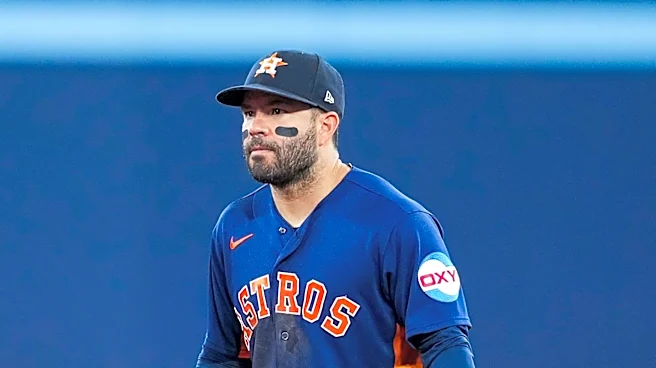
Those two prospects, Kevin Alvarez and Xavier Neyens, will never play with Jose Altuve, Yordan Alvarez or Hunter Brown. If the goal is to win while you still have your all-time franchise icon and arguably the best hitter in the league on your team, those types of prospects may need to be liquidated for an impact player. The key is to maximize their value as much as possible.
That doesn’t mean those prospects need to be traded. With the specter of a lockout coming, perhaps the impact players being acquired are rentals in the final year of their contracts. Rentals would have much lower cost of acquisition. More teams will be reluctant to part with top minor league talent as a protracted lockout would burn a year of a veteran’s career, but minor leaguers could still be playing and developing at very low cost.
Finding the balance within, and acquiring the right kind of talents is the GM’s job at the deadline. It is his final test, the ultimate “ride or die” moment.
Since he cannot fail and keep his job, he may as well swing for the fences.
We are about to see what kind of deadline player Brown can be.