

Minnesota is one of the easiest teams in the country to game plan against; executing against them is a different matter entirely, just ask Michigan.
Here are the key stats:
Minnesota Rushing Attempts
vs Eastern Illinois – 38
vs Mississippi State – 15
vs Akron – 33
vs Washington – 33
Vs Michigan – 40
Minnesota Time of Possession
vs Eastern Illinois – 36:21
vs Mississippi State – 29:45
vs Akron – 34:04
vs Washington – 36:01
vs Michigan – 37:36
The Gophers head into this game with a 4-1 record. In their 4 wins, they’ve run the ball 30+ times and held the ball for 34+
minutes. In their one loss, they ran it 15 times and held it for less than 30 minutes.
The “Drag Them into the Mud” Gameplan
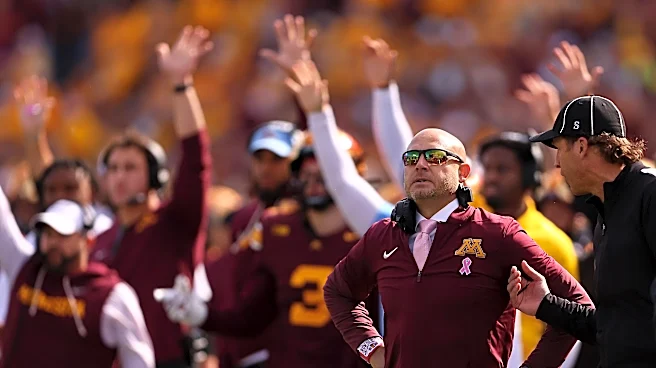
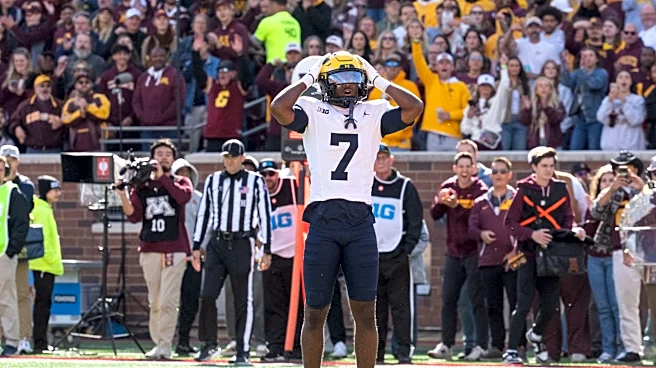
PJ Fleck wants to run the ball, keep games close, grind down the opposing defense, and win in the 4th quarter. As long as the game is close, he’ll run the ball, and he doesn’t particularly care whether it’s effective. He’d obviously prefer the running game to pick up yards, but his starting running back, Darius Taylor, ran the ball 18 times for 32 yards against Michigan. That’s 1.8 yards per carry, but Taylor kept getting the ball. Reserve running back TJ Thomas had 12 carries for 56 yards, a more robust 4.7 yards per carry, but overall, Minnesota ran the ball 40 times for 126 yards, or 3.1 yards per carry. To put that in perspective, if you remove the quarterbacks, Purdue averaged 3.3 yards per carry against Notre Dame. I watched that game, and I don’t remember thinking that the run game was particularly effective, and yet Minnesota used 3.1 yards per carry to spring the upset on Michigan last week.
If you want to understand how this Minnesota team wins, I recommend you check out the second half against Michigan last week. It went like this:
Minnesota gets the ball coming out of halftime and puts together a 12-play drive that eats up 7 minutes and 38 seconds of game clock while advancing 33 yards downfield. Pulling up the calculator once more, that’s 2.75 yards per play. They converted a 3rd and 1 and a 4th and 1 before a false start put them behind the sticks and forced them to try to convert a 3rd and 11. They couldn’t and punted, but the Wolverines muffed the punt.
The Gopher drive began on Michigan’s 17 and ended 4 plays later with a 13-yard field goal, cutting Michigan’s lead to 4 points, at 14-10.
Michigan took the kickoff, and 2 plays later, Bryce Underwood threw it to a Minnesota defensive back, which is the opposite of what you’re supposed to do as a quarterback, from what I understand of the objectives of the game.
The Minnesota offense took the field again; their next drive lasted 8 plays, covered 34 yards, chewed up another 5 minutes of clock, and ended with an 8-yard field goal on the first play of the 4th quarter. The Gophers had the ball all but 41 seconds in the 3rd quarter and ran 23 plays to Michigan’s 2; 16 of those 23 plays were runs, with the longest going for 14 yards.
You’ll never guess what happens next (unless you watched the game, of course). Michigan takes the kick, still up 14-13. Michigan’s brain trust starts the drive with another Underwood throw, and their 12.5-million-dollar quarterback proves investing in 19-year-olds tends to be a poor financial decision by throwing an interception.
Minnesota took over on Michigan’s 35 and finally cracked the Wolverine defense with a 31-yard end around that put them inside the 5. This time, they cashed in for 6 instead of kicking a field goal, took a 20-14 lead, and held on for the remaining 13 minutes.
It was an ugly game to watch, but as of now, style points still aren’t part of the scoring. Minnesota thrives on special teams, turnovers, and time of possession.
To slaughter a familiar saying, “Never wrestle a Gopher in the mud, you’ll both get dirty, but the Gopher likes it.”
How to Stay Out of the Mud
Mississippi State gave everyone the blueprint. It goes something like this:
1st Quater
Miss St. – 5 plays – TD – 1:48 drive
Minnesota – 16 plays – FG – 10:11 drive (9 runs, 6 passes)
Miss St. – 9 plays – TD – 2:36 drive
2nd Quarter
Minnesota – 3 plays – Punt – 1:06 drive (1 run, 2 passes)
Miss St. – 7 plays – TD – 2:38 drive
Minnesota – 4 plays – Punt – 1:53 drive (4 passes)
Miss St. – 12 plays – TD – 5:03 drive
Minnesota — 11 plays – FG – 4:32 drive (10 passes, 1 run)
The Gophers run on a pretty tight schedule. As long as the other team doesn’t score, the game follows the Gophers’ schedule. However, when the other team scores, they can’t stick to that schedule. Once Mississippi St. reached 21 points, PJ Fleck decided he needed to start throwing the ball because you won’t get to 21 points if you need 10+ minutes to put together a drive.
The Key for Purdue
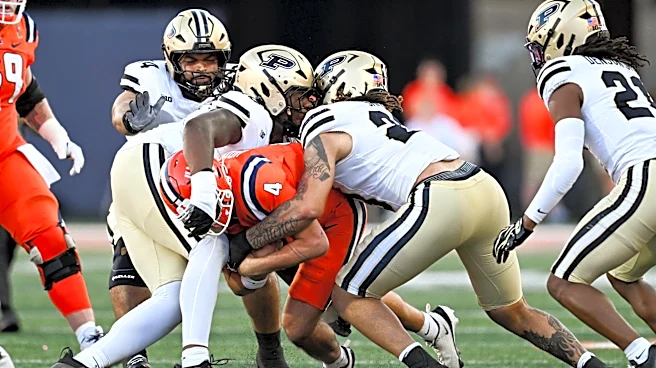
This game comes down to Ryan Browne and the offense. They need to speed up Minnesota by getting the ball into the end zone early and often. If this game turns into a rock fight in the first half, the Gophers will put Purdue away in the second half. Purdue’s defense can’t handle the ground-and-pound attack like Washington and Michigan. The Boilermaker offense has to force Minnesota to keep up.
If this game comes down to which team controls the clock and runs the ball, Minnesota wins by 2+ scores, and it will be one of the most frustrating, mind-numbingly boring games ever inflicted on you.
If this game comes down to which quarterback is better at putting up points. The Boilermakers have a good shot at pulling off the upset.
Purdue wants to play this game in the mid-to-high 30s, while Minnesota would prefer the mid-to-low 20s.
Purdue’s offense, more than their defense, will dictate how this game is played. Let’s hope the team that put 30+ up in losses to Wake and UCLA shows up tomorrow, because I don’t think Minnesota can score that many points.
*I’m going to hedge this a little. I don’t think Minnesota can score 30+ points in a competitive game against Purdue. If they jump out to a lead and Purdue can’t move the ball on offense, the Purdue defense will die on the field in the 2nd half. That’s the worst-case scenario. It’s very much in play, but I prefer to consider the more Purdue-friendly outcomes, seeing as this is a Purdue blog.