

Shooting is one of those things that, when you have it, you probably don’t appreciate it nearly as much as when you don’t. After all, the entire point of basketball is to put the ball in the hoop. So when shots are falling, your natural inclination is to think, “Yeah, that’s what’s supposed to happen. When the shooting disappears, it becomes a glaring weakness, and suddenly you start reminiscing about when you had it.
That is going to be one of the more interesting storylines for the Suns this season,
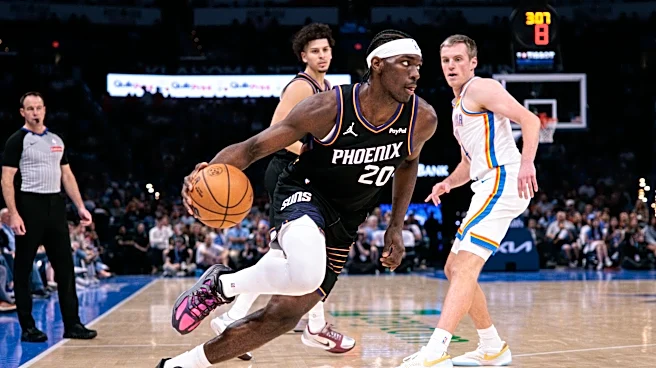
especially from beyond the arc. Phoenix shipped out two high-level three-point shooters in Grayson Allen and Royce O’Neale, who combined for 371 made threes last season. That accounted for 31% of the team’s total makes from deep. That is a substantial amount of shooting going out the door and wearing Hornets’ teal.
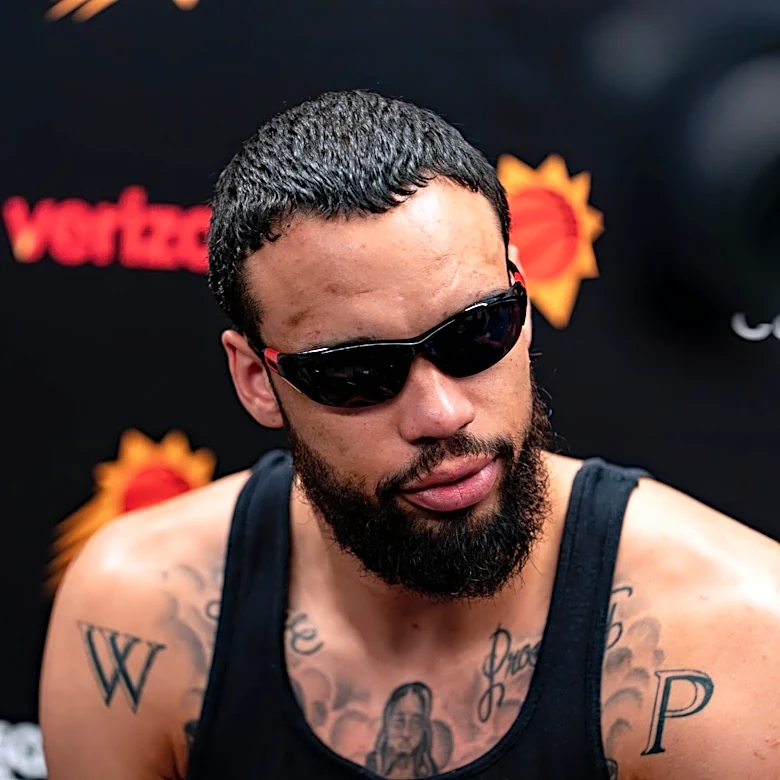
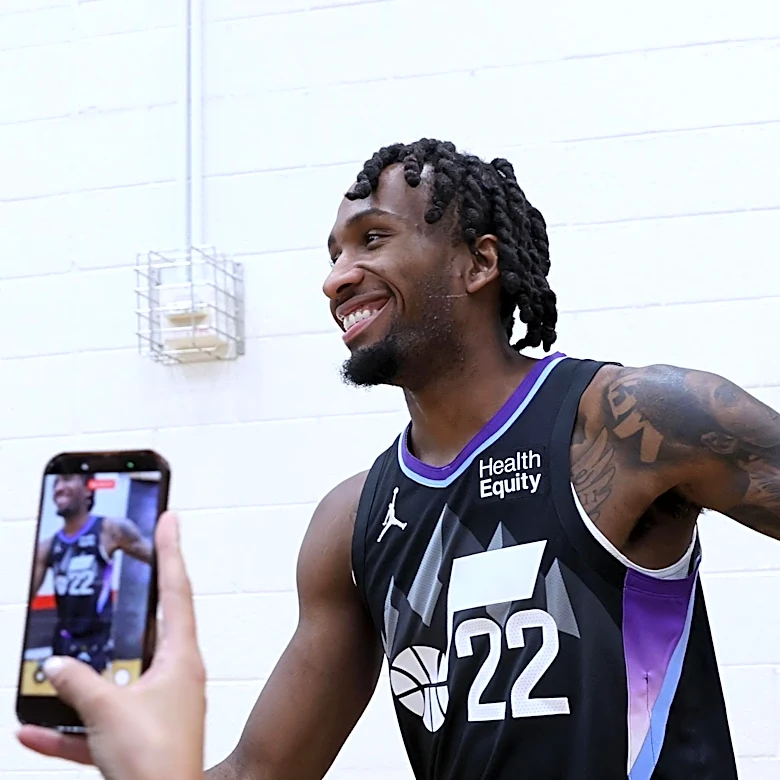
It also becomes one of the primary concerns when you look at the projected starting lineup. Combine the career three-point numbers of Jalen Green, Devin Booker, Dillon Brooks, Miles Bridges, and Mark Williams, and you get 4,296-of-13,387 from deep. That’s 32.1%. The NBA average last season was 36.0%. So on paper, the projected starting five enters the season with a very real shooting weakness.
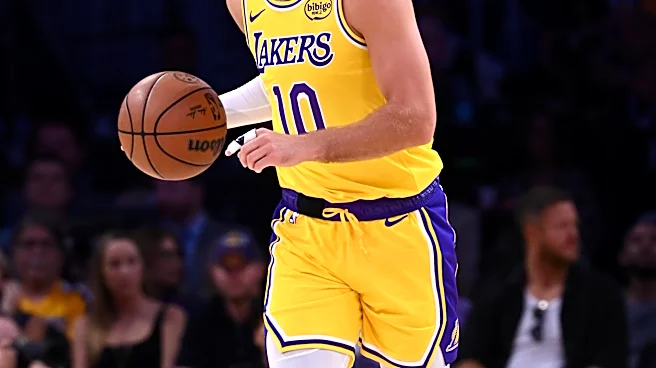
That is one of the reasons Luke Kennard’s acquisition is not only important, but necessary for this team. It also feels like he may be someone the fan base, and perhaps the league at large, is underestimating when it comes to his potential impact in Phoenix.
As we’ve worked our way through our annual SunsRank exercise, Kennard has consistently been ranked lower by the community. He was pushed into the Wild Card tier and ultimately ranked as the 11th-best Sun, falling behind both Khaman Maluach and Rasheer Fleming. The writing team has him eighth. Perhaps the optimistic ranking by the Bright Side writers leans more heavily on what Kennard has already proven throughout his career, along with what this team will need from him and how prominently he could be used.
We know he is going to be asked to knock down shots, but Kennard has never really been defined as a high-volume three-point shooter. He is a career 44.2% shooter from deep, yet he has averaged only 4.3 attempts per game across nine seasons. For context, Grayson Allen, Collin Gillespie, Jalen Green, Royce O’Neale, Dillon Brooks, Devin Booker, and Jordan Goodwin all attempted more threes per game last season than Kennard has averaged for his career.
There are exceptions, though. His career high came in 2019–20 with Detroit, when he attempted 6.5 threes per game. Then, in 2021–22 with the Clippers, he averaged 6.0 attempts while leading the league at 44.9% from beyond the arc. That is something worth remembering.
Kennard attempted only 3.1 threes per game last season, the second-lowest mark of his career. That doesn’t mean he lacks the ability to handle more volume. His history suggests that when the attempts increase, the efficiency can remain elite. Kennard has led the league in three-point percentage three times in his career, and two seasons ago with Memphis, he averaged 6.1 attempts per game.
Expectations in Phoenix should be even higher. He may need to surpass his career high of 6.5 attempts per game and find himself living in the 7+ attempts per game range. If there’s anything we learned from Jordan Ott’s system last season, it’s that there is a good chance that happens. The Suns averaged 40.8 three-point attempts per game last season, fifth most in the NBA. In total, 45.3% of their shots came from beyond the arc, which ranked seventh.
So while Phoenix acquired Miles Bridges to help attack the rim, the Kennard acquisition represents a continuation of a philosophy that already exists. The key is finding balance. The Suns can’t be a team that ranks seventh in three-point attempt rate while also ranking 29th in field goals made inside 5 feet. If they want to be successful, they have to find a better balance between generating shots at the rim and creating quality looks from deep.
Kennard is going to be an important part of that. He has proven throughout his career that he can knock down threes at an elite rate, and Phoenix will need both him and Collin Gillespie to provide that shooting off the bench. Jordan Ott can weave them in and out of different combinations throughout the game, especially when they’re playing alongside lineups that lack reliable three-point threats.
Luke Kennard may not start, and he may not be one of the first names you think of when evaluating this roster. But shooting has a way of making itself incredibly valuable when you don’t have enough of it. Phoenix lost 371 made threes this offseason, and somebody has to replace that production. Kennard has spent his career proving he can make them. Now the Suns need him to prove he can make a hell of a lot more of them.