


The New York Giants are heading into the toughest stretch of their schedule for the 2026 season.
They have teams with winning records in four of their next six weeks, starting with their Week 11 matchup against the Jacksonville Jaguars.
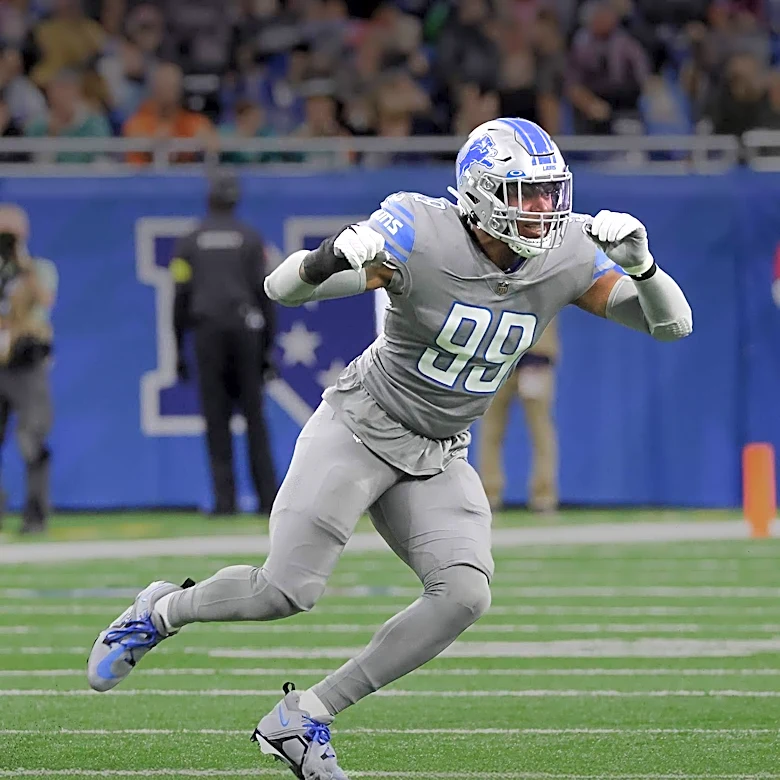
After that the Giants will face the rebuilding Indianapolis Colts, then the San Francisco 49ers and Seattle Seahawks. Those games are followed by the Cleveland Browns, Detroit Lions, and Dallas Cowboys before the season finale against the Philadelphia Eagles.
The Giants
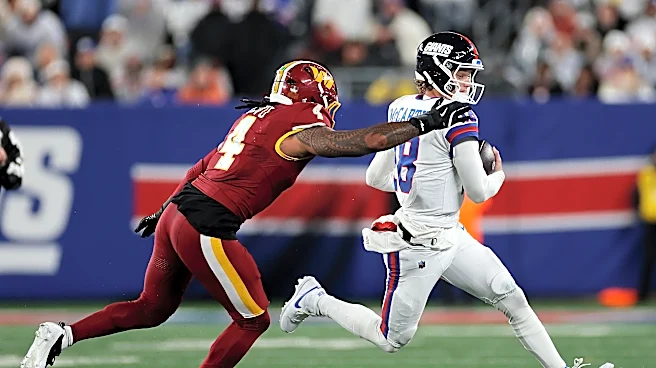
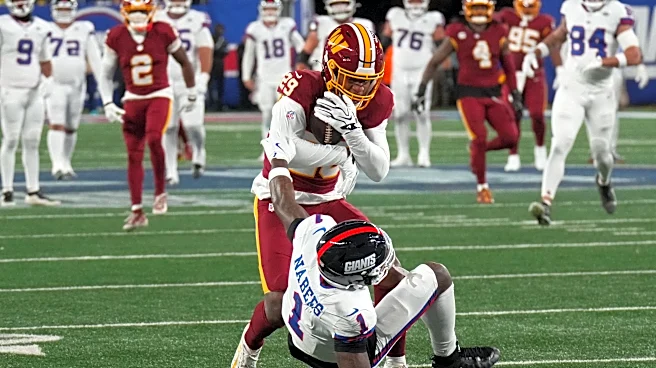
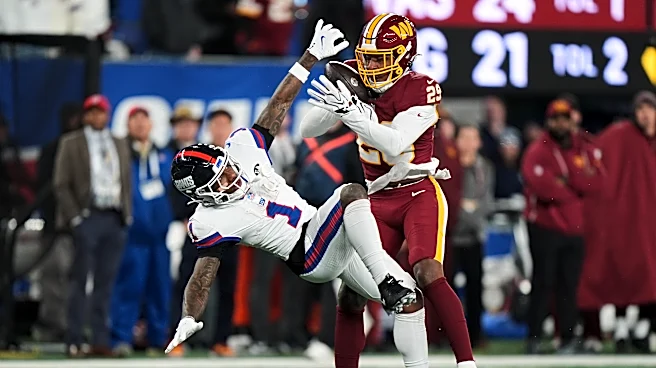
are still in control of the NFC East, but their grip on the division is tenuous after a frustrating Week 10 loss to the Washington Commanders. They still have control over their destiny and a playoff berth is within their grasp.
The Giants will need to continue to rely on their most important players if they want to realize their playoff dreams.
QB J.J. McCarthy
The quarterback position is the single most important position in sports, so it follows that J.J. McCarthy is the most important player on the Giants’ roster.
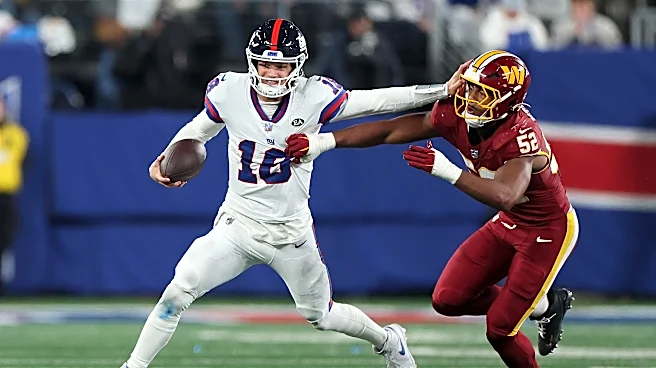
McCarthy has played very well since coming onto the field in the fourth quarter against the New Orleans Saints. McCarthy only joined the Giants on Sept. 28, when they traded their fifth-round pick for him. McCarthy has been a significant upgrade over Jameis Winston, adding a couple much-needed elements to the Giants’ offense. We’ve talked about how his athleticism has helped to open up the running game, giving defenses a speed option to worry about.
What has gotten less conversation is the vertical element that McCarthy’s passing has added into the offense.
McCarthy currently leads the NFL in Air Yards, averaging 10.4 yards downfield. Perhaps even more impressively, McCarthy is also 10th in the NFL in completion percentage over expected at +3.3 points above expected. In other words, he’s attempting a high rate of relatively difficult throws and completing them at a higher-than-expected rate.
That’s been particularly helpful for the offense since the Giants have pretty consistently asked McCarthy to convert long third downs through the air.
The Giants have faced 20 3rd downs of at least 7 yards over the last two weeks, and they usually lead to McCarthy trying to convert those long downs. He has, largely, been better than the Giants could have hoped since they traded for him, and has given hope and life to a season that appeared on the brink after Jaxson Dart was lost for the year.
McCarthy will need to continue to play well as the Giants’ starting quarterback. The Giants are going into the toughest stretch of their schedule with games against the Jaguars, 49ers, Seahawks, and Cowboys remaining on the schedule. The Giants have the potential to win any of those games, but they’ll need McCarthy to keep building on what he’s done in order to do so.
Those teams represent some of the best offenses in the NFL, and the Giants will need their own offense to finish in the end zone for more often than they have this year (8.1% of drives, 21st in the NFL) if they want to keep pace.
The offensive line
Okay, this is cheating a bit, but I do believe that it’s much better to think of an offensive line as a unit and not group of five individuals.
The Giants’ offensive line struggled mightily in Week 9 against the Philadelphia Eagles and has been something of an issue throughout the year. The pass protection has been uneven, generally holding up well against four-man rushes (8th best pressure allowed rate in the NFL), but having a tendency to surrender pressure when blitzed.
Each of the Giants’ linemen have had technical failures when faced with the blitz, with issues in footwork, leverage, hand usage, and correctly picking up stunts or twists. And, when combined with the Giants’ tendency to land in 3rd and long situations, sacks in big moments.
The Giants’ line has also been a frustratingly poor run blocking unit. They’ve been among the worst in the NFL at opening holes and are averaging just 0.9 yards before contact per run.
The good news is that the line has upside to improve over the remainder of the season. Both right guard Sisi Mauigoa and center Bryan Hudson are first-year starters, and also new to each other. Familiarity and chemistry are vitally important to offensive line play, and the more reps the young players get together, the better. Each has had some embarrassing failures this year, but also impressive blocks as well.
Blocking will be key to whatever the Giants do, or do not, accomplish over the remainder of the year. They’ll need their pass protection to hold up against three of the best defenses in the NFL over the next four weeks so McCarthy can continue to grow. Likewise, if John Harbaugh wants to be a run-first team (despite the Giants being better at passing right now), the offensive line will need to do a much better job at opening holes up front.
LB Arvell Reese
It’s honestly remarkable just how quickly the Giants’ rookie linebacker has become a focal point of the Giants’ defense.
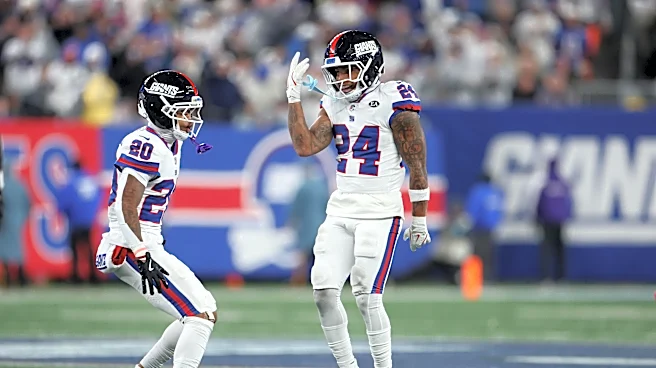
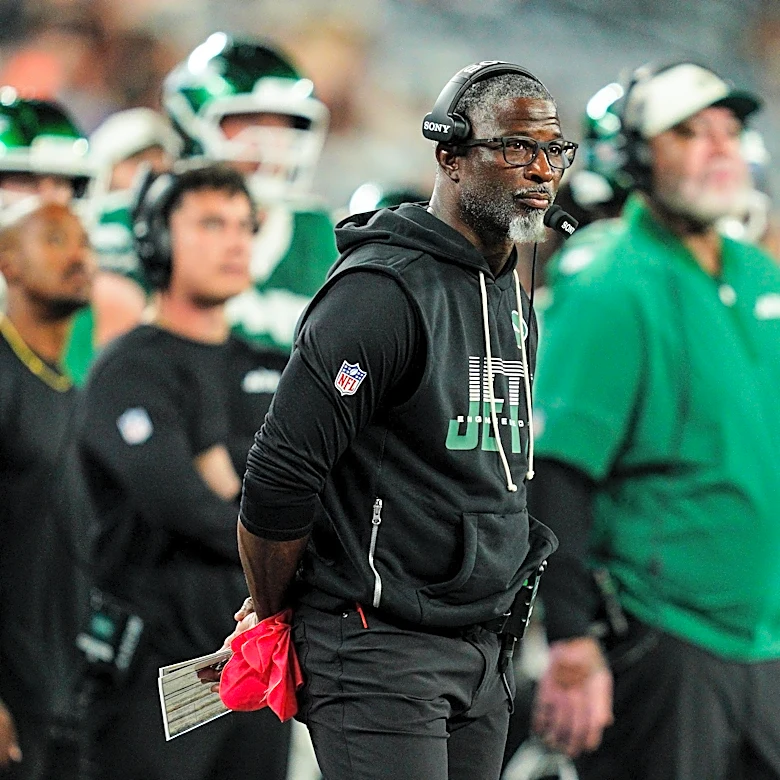
And I confess that I could have gone a couple different ways for this section. I could have highlighted Abdul Carter, Deonte Banks, Jevon Holland, or even Kayvon Thibodeaux as defenders who will be instrumental in the Giants’ pursuit of a playoff berth. And the fact of the matter is that so much of what Dennard Wilson does on defense is within the context and structure of the whole play and not just 11 guys running around.
But, like I said, Reese has quickly become a focal point for the defense and he is frequently the tip of the spear.
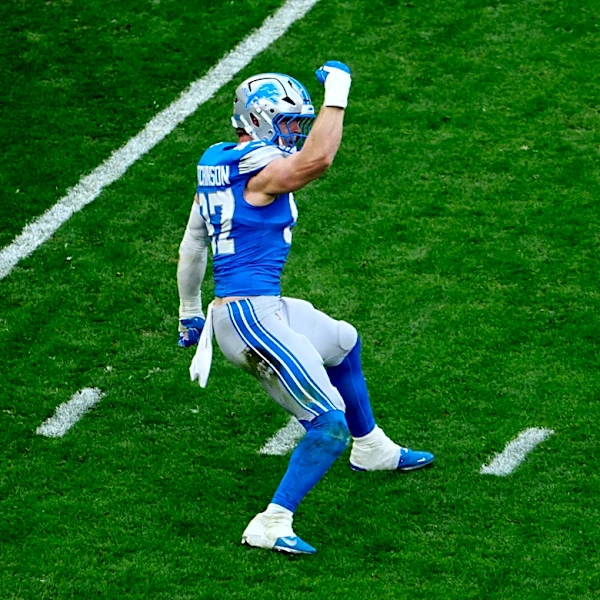
Reese is now the favorite to win DROY and could even be a factor in the DPOY conversation. He has a rare blend of length, speed, explosiveness, and power, as well as the ability to process quickly and be a three-dimensional defender.
One of Dennard Wilson’s greatest strengths so far has been scheming opportunities for Reese to make impact plays. Each of the aforementioned defenders plays a role in unleashing Reese — Abdul Carter’s elite speed off the edge commands double-teams or forces quarterbacks off their spots. Kayvon Thibodeaux’s versatility allows him to occupy blockers, drop into coverage to waste blocks and muddy reads, or pressure QBs into moving. Holland’s communication and range enables the coverage rotations to slow down passers, while Banks’ sticky press-man coverage ability takes away receiving options and forces quarterbacks to hold the ball.
All of which combine to give Reese the opportunity to make impact plays, and the Giants’ defense is at it’s best when he’s taking advantage of those opportunities.
He took a step forward over the course of the Giants’ Week 8 bye, and the mini-bye after Thursday Night Football offers another opportunity to take a breath and incorporate the lessons he’s learned so far. The Giants’ don’t necessarily need Reese to take over every game from here on out. However, they do need him to continue to consistently take advantage of opportunities as the rest of the defense creates them for him.
The Giants are among the very best teams in forcing 3-and-outs and punts, and Reese’s play has been a big reason why. They need players like Carter and Thibodeaux to have more individual impacts when they’re only rushing four too, but Reese needs to continue to wreak havoc when they set him up to do so.
WR Malik Nabers
The Giants want to be a run-first team, but Nabers is the Giants’ star offensive player.
He, and tight end Isaiah Likely, account for 56% of the Giants’ passing targets and 40% of the Giants’ offensive yardage. Likely is having a career year and proving well-worth the contract the Giants gave him. Nabers, on the other hand, has been more uneven.
Conversations about his body language aside, he hasn’t had the consistent impact that the Giants need from him, and his production is largely in line with his rookie year despite a better quarterback situation. Nabers has also shown the kind of streakiness that was a frustrating feature of his rookie campaign as well. He flashes legitimate greatness when he’s engaged and “feeling it”, but has also struggled with his handle on the ball at other times.
As mentioned above, the Giants want to be power running team. And that makes sense given both Harbaugh’s preferences and how offenses have trended in recent years. However, much of the resurgence in the running game is due to defenses using light boxes and light subpackages to account for explosive passing attacks. While Cam Skattebo (the only Giants’ runner with enough carries to qualify for NextGen Stats) has seen the 16th-fewest (out of 51 qualifying backs) heavy boxes, he has also seen among the fewest light boxes in the NFL.
In other words, the Giants’ passing game isn’t so intimidating that opposing defenses feel the need to drop an extra player into coverage.
The Giants’ offensive line can’t consistently open holes against the neutral boxes the Giants face at a high rate. So it must fall to the passing game to either force defenses into light boxes, or punish them for not playing coverage.
Malik Nabers is the Giants’ Number 1 receiver, and wants to be among the very best in the NFL. The Giants need him to make defenses pay for not respecting him, or be such a coverage magnet that they can’t afford to double Malachi Fields or Darnell Mooney.
Nabers joining the ranks of Jaxon Smith-Njigba, Ja’Marr Chase, CeeDee Lamb, and Amon-Ra St. Brown will go a long way toward giving the Giants the kind of offense they need to keep pace with the best in the NFL. Not to mention room for Cam Skattebo and consistent leads for the defense to protect.
K Dominic Zvada
Head coach John Harbaugh has repeatedly expressed confidence in Zvada — and that’s the right thing for a head coach to do.
Every rookie has growing pains. But it’s tough to ride them out when, more often than not, the rookie is on the field in high leverage situations with all eyes on them. Zvada has flashed high-level ability as a kicker with a very strong leg and the ability to drop kick-offs with precision to help the coverage team. But, as we’ve also seen, he has been erratic and struggled mightily from the right hashmark.
Super Bowl winning kicker Lawrence Tynes went into detail on the root cause of Zvada’s struggles, and he too expressed confidence that the rookie has a bright future ahead of him.
The problem is that the Giants need Zvada to be more reliable right now.
The Giants’ offense actually pretty good. As noted above, McCarthy has been playing well — very well considering he was dropped into the offense two days before October — and the Giants are 11th in the NFL in generating first downs. Unfortunately, they’re only 21st in the NFL in touchdown rates. Meanwhile, they’re fourth in the NFL in field goals, averaging 2.6 attempts per game.
And that’s with John Harbaugh beginning eschew field goal attempts and instead opt for short punts. While he doesn’t have to say it, actions speak louder than words and Zvada’s inconsistency with field goals is now impacting how they call the game. Zvada has the kind of leg strength that allows a drive to get partial credit even if it fizzles near the 40-yard line. However if he can’t consistently hit those kicks, or Harbaugh is afraid to even try, it can’t help but impact the offensive play-calling.
The Giants have shown a preference to try and win on defense, trusting Dennard Wilson’s aggressive unit to shut down opposing offenses. But as we saw against Washington, that’s an increasingly precarious position the longer you allow them to hang around — particularly considering the Giants have fielded the worst Red Zone defense in the NFL and surrender a touchdown on 80 percent of Red Zone trips allowed.
Having an offense that struggles to consistently finish in the endzone puts that much more pressure on the defense, so the Giants need Zvada to work through his struggles quickly and stop leaving points on the field. It will be almost impossible to keep up with offenses like those of the Jaguars, 49ers, Seahawks, and Cowboys if the Giants can’t score points at every opportunity.