

It’s a common refrain that the jump to the NBA is hardest for young point guards. With how fast the game is, the high level of skill, and the physicality that seasoned veterans possess, quick adaptation to the level of competition is incredibly difficult.
Kingston Flemings bucked one similar trend in his lone collegiate season playing for Kelvin Sampson at Houston. Sampson is famous for tempering expectations for his young guards, often having them to wait until their upperclassmen to carve out big
roles for his team.
Instead, all Flemings did was start all 37 games and play 31.7 minutes per contest in his one-and-done season there despite arriving on campus as a fresh faced 18-year-old.
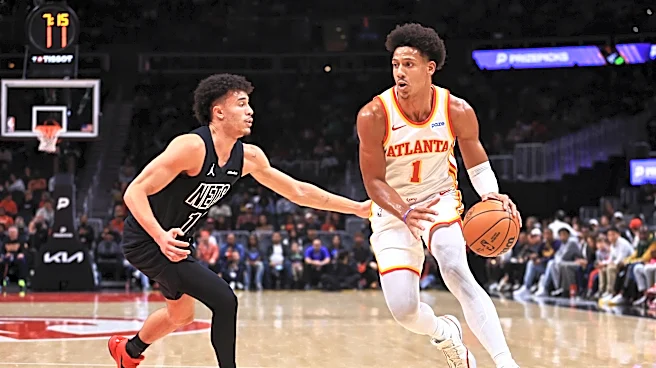
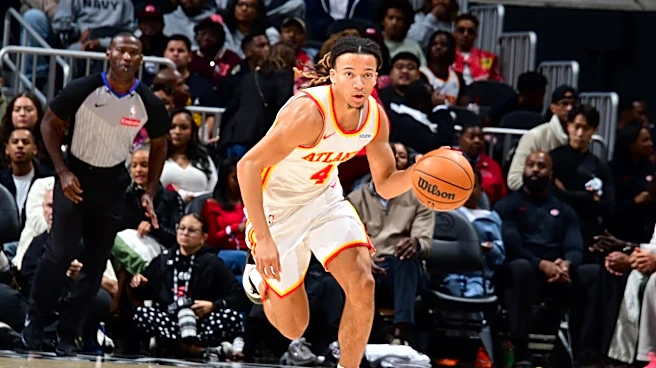
Now, as a rookie for the Atlanta Hawks, the no. 8 overall pick became a starter in just his eighth career NBA game.
Predictably, there appeared to be a bit of nerves and discomfort throughout the first four games of his professional career. He seemed hesitant to attack and deferred to the veterans on the team whenever possible.
Again, not a surprise for a 19-year-old guard on the big stage.
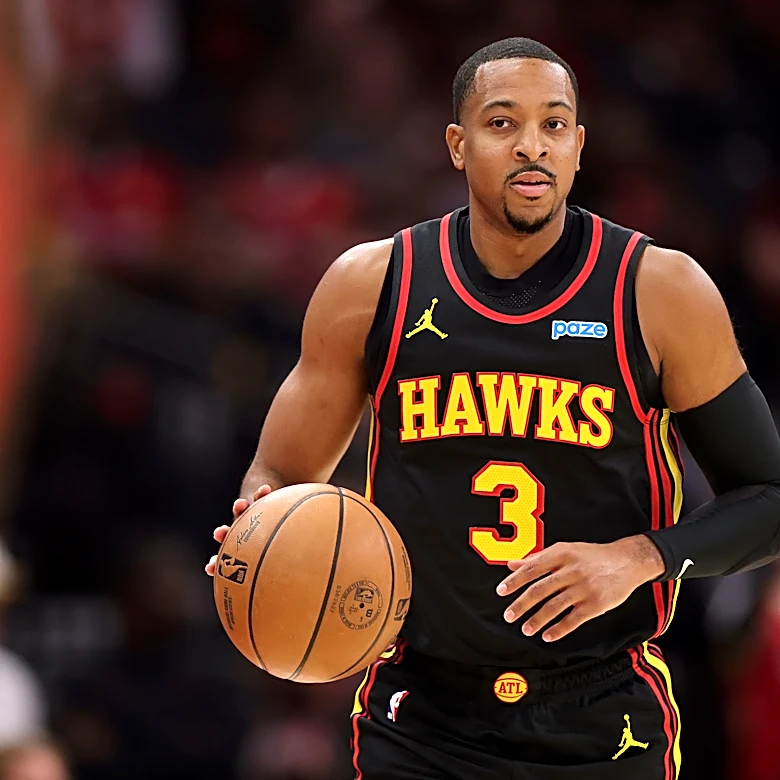
At the same time, 35-year-old CJ McCollum has shown signs of slowing down this season. He’s never been a particularly willing passer as the team’s quasi-point guard, and the numerous slow starts (both from McCollum personally and the team at large) in the first few games became an immediate worry.
But something clicked after that — and Quin Snyder felt the time was right to make the lineup change for the good of the team, although admittedly the public comments have largely been through the frame of CJ McCollum asking to come off the bench in some respects.
“CJ [McCollum] and I, I respect him,” Snyder had to say prior to the home game against the Wizards. “We’ve known each other a long time. He respects me. A lot of dialogue between the two of us generally about our team. That includes film. Just looking at our team, we had a couple of tough starts. It certainly wasn’t attributable to any one thing. It felt like as we looked at what was there, there was something that we could do differently. Potentially help him be impactful with the bench group. Which he did. And also give our starters a different look to get them going.”
In Flemings’ first four games, he was just 6-for-18 (33%) from the field including 1-for-5 (20%) from three and only got to the free throw line once (missing that attempt). He’s also someone who values the ball a ton, and so his 17-to-11 (1.54:1) assist-to-turnover ratio must have come as a disappointment.
This tepidness was on full display — clearly not wanting to make mistakes — and as a result playing less freely than one should or could.
But over the next seven games, he has come alive to the tune of 32-for-55 (58%) from the field, 8-of-16 (50%) from three, 10 free throw attempts, and 31 assists to just 14 turnovers (2.1:1 assist-to-turnover ratio).
Flemings’ lightning quick first step can be relied upon to create early advantages, and his high release point has helped him get his jump shot off against defenders of all size:
And now, he’s leveraging his scoring pressure into playmaking for others and relocating for better shots if defenses play him too aggressively. Three-point shooting was thought to be a weakness of his coming into the 2026 NBA Draft, but so far he’s hit 5-of-9 (55.6%) of his catch-and-shoot three-point attempts and 43% of all three-point attempts (9-for-21).
Flemings is a careful, efficient playmaker who avoids turnovers at a high level for someone in his age bracket. He’s flashed good vision to poke holes in the defense and to get the ball out of his hands to his teammates in space. Here, he splits the Cavaliers 2-3 zone with a quick skip pass and a helpful Lu Dort hammer screen:
In fact, thus far into the season, Flemings is tops on the Hawks in potential assists per 36 minutes (13.0), narrowly eclipsing Jalen Johnson (12.2) and Dyson Daniels (11.8). He’s doing this while averaging the most turnovers per 36 minutes on the team (3.7), so there’s still room for growth, but it’s been refreshing to see him not hesitate after making mistakes.
Defensively, the first thing you notice is his level of compete against players 6-foot and 7-foot tall alike. Here, he helps and crashes down on Giannis Antetokounmpo ready to lay the ball up in the dunker’s spot:
And it’s not just flashy disruptive plays, either. The great Steph Noh detailed Flemings’ penchant for just doing the defensive basics: a high motor, making the right rotations and being in the right position, and holding his own against bigger players.
Flemings is a different breed of point guard. He can run a pick-and-roll if you need to. He can set screens and cut if you need him to. He can spot up and wait for a swing-swing if you need him to. He doesn’t take breaks on defense. And most importantly, he isn’t a target for opposing offenses to pick on.
He’s a player that truly wants to impact the game in more ways than scoring — and the scoring has even been efficient (60% true shooting as of November 10)!

But with the Hawks looking to pressure the ball on defense and create transition opportunities off turnovers, Flemings fits neatly into that new ethos. So, his arrival just may coincide with a new Hawks identity that few teams want to see in a 48-minute grind of a basketball game.