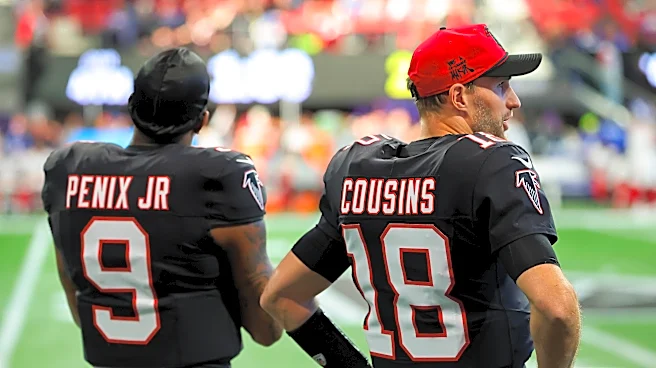


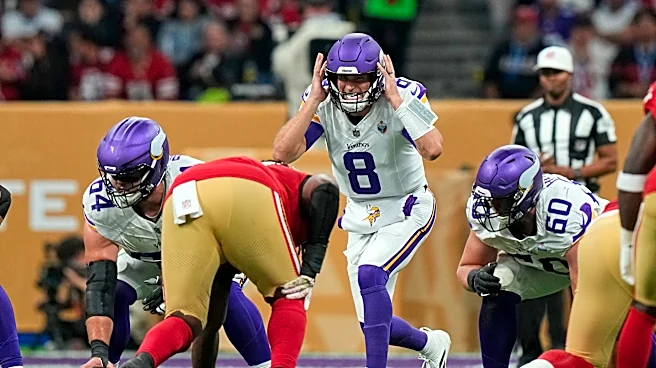
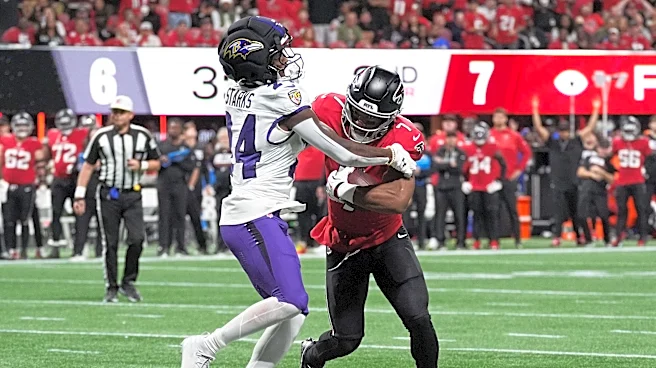
As the Atlanta Falcons travel to face the Minnesota Vikings in Week 12, the matchup between the two quarterbacks should steal every headline. Michael Penix squares off against his former teammate and mentor Kirk Cousins, prompting a look back at the Falcons’ infamous 2024 offseason double-dip at quarterback. At the time, the Falcons felt they’d solved their quarterback problems for a decade by signing Cousins to a $180 million contract and drafting Penix as his successor with the eighth overall pick.
Yet two and a half years later, Atlanta is still embroiled in quarterback questions and scrapping for survival in the NFL’s weakest division while Cousins leads the Vikings as a legit playoff contender.
Since leaving Atlanta this past offseason, Cousins has had a bit of a resurgence, guiding the Las Vegas Raiders to a respectable 4-5 record before returning to the Vikings at the trade deadline. Meanwhile, Penix, recovering from a season-ending knee injury in 2025, came back strong in Weeks 3 and 4, but has been mostly lackluster in his six outings since. Coming off their bye, the Falcons need to spark a late-season push for the NFC South crown, while the Vikings shake off their recent stumble in Mexico City.
Sunday’s battle isn’t just for playoff positioning, but a referendum on Atlanta’s 2024 decision and their attempts to hedge with two quarterbacks compromised both, wasted precious draft capital, and left them with no clear answers at the sport’s most important position.
Falcons failed to copy Packers’ blueprint
The Falcons’ decision to double-dip was extremely controversial at the time because it was unprecedented. No team in NFL history had given a veteran quarterback multiple years of guarantees in free agency, only to undermine that by selecting his replacement in the first round of the draft. The Falcons dreamed of building a bridge similar to what the Green Bay Packers had with selecting Jordan Love in the first round of 2020 to sit behind Aaron Rodgers.
With Love fresh off guiding the Packers to a divisional playoff loss in the 2023 postseason in his first season as a starter, it seemed like a worthwhile blueprint to follow. However, the Packers haven’t won a playoff game in the years since, and one can’t help but look back at the opportunity cost of the team’s failures to capitalize on back-to-back NFC Championship losses in 2019 and 2020 with an early-round selection that could’ve helped Rodgers and the Packers win a Super Bowl before his eventual exit in 2023.
That same opportunity cost would plague the Falcons, who bypassed a glaring pass-rush need by drafting Penix, prompting a domino effect that led them to trade a future 2026 first-round pick to acquire James Pearce after already selecting Jalon Walker at the top of the 2025 NFL Draft. Pearce’s productive rookie season quieted any concerns about opportunity cost. However, after missing the first half of 2026 due to a suspension, Pearce, like the Falcons, also needs a strong finish to continue justifying the extra expenditure of draft capital for a 3-7 roster with plenty of holes.
Falcons playoff drought made double-dip a gamble they couldn’t afford
Not to mention, Rodgers spent over a decade in Green Bay building a Hall-of-Fame resume, and he entered the league on similar terms when he was drafted in 2005 and sat three seasons behind Brett Favre. The Packers had earned the benefit of the doubt with making such transitions, while the Falcons had not. The Falcons hadn’t cracked the postseason in six seasons before 2024, and the organization showed its hubris, assuming a return to the postseason was all but assured under Cousins, even though Minnesota had done so only twice in his six seasons there before he arrived in Atlanta.
The playoffs remain elusive, and hindsight suggests the Falcons should’ve committed to one quarterback and used the remaining resources to build the rest of the team. For two years, Cousins’ bloated contract received the lion’s share of criticism, but today, the Penix pick deserves harsher scrutiny.
Cousins’ steady floor is exactly what the current Falcons are missing
Signing Cousins was certainly a risky overpay, given his mostly average play in both Washington and Minnesota over the preceding decade. But the veteran was a more proven commodity and offered a steadier floor, even after a 2023 Achilles injury. That injury required time to recover, time the Falcons failed to give him due to the presence of Penix breathing down his neck. The minute Cousins hit a snag, the Falcons pulled the plug and turned to Plan B.
However, the further Cousins has gotten away from that 2023 Achilles rupture, the better he’s seemingly played. His veteran poise is exactly what’s missing to steady the current Falcons ship, as the team lives with the weekly rollercoaster that is developing a young quarterback like Penix. In the current under-center, play-action-based offense under current Falcons head coach Kevin Stefanski and offensive coordinator Tommy Rees, Cousins would thrive. These are the exact offensive styles Cousins has spent over a decade mastering.
Cousins’s downside is his relatively low ceiling. The Vikings are firmly in playoff contention, but are unlikely to do any serious damage come January with Cousins at the helm, barring their defense going on an epic run. But for a Falcons team inching towards a decade without a playoff appearance, those seem like first-world problems.
Penix’s ceiling hasn’t shown up consistently yet
Penix’s upside is his potential to deliver the high-tier play that could turn a team into a legit postseason contender. And while glimpses of that level of play have flashed occasionally, it hasn’t materialized consistently. Penix’s arm strength is his superpower, but it hasn’t consistently translated into big-time downfield throws. After finishing dead last in PFF’s adjusted completion percentage on deep passes in 2025, he’s bounced back to 15th in 2026. But it adds up to Penix being no better than average at his supposed best trait, raising questions about what else he brings to the table. Lately, the answer has been slow starts, panicking under pressure, and overall inconsistency.
Circumstances haven’t been in his favor, as overcoming his 2025 injury derailed his development alongside coaching changes. But the Falcons knowingly ignored Penix’s significant collegiate injury history, once again showcasing incredible hubris. Now the Falcons face the real possibility of hitting reset again at quarterback this offseason, leaving the franchise with nothing to show for either investment besides wasted primes and a mountain of frustration.
Penix’s 2026 finish will decide if new regime stays the course
And now the clock is ticking after the team paid some of its prominent skill players, like Bijan Robinson and Drake London. They have only a few more years to maximize their primes, or they may find themselves selling off both to the highest-bidding contender, as they did with safety Jessie Bates earlier this month.
The Falcons have to fix the quarterback situation sooner rather than later. Putting their hopes in Penix’s potential cost the people who selected him their jobs. Now the current decision-makers in Atlanta are struggling to retroactively justify that decision as the Falcons stare at a 3-7 record again, the same record the team had when Penix was hurt a year ago. If the Falcons can’t turn the tide over these final seven games, starting Sunday against the quarterback they ran out of town, it’ll be harder for the current regime to justify staying the course with Penix after this year.