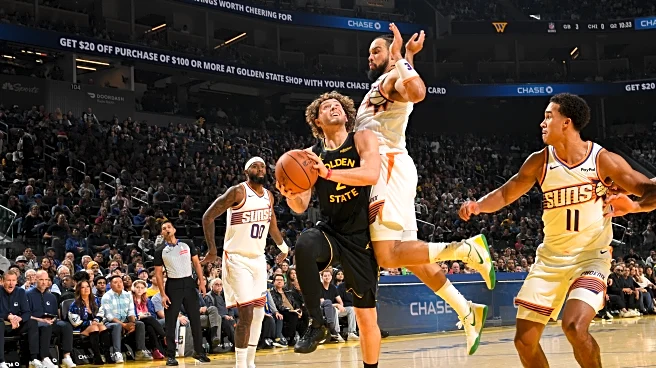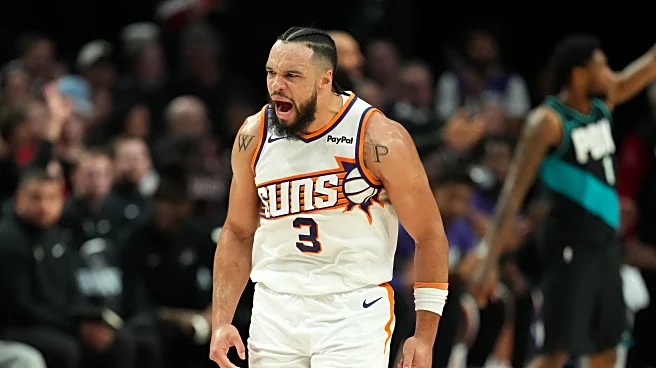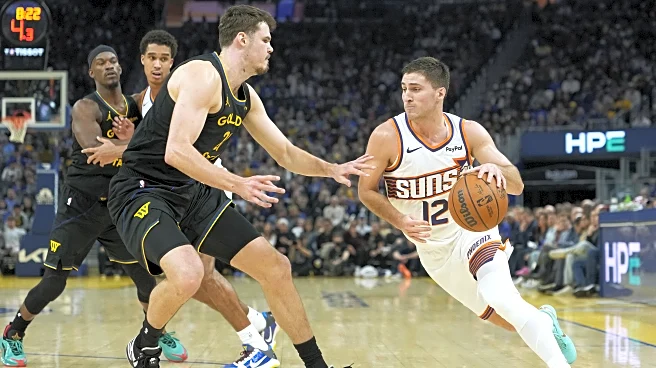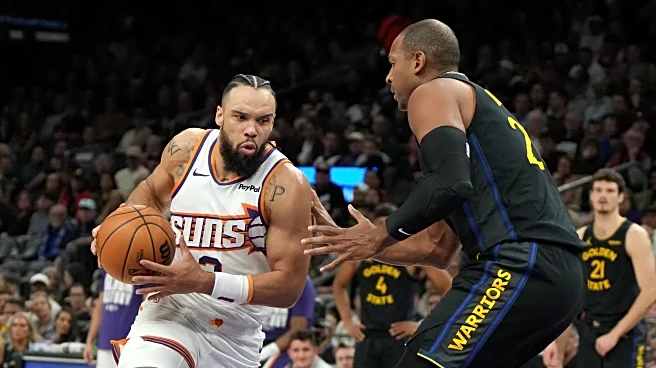

Last season, the Phoenix Suns managed to turn disappointment into an art form. The most expensive roster the league has ever seen could not even sniff the Play In, let alone the postseason. A masterclass
in how fast things can go sideways. Most of us have tried to memory hole that year and move on, but every so often, a new detail leaks out. Another breadcrumb. Another explanation. Another quiet “why”.
This time, it came from Brent Barry. He popped up on an episode of the No Dunks Podcast and peeled back the curtain a bit on how that team actually functioned behind the scenes. And the picture he painted helps explain how something with that much talent unraveled the way it did.
“The situation there overall, I would tell you guys, being on the inside, was it was a team that just didn’t know how to get along,” Barry stated. “They were all cordial towards one another. They all came to practice and were friendly, but it was one of those situations where you’re just not invested.”
“I thought it was going to be a slingback from what happened with Frank Vogel and the disappointment from the year before that there would be some piss and vinegar in the team and that these guys would want to show like, hey, we’ve got the highest salary in the league,” he continued. “We’ve got to figure this thing out together. Let’s use our superpowers to do that. Let’s use our superpowers for good. Unfortunately, they used them the other way and found ways to dismantle that roster. And sadly, they just didn’t commit to one another.”
“If clearly those guys don’t have a hierarchy and you’re not, as a member of the team, as a player, you’re not aware of which of the guys were leaning on the most, it confuses the rest of the team. And I think we had a lot of guys who didn’t exactly know what the expectations were. And again, this comes back to really good coaching and leadership. You have to define those for a team. And at no point did we do that for the Phoenix Suns last year.”
This was incredibly revealing. It highlights the contrast between last season and this one in bold print.
Starting with Bradley Beal, it became clear that he never fully bought into operating within a true team structure. He had been the alpha in Washington for so long that the adjustment never really took. When reports surfaced that he took offense to his head coach asking him to play more like Jrue Holiday, that told you everything you needed to know. That was a crack in the armor.
I have said it plenty of times. I liked the player. I did not like the contract or the situation. But once that detail came out, it reframed things. This was not only about fit on the court. It was about mindset. When a player resists being part of something collective, when the instinct is “me” over “we”, the whole thing starts to wobble. That mentality bleeds. And last year, it bled everywhere.
And if you take Barry’s comments one step further, they also shine a light on the challenge Kevin Durant brought with him.
You can talk all day about his greatness on the court, and none of that is up for debate. But the laissez-faire approach, the mentality of wanting to hoop and nothing else, showed up in exactly what Barry was describing. That disengagement, that singular focus, warped the hierarchy of the team and bled into the locker room. That’s the lack of investment.
With great power comes great responsibility, or at least it is supposed to. That has never really been Durant’s lane. He wants the praise. He wants the contract. He wants the freedom. He does not want the accountability that comes with steering a group. Last season made that painfully clear. When the players carrying the largest financial weight do not define or embrace their role, everyone else drifts. Structure erodes. Accountability disappears.
What you end up with is a roster full of mercenaries. Guys playing for themselves, not for each other. The coaching staff never had a chance to pull it back together because the egos were too big and the buy-in was never there. That was last year’s Suns in a nutshell.
Devin Booker was obviously part of that group too, and he even said early this season that last year was the toughest stretch of basketball he has ever lived through.
We do not know how much responsibility to pin on him for what did or did not happen, but one thing is clear. His voice was muted. Just ask Coach Bud, who, when the team was struggling, reportedly told Booker to “tone it down”. He’s not free of sin, but he’s the only one who appeared to try to vocalize the issue and was muted. When you stack that many stars together and no one clearly owns the room, even the franchise guy can get drowned out.
That is the clearest contrast to this season. This team works because everyone knows where they stand. There is a hierarchy. There is clarity.
You can hear it when guys like Jordan Goodwin, Collin Gillespie, Mark Williams, and Ryan Dunn talk on The Old Man and the Three Podcast. The reverence they have for Devin Booker. The respect they show for what Dillon Brooks brings. That stuff matters. It sets the tone. And it is a big reason why this version of the Suns feels connected in a way last year never did.
The difference is obvious, and you see it every night on the floor. When there is a clear hierarchy behind the scenes, it shows up in how the team plays. Roles are defined. Effort lines up. Execution follows.
This team has already won 27 games. Last season, it took until February 22 to get there. 59 games. This group did it in 44. That is not coincidence. That is structure. That is buy-in. And it traces back directly to the issues Barry pointed out. When everyone knows who they are and how they fit, winning stops feeling accidental and starts feeling repeatable.