



After falling to the ninth pick in the 2026 NBA Draft, the Dallas Mavericks now enter a very different section of the board than they were hoping for a few months ago. The top-end “future franchise centerpiece” tier is likely gone by the time Dallas picks, meaning the Mavericks now have to focus on identifying high-level complementary players who fit around Cooper Flagg long term. That shift makes Dailyn Swain one of the more fascinating names in the Mavericks’ range.
Swain’s breakout junior season
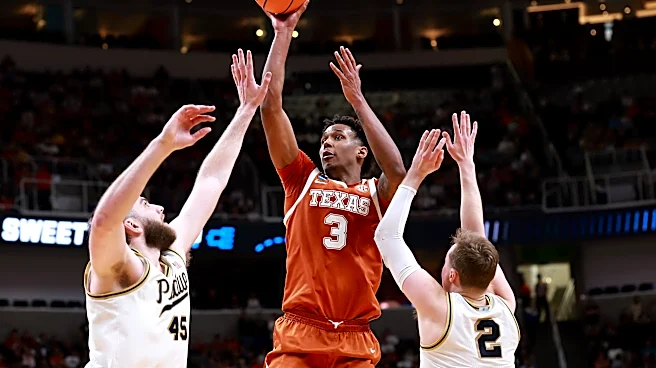
at Texas was one of the best all-around wing seasons in college basketball. He became the first player in Texas history to win SEC Newcomer of the Year, earned Second-Team All-SEC honors, and finished as a finalist for the Julius Erving Award. More impressively, he became the only player in a major conference to lead his team in points, rebounds, assists, steals, and minutes played. Swain averaged 17.3 points, 7.5 rebounds, 3.6 assists, and 1.6 steals while shooting 54.2% from the field and 81.5% from the free throw line. He also helped lead Texas to the Sweet 16, where he finished with 15 points, 9 rebounds, and 5 assists in a narrow loss to Purdue.
The production is impressive, but the way Swain plays is what really stands out.
The good
Swain feels like one of the safest “winning basketball” bets at the end of the lottery or in the middle of the first round because of how many different ways he impacts the game. At 6-foot-6.5 and 211 pounds with a near 6-foot-10 wingspan, he already has NBA-ready size and physicality for a modern wing. He constantly pressures the rim, plays through contact, rebounds extremely well for his position, and thrives in transition.
The downhill pressure is probably the biggest selling point offensively. Swain consistently creates paint touches, collapses defenses, and forces rotations without needing isolations built around him every possession. He attacks closeouts quickly, pushes the ball after rebounds, and plays with a pace that keeps offenses moving. The advanced metrics back that up, too, as Swain graded near the very top nationally in rim pressure and rim assists among wings.
What makes him especially interesting next to Cooper Flagg is how connected his game feels. Swain does not need the ball for 15 seconds to impact a possession. He rebounds and initiates transition offense, makes quick reads, cuts hard, attacks gaps, and keeps the ball moving naturally. Those are the types of players that elevate lineups around stars rather than slowing them down.
Defensively, there is a lot to like, too. Swain generated steals at a strong rate, consistently disrupted actions without gambling himself out of possessions, and projects as a versatile multi-positional defender. Dallas badly lacked perimeter size, physicality, and point-of-attack resistance for much of last season, and Swain could help solve all three problems immediately.
The bad
Swain’s swing skill is clearly the jumper. While the free-throw percentage at 81.5% is encouraging long-term, the three-point shot itself still feels more functional than truly dangerous. Defenses will likely dare him to shoot early in his NBA career until he proves he can consistently punish teams from outside.
There are also questions about the ceiling of his half-court creation. Swain is extremely effective attacking advantages, but he is not someone you currently project to become a primary offensive engine. He thrives attacking downhill against bent defenses, but creating difficult offense against set NBA defenses remains more theoretical than proven.
That creates some archetype risk. Wings who rely heavily on physicality, transition scoring, and connective offense can sometimes become difficult to maximize if the jumper never fully develops. Dallas also already has several players who prefer to operate inside the arc, so long-term spacing around Flagg remains one of the most important questions the front office must answer.
Player comp
Swain’s game honestly resembles a blend of several different NBA wings. There are shades of Josh Hart and Jaime Jaquez Jr. because of the rebounding, toughness, downhill pressure, and constant activity he brings every night. Offensively, there are stylistic flashes of Gordon Hayward and Evan Turner in the secondary creation and connective playmaking from the wing position.
The higher-end outcome probably looks something like a more athletic version of Jaime Jaquez Jr., where the value comes from versatility, feel, physicality, and two-way impact rather than elite shot creation. Even if he never becomes a true offensive star, Swain feels like the type of wing playoff teams are constantly trying to find because of how naturally he contributes to winning basketball.
Fit with the Mavericks
Swain feels like one of the cleaner fits for what Dallas should be trying to build around Cooper Flagg moving forward. The Mavericks desperately need perimeter athleticism, rebounding, defensive versatility, and secondary playmaking after the roster looked so disjointed last season. Swain addresses all four areas almost immediately.
More importantly, his game complements Flagg naturally. He can defend multiple positions, attack closeouts, rebound, push in transition, and function as connective offensive tissue without requiring heavy usage. That matters on a team where Flagg is clearly going to become the primary offensive engine long term.
He also feels like exactly the kind of player Masai Ujiri and Mike Schmitz would gravitate toward. Swain checks almost every “winning basketball” box organizations prioritize: effort, feel, versatility, physicality, transition offense, and defensive flexibility. Even if the jumper never becomes elite, the baseline NBA role already feels very real.
And if Dallas is serious about building a tougher, longer, more defensive-minded roster around Cooper Flagg, Dailyn Swain feels like exactly the type of player the Mavericks should be paying close attention to throughout the pre-draft process.
Final Thoughts
Dailyn Swain may not have the flashy offensive upside of some of the guards projected near the top of this class, but he feels like one of the safer bets to become a meaningful NBA player. He already impacts games in multiple ways without needing high usage, and those types of players become incredibly valuable in playoff environments.
If Dallas is serious about building a tougher, more versatile, defensive-minded identity around Cooper Flagg moving forward, Swain feels like exactly the kind of player the Mavericks should be paying close attention to throughout the pre-draft process.