
According to Over The Cap, the Green Bay Packers currently have $23.5 million in cap space this offseason, and they are expected to have $67.5 million in cap space in the 2027 season. Whatever goes unused in 2026, which at this point could be in the $13.7 million range, will be added to their 2027 space.
Mind you, this includes safety Xavier McKinney (likely to be extended) carrying a $24.8 million cap hit in 2027 and quarterback Jordan Love (likely to have the can kicked on his cap cost) carrying a $44
million cap hit. There are other ways for the Packers to create more cap space next year, but those are the two big ones.
This is all to say this: Green Bay showed patience in 2026 to collect compensatory draft picks for the 2027 season, while at the same time getting over the dead cap numbers that come with moving on from Rashan Gary, Kenny Clark, Elgton Jenkins and Nate Hobbs, but 2027 should be a big cap spend year (and it’s not like the Packers are going cheap this year, either, as they’re still 8th in cash spend for players in the league for 2026).
Green Bay is attempting to streamline the team, getting all of its contracts to line up for the 2027 and beyond window, while remaining competitive in 2026 (versus blowing it all up as we’ve seen in Miami). From here on out, everything is scheduled, whether it’s players coming in or coming out (this is what people have lauded Philadelphia Eagles general manager Howie Roseman for doing for years).
The one downside to this is that there’s an inevitability here: Anyone leaving in the 2027 free agency cycle will basically be walking for free, since the Packers are almost certainly to be spenders (even more so if they don’t extend their own) next year. If Packers don’t want to extend scheduled 2027 free agents, it’s better for them in the long-term to move off them now, and it only hurts the team to have these future free agents play out their contract seasons for various reasons (prices go up over the course of a year due to extensions, getting a pick for a loss of a player in a trade versus getting nothing in free agency in a year where you plan to spend, a player has no incentive to re-sign with a team until after his agent finds other teams’ prices at the combine if he’s played out a full season, etc.)
So this is the ultimate question: Which players should the team extend this offseason?
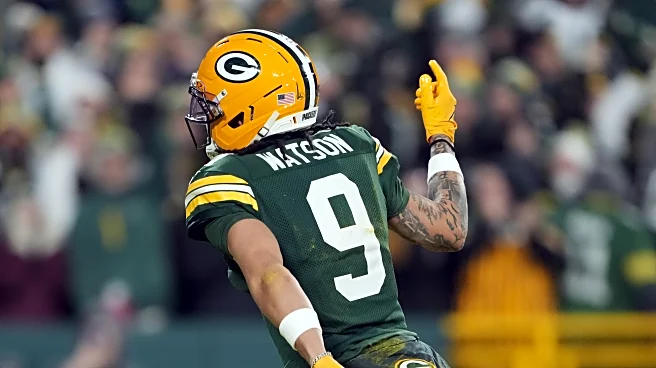
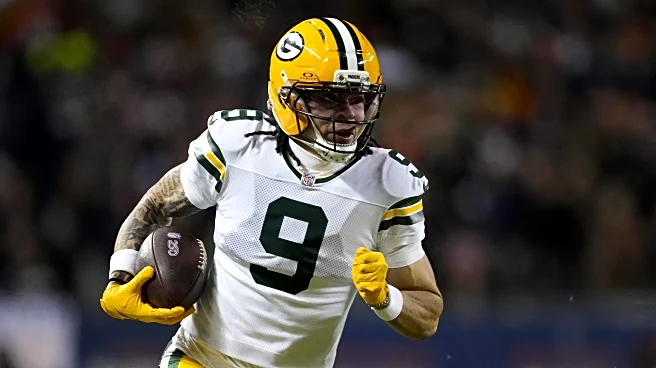
Christian Watson, WR
Going into this offseason, the floor for a Christian Watson contract was probably the price tag it cost the Detroit Lions to lock up WR2 Jameson Williams ($26.7 million per year), another speedster from the draft class with similar production and had also previously come off an ACL tear. With Alec Pierce, another 2022 draft class speester with similar production, getting $28.5 million per this free agency cycle, the price to retain Watson should be easy to figure out. There’s not much wiggle room. It’s just a matter of whether the Packers are willing to pay it.
Tucker Kraft, TE
There’s a weird gap in the market right now for tight end, as these are the top APYs for the position:
- George Kittle: $19.1 million
- Trey McBride: $19 million
- T.J. Hockenson: $16.5 million
- Kyle Pitts: $15 million
- Isaiah Likely: $13.3 million
It’s hard to imagine that Tucker Kraft’s camp will take less than the T.J. Hockenson rate, even coming off a torn ACL. If the Atlanta Falcons were willing to tag Kyle Pitts at $15 million a year, he’ll probably get more than that on a multi-year extension, and if the Packers wait long enough, maybe he’ll start to fill the gap behind McBride in the market.
I’m guessing that if Green Bay wants to get Kraft done this offseason, it’ll be a number between McBride and Hockenson (or McBride and Pitts, if they wait to extend Kraft after Pitts signs a multi-year deal).
Devonte Wyatt, iDL
We actually had a pretty good proxy for Devonte Wyatt on the free agency market this year when John Franklin-Myers, a 29-year-old who specializes in pass-rushing like Wyatt, signed for $21 million per year. Wyatt is currently set to play on a $12.9 million fifth-year option for the 2026 season, so the team would probably drop his 2026 cap hit if the 27-year-old signed a new deal.
Lukas Van Ness, EDGE
I don’t actually feel comfortable projecting a Lukas Van Ness contract right now, because of how weird his situation is as an ascending but not living up to draft expectations pass-rusher who is only 24 years old. He played his best football in 2025, but he still hasn’t even started a game since high school. There are going to be first-round picks drafted in this upcoming class who are older than him, and age (along with playing time) is the primary factor for pricing non-Pro Bowlers in free agency.
Kansas City’s George Karlaftis ($22 million per) and Greg Rousseau ($20 million per) are players who fit a similar profile to Van Ness, but I think at that point, the Packers would probably just pick up Van Ness’ fifth-year option (which they’ll need to do by May 1st) and see how 2026 plays out.
Jayden Reed, WR
This is another funky one, because Jayden Reed has been used as a slot-only receiver for the Packers. If I had to guess, he’d come in between the Khalil Shakir ($13.2 million per) and Romeo Doubs ($17 million per) numbers, but that’s a pretty big gap. Wan’Dale Robinson got $17.5 million on the free agent market this year after finishing third in the league in slot receiver yardage, but he also can contribute as an outside receiver, too.
Other Notable 2027 Free Agents
- CB Keisean Nixon
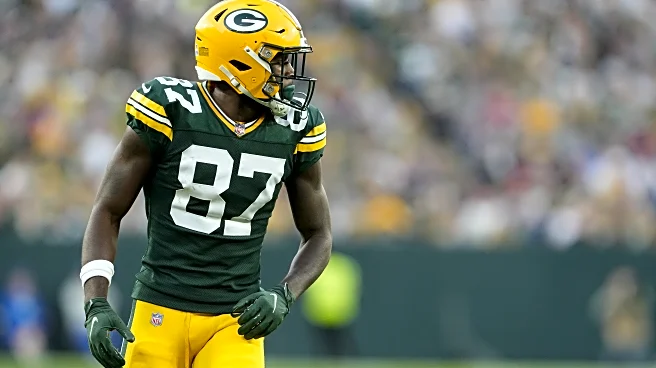
- WR Dontayvion Wicks
- CB Carrington Valentine
- iDL Karl Brooks
- LB Isaiah McDuffie
- OL Darian Kinnard
—
As a reminder, the Packers typically backload players’ contracts from a cap perspective (they usually sign four-year deals with a big signing bonus on the front and then don’t guarantee money after Year 1 of the contract). So just because a Watson, for example, would make $29 million per year doesn’t mean that he would exhaust $29 million in cap space for Green Bay in 2027 if extended.
Who would you like to keep around at their projected prices? Sound off in the comment section.
It’s also worth mentioning here that the NFL is in the process of renegotiating its broadcast contracts, starting with CBS, which is expected to pay 50 percent more for the same games they already were scheduled to receive. While prices for players mostly stayed flat from 2025 to 2026 (various factors here that could be a whole article in itself), there could be a big boom in 2027, depending on how many league broadcast partners are willing to pony up more money to keep the NFL happy. That television money is the primary driver for cap increases, which are already in the $25 million per year range.
So an okay deal now could look much better down the line when the cost of all non-rookie contract players ends up jumping big time after these negotiations are done.
Join the conversation!
Sign up for a user account and get:
- Fewer ads
- Create community posts
- Comment on articles, community posts
- Rec comments, community posts
- New, improved notifications system!