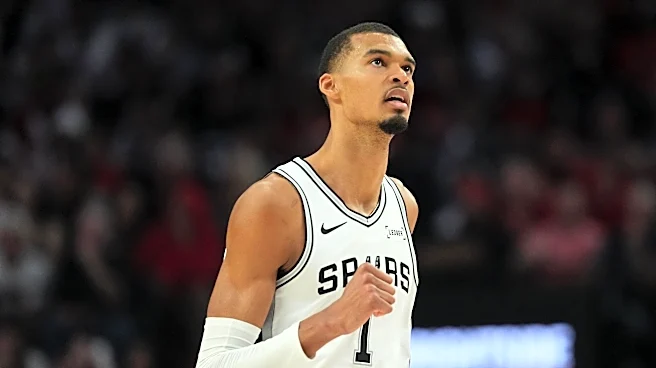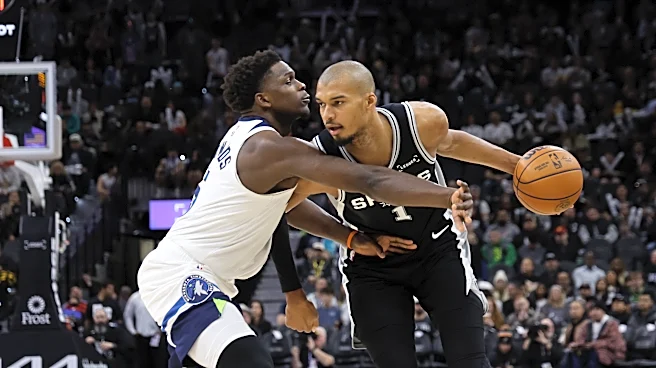






Ah, yes, it’s the Spurs-Wolves second-round clash that everyone anticipated! No one around here penciled in a Spurs-Nuggets tilt, and there’s also no evidence of a writer crashing out following San Antonio’s final regular-season loss to Denver.
Now that we have our matchup set, it’s time to dive into some stylistic battles that could take place. Given the small sample size of the first round, the stats used will come from the regular season, and Minnesota’s numbers will reflect data from lineups without
Donte DiVincenzo and Anthony Edwards — although the latter could come back later in the series.
Let’s start with the Wolves’ shot diet.
Minnesota’s shot chart
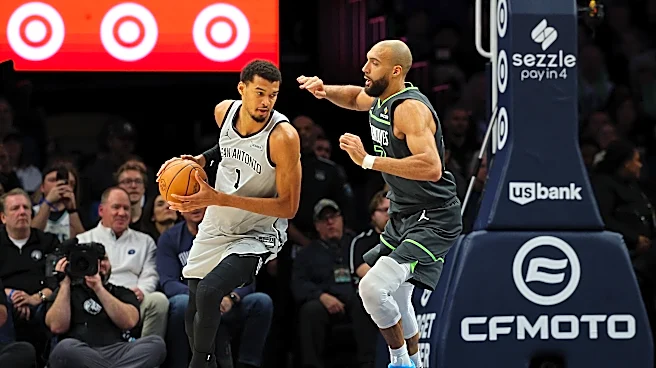
The Wolves take 36.3% of their shots at the rim (top 5 league-wide) while converting on just 64.5% of those attempts (bottom 5). It goes without saying that Wemby will make their lives much tougher, as opponents are shooting just 60.8% in that area with him playing. More importantly, only 26.2% of attempts are at the rim when Wemby’s on, and the Alien’s presence will force Minnesota to shoot from farther out.
Assuming Wemby camps in the paint due to Gobert’s lacklustre offensive game, the Wolves will focus on pull-up 3s and long 2s. Some of their guards caught fire in round 1, but the full-season stats indicate that Minnesota is a below-average shooting team from every area of the floor except above-the-break 3s, and even that came on extremely low volume. The Wolves will need to find other sources of offense if their shooting reverts to the norm, and one potential solution is to crash the boards.
Offensive rebounding
The biggest matchup advantage Minnesota has over San Antonio is their size at the forward positions. None of the Spurs’ forwards can match up physically against Julius Randle and Naz Reid, which could allow the Wolves to fatten up on the offensive glass. Still, that is easier said than done, as the Wolves’ 28.6% OREB is decidedly average, while the Spurs’ 74.1% DREB ranked first league-wide.
If they decide to go down this route, Minnesota will need to be comfortable taking shots deeper in the paint to force Wemby to commit, leaving the backline more exposed. Even so, there’s a good chance that the Alien will either block the shot or recover fast enough to grab the rebound. The Wolves might be forced to play lineups featuring all of McDaniels, Reid, Randle, and Gobert — a quartet that saw minutes in the Denver series but only logged 71 possessions together in the regular season.
Transition opportunities
If the Wolves prioritize the offensive glass, then they’ll be giving the Spurs easier opportunities to run. Minnesota would be playing into a strength of San Antonio’s, as they rank 6th and 8th, respectively, in transition frequency and points per play. On the other hand, the Wolves could decide that the defensive tradeoff is not worth the potential offensive gain, and they could go big to prioritize defensive boards instead. Minnesota increased their DREB from 66.7% in the regular season (9th percentile) to 79.2% in round 1 against Denver (95th), and they’ll prevent the Spurs from getting easy second-chance points if this continues.
The Wolves could push the pace themselves if defensive rebounding remains a priority. They ranked 6th in transition points per play in the regular season, and both teams were top 10 in preventing opposing transition opportunities too. Fast break points are clearly an emphasis for both teams, and the winner in that category could be determined by the size of Minnesota’s lineups and which side of the rebounding battle they prioritize.
Pace
This one is very simple: both teams are better when they play fast. Minnesota and San Antonio ranked 10th and 12th, respectively, in pace in the regular season, and are now tied for 1st and 3rd in the playoffs. The Wolves were able to take Denver out of rhythm by speeding them up, but doing so against the Spurs would only benefit the black and silver.
For San Antonio, Stephon Castle specifically needs to play with speed and purpose. Portland cut the Spurs’ large lead down to single digits in game five of round 1 because Castle started walking the ball up without getting into any action until the shot clock almost expired. However, San Antonio’s offense is almost impossible to stop when he’s running handoffs and attacking closeouts, which is how the Spurs built their lead.
X-Factor: Rudy Gobert
When Gobert’s been played off the floor in the past, it was always due to issues with his offense, not defense. That problem could rear its ugly head again in this series if his lack of a post game and shooting allows Wemby to camp in the paint, allowing the latter to shut off Minnesota’s drives and rim attempts. Given the ability of the Spurs’ guards to fight through screens and defend, Gobert won’t be able to make as big an impact as a screener either, which could render him close to a zero on offense.
Defensively, Gobert’s matchup with Wemby will be the polar opposite of the one he had against Jokic. Wemby’s lob threat as a roll man and his ability to come off screens will force Gobert to guard in space, which is why I expect him to be assigned to Castle instead. Similar to what Portland did, Gobert can sag off the second-year guard (who quietly hit over 40% from three on five attempts a game against the Blazers) and stay in the paint, while physical forwards like Randle and Reid match up with Wemby instead. The Spurs found counters to this strategy by running hand-offs with Castle (as was shown above), but that might be the lesser of all evils given the offensive versatility that San Antonio has.
Another wrinkle in the Gobert-Wemby matchup is the number of corner threes the Spurs generate. In the regular season, Wemby’s roll gravity helped San Antonio take 13.8% of their shots from the corners when he played, which was one of the highest recorded numbers ever. However, the Wolves are elite at preventing shots from the corners, conceding just 8.6% of such attempts to their opponents, which was one of the five lowest marks league-wide. If Gobert can guard the paint alone, the other Wolves players can focus on playing man defense and prevent open looks instead of worrying about packing the paint to stop lobs to Wemby.