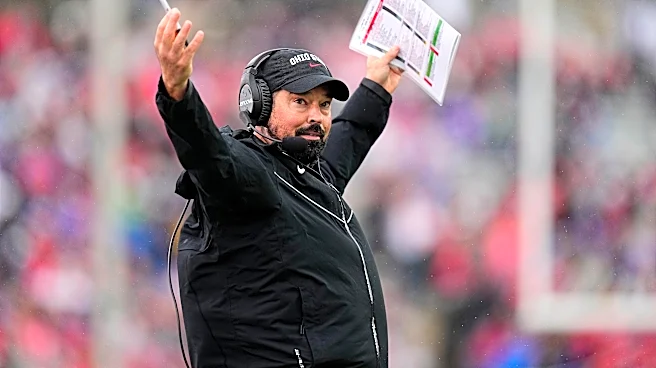



Ryan Day didn’t hide his opinion about one of college football’s strangest new developments, but he also acknowledged that Ohio State could not afford to ignore it if other programs found a way to gain an advantage.
“Do I like anything about it? Absolutely not,” Day said. “But we got to do what’s right for Ohio State.”
For Ohio State, that decision has now been made for it.
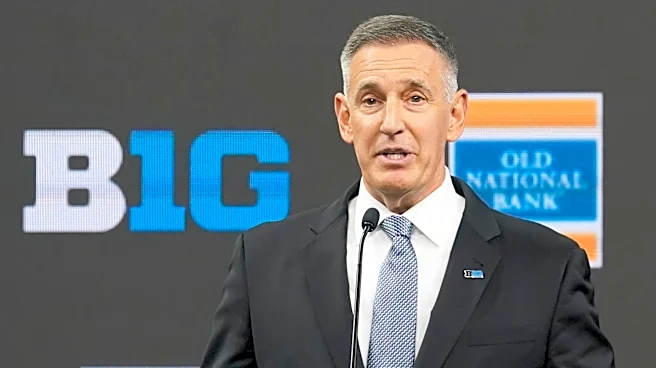
The Big Ten unanimously adopted a rule Tuesday barring football players from maintaining eligibility at a Big Ten school if they
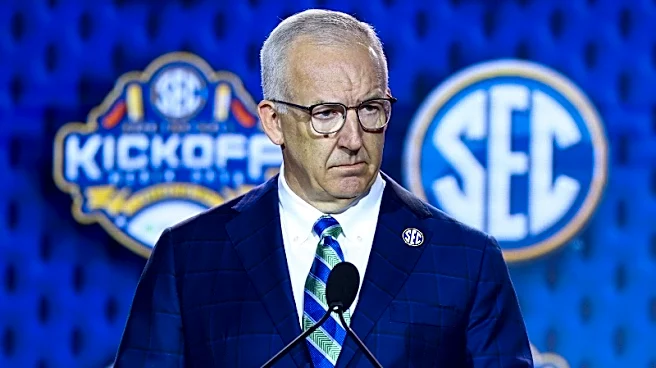
have signed a professional contract, appeared on a professional roster or declared early for the NFL draft without withdrawing. The SEC adopted a similar policy, while the ACC and Big 12 were also moving toward restrictions on NFL returnees.
The rule closes the door on Ohio State adding a player who had already entered the professional ranks, eliminating a scenario Day had acknowledged the Buckeyes might have to consider if other programs began using it to gain a competitive advantage.
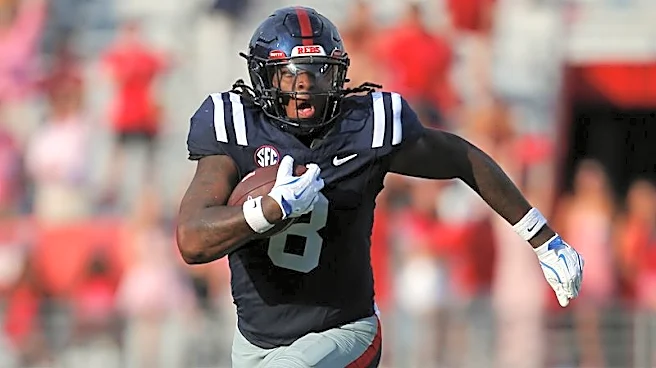
Day was discussing the possibility of players who had already pursued professional football returning to the college game, a scenario that became possible after a court ruling granted members of the 2022 recruiting class another year of eligibility. The most notable example was Dae’Quan Wright, a former Ole Miss tight end who went undrafted in the 2026 NFL draft, spent time with the Philadelphia Eagles and Cleveland Browns and then committed to LSU after Cleveland waived him.
Wright’s situation gave Day a glimpse at how quickly the boundaries between college and professional football can shift. When Day first heard that LSU had landed a commitment from Wright, he immediately recognized how unusual the situation was.
“Whenever I heard that we were in a meeting and someone said, ‘Yeah, LSU just got a commitment from the Browns’ tight end,’ I said, ‘We are definitely in a different world right now,’” Day said.
But Day’s reaction went beyond simply acknowledging that Wright’s situation was unusual. If other programs could add players with NFL experience to their college rosters, Ohio State would have to at least consider whether refusing to make the same moves would put the Buckeyes at a competitive disadvantage.
“If there are teams that have some players out there who are cut from NFL rosters that are gonna be on their teams, we have to at least consider and look at it,” Day said. “Once some of these guys become available, adding them to the roster is going to provide an advantage for certain teams.”
His statement isn’t an endorsement of an NFL-to-college pipeline. It is an acknowledgment of the responsibility Day has at Ohio State, where the goal is to compete for championships regardless of whether the changes required to do that are particularly appealing. The Buckeyes can disagree with where college football is headed, but refusing to participate in something that is allowed while another program uses it to improve its roster can become a competitive decision in itself.
That is a calculation Ohio State has had to make before. As the transfer portal and name, image and likeness have reshaped roster construction, the Buckeyes have faced criticism for being too cautious while other programs moved more aggressively within the changing rules. That criticism has been particularly pointed around Ohio State’s approach to NIL, raising questions about whether the program’s reluctance to fully embrace the new landscape has sometimes put it at a competitive disadvantage. But the Big Ten’s decision removes that particular calculation from Ohio State’s hands.
“There has to be a certain point where your roster gets locked in,” he said.
The conference has now established that point for Ohio State, removing the possibility of the Buckeyes adding a player who has already entered the professional ranks. Day no longer has to decide whether refusing to participate in something he clearly dislikes is worth risking a competitive disadvantage in this particular situation.
But that decision is only one example of a larger challenge facing Ohio State. The transfer portal, NIL and shifting eligibility rules have already changed how the Buckeyes build a roster, and each new development forces the program to decide how much of its traditional approach it can afford to keep.
The Buckeyes may not get to choose the direction college football takes. They can choose whether Ohio State keeps pace with it.